The unglamorous truth about a law firm is that it is also a factory. Leads arrive. Conflicts are checked. Clients are opened. Matters move through repeatable stages. Documents multiply like rabbits with billable-hour targets. Time becomes invoices; invoices, ideally, become cash. The legal work may be bespoke, but the business around it is a chain of handoffs. Actionstep sells the machinery for that chain.
Founded in New Zealand in 2004 by Ted Jordan, Actionstep now describes itself as a law-firm operations platform for the midsize market. Its cloud software connects client intake, CRM, matter management, tasks, email, documents, timekeeping, billing, trust and office accounting, compliance, and reporting. By April 2026, the company said it supported 5,500 firms and nearly 50,000 users around the world.
That list of features is long because the problem is long. A missed deadline can become a professional-liability event. A misplaced email can become a client-service problem. A forgotten six-minute call can become leaked revenue. A trust-accounting error can become something much worse than an awkward Monday meeting. Actionstep's product thesis is that these are not separate app problems. They are one operating problem.
01 / The original irritation
What failed first was the workflow
Jordan's founding observation was pleasantly specific: business software often contained workflows that did not match the way people actually got work done. The user was expected to bend. His response was to remove those rigid assumptions and let customers modify the technology around their preferred process. The early product was broad business-management software. A construction franchise and a law firm were reportedly among its first commercial users in 2005. Legal eventually became the center of gravity because process matters intensely there.
This history explains Actionstep's main difference from competitors. It is not merely a digital filing cabinet with a timer attached. A firm can define matter types, stages, fields, tasks, reminders, document templates, approvals, and rules for different practices. An estate-planning file need not move like litigation. A plaintiff firm need not invoice like a corporate boutique. The software promises a common system without pretending the work is common.
“We work together to make Actionstep fit your law firm's ways of working, not the other way around.”Actionstep's operating model

02 / The awkward middle
A market between “easy” and “enterprise”
Small practices can buy simpler products from Clio, MyCase, Smokeball, PracticePanther, Rocket Matter, CosmoLex, and others. Large firms can spend heavily on Aderant, enterprise document systems, custom integrations, and internal IT. Actionstep has placed itself in the uncomfortable space between them: growing firms with complex operations, multiple practice areas, serious accounting needs, and little appetite for a sprawling technology estate.
The customer roster is consequently less about celebrity logos than operational personalities. Partners want profitability and visibility. Lawyers want every email and document attached to the right matter. Practice managers want consistent handoffs and balanced workloads. Finance teams want clean billing, collections, ledgers, and trust controls. Administrators want fewer systems to reconcile. Clients simply want their lawyer to look organized.
This positioning also clarifies the company's acquisition spree. After Serent Capital made an undisclosed growth investment in 2020, Actionstep acquired Australian legal-software company LawMaster in 2022, FilePro in 2023, and Toronto-based Soluno later that year. The deals added regional reach, customers, and expertise. Soluno supplied the deep North American legal-accounting product that became Actionstep Legal Accounting.
Practice Management and Legal Accounting can operate as connected products; Legal Accounting can also stand alone. The newer Builder module creates documents from templates and matter data. Capture turns client web forms into structured records without copy-and-paste work. Scout answers product-support questions using Actionstep help content and is separated from firm data. This is AI in its sensible office clothes: fewer help-desk searches, fewer forgotten entries, fewer opportunities for a name to land in the wrong document.

03 / The bill behind the billables
What it costs, in money and attention
Actionstep does not publish one universal sticker price. It sells subscription licenses through a quote-based fee schedule. Modules, implementation work, data migration, and subscriptions to connected products may affect the total. That absence of public pricing is itself useful information: this is a consultative sale, not an app-store decision.
The more important cost may be organizational attention. Actionstep says a typical implementation takes six to twelve weeks, depending on firm size, migration, workflow complexity, training, and the availability of the firm's own stakeholders. Its five-step method is plan, design, build, test, deploy. Certified partners often handle the work because configuration is not a checkbox exercise. Someone has to decide what the ideal process actually is.
That is where flexible software can fail. A firm that recreates every historical quirk merely builds a faster museum. A firm that has no internal owner leaves consultants guessing. Dirty contact records remain dirty after migration, only in a newer database. Review sites reflect this split: users praise automation and customization, while some report difficult setup, costly customization, or weak fit for their particular document and accounting needs. G2's displayed estimate of average implementation time is five months, longer than Actionstep's typical range, which is a useful reminder that real firms are untidy.
Works best when...
- The firm has repeatable, complex workflows
- Leadership assigns a real project owner
- Data is cleaned before migration
- Customization can repay its setup cost
Probably not when...
- A solo wants instant self-serve setup
- Price transparency is non-negotiable
- No one can define the current process
- The team will not train or change habits
04 / The copyable playbook
Do the boring work before the clever work
The most portable lesson from Actionstep has little to do with lawyers. Start with the handoff. Where does information disappear? Where does one person retype what another already knows? Where does a task wait for memory instead of a trigger? Map those moments, standardize what deserves to be standard, and preserve discretion where judgment matters. Only then automate.
A customer story makes the point. Litigation firm Gower, Wooten & Darneille said earlier systems, Centerbase and RocketMatter, did not scale with its email capture, document production, and invoice volume. A partner's prior Actionstep experience helped change the firm's mind. With an implementation partner, GWD configured the platform around its litigation process. The lesson is not “buy Actionstep.” It is to select against the work that broke first, then bring an experienced operator into the rollout.
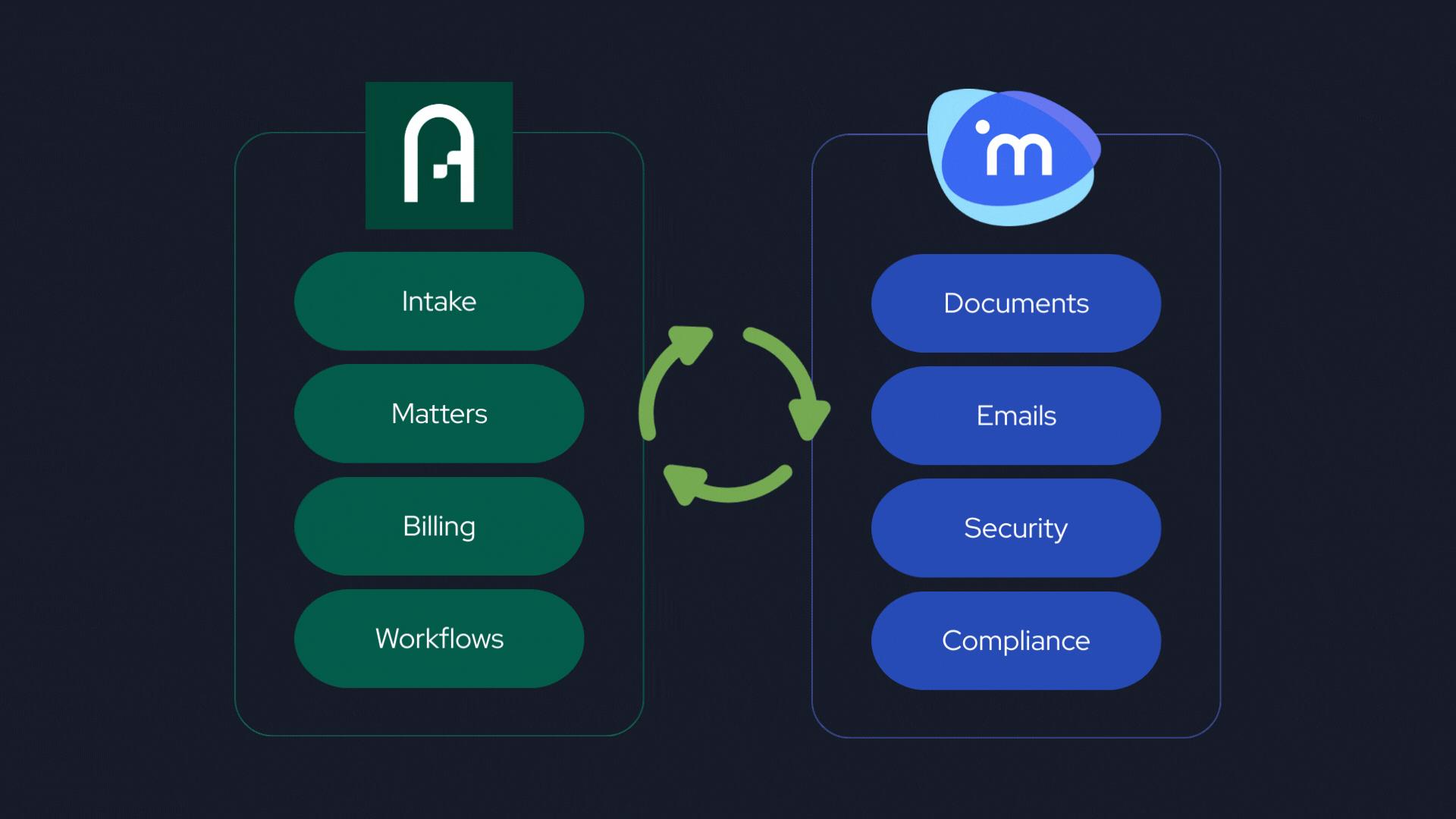
Actionstep has applied the same logic to integrations. Xero keeps invoices, payments, trust transactions, and firm transactions aligned. NetDocuments links workspaces to matters. In April 2026, a native iManage integration began automatically creating and syncing document workspaces when matters open. For a midsize firm, this is less glamorous than generative drafting and possibly more valuable. Context switching is an invisible tax paid in small coins all day.
05 / Twenty years, compressed
From Auckland irritant to global operating layer
Actionstep begins in New Zealand with configurable process at its core.
The company accelerates US growth, product work, sales, and hiring.
LawMaster, FilePro, and Soluno add market reach and accounting depth.
Documents, support, and client intake become more structured and automated.
SOC 2 Type 2 completion and native iManage integration target enterprise expectations.
Today the company is led by CEO Early Stephens from its global headquarters in Denver, with its Auckland roots and teams across North America, the United Kingdom, Australia, and New Zealand. Its stated culture favors curiosity, empathy, transparency, and continuous improvement. That language is standard corporate fare. The more revealing cultural choice is structural: Actionstep relies on a partner ecosystem to tell customers that buying the software is not the same as changing the firm.
Its business model follows that seriousness. Every user needs a subscription license, and the platform evolves through a mix of core capabilities, optional modules, integrations, and specialist implementation. Recurring software revenue is the engine; a network of consultants helps convert the product into a working firm. It is a smart division of labor when the partner is good, the scope is honest, and leadership stays involved. It is a frustrating one when buyers expect a login screen to perform organizational therapy.
There is no guaranteed ending here. Legal technology is crowded, switching costs cut both ways, and a configurable platform must avoid becoming a complicated one. The company has to integrate its acquisitions, serve regional accounting rules, satisfy rising security scrutiny, and make AI useful without becoming reckless around sensitive data. Its opportunity is just as clear. Midsize firms want big-firm control without big-firm machinery.
Actionstep's answer is an operating system that can bend. The condition is that the customer must know which way.