A needle seems an unlikely place to look for a theory of venture capital. Yet consider what happens when it collects too little tissue, or damages the sample on its way out. The instrument is small. The uncertainty it leaves behind can be considerable. For Acorn Campus Taiwan, a firm investing in life science and technology startups, that kind of problem belongs in the same conversation as a market, a founder and a financing round.
- Acorn connects early-stage companies with capital and experienced entrepreneurs across the Pacific.
- Its investments include clinical tools with unusually specific jobs.
- Its record offers a lesson in commercialization, alongside a reminder to examine the risks.
The sample comes before the spreadsheet
In early 2024, URO-1 completed an $8 million Series A led by Acorn Campus of Taiwan. Angels in four American states also participated. The company was preparing a prostate-biopsy platform built around its SUREcore needle and coreCARE specimen-retrieval products. Its proposition concerned the quantity, consistency and condition of tissue arriving for examination. Better material, the company argued, could help the pathologist interpret what was there.
There was a personal connection to the problem. URO-1 chief executive Ted Belleza had undergone a prostate biopsy and treatment for prostate cancer. In an interview published by the North Carolina Biotechnology Center, he recalled his urologist saying that sampling instruments and methods had changed little in decades. Here was a familiar procedure with room for a different tool. That is a more useful starting point than an abstract promise to transform healthcare.
URO-1’s completed Series A, led by Acorn with angel participation. Reported in 2024.
The amount financed URO-1. It does not describe the size of Acorn’s individual investment. Earlier reporting had described the company reaching $5 million toward its Series A. The later $8 million figure should therefore be read as the completed round, rather than casually added to the earlier milestone. In venture reporting, the arithmetic can become more impressive than the underlying event.
Two shores, one practical question
Acorn Campus Taiwan was founded by Wufu Chen in 2014, according to Taiwan’s FINDIT investor database. Its contact page lists Santa Clara and Taipei offices. The wider Acorn network traces its history through seven funds across three geographies. Those numbers describe the network, which includes related investment organizations, rather than seven funds belonging to the Taiwan firm alone.
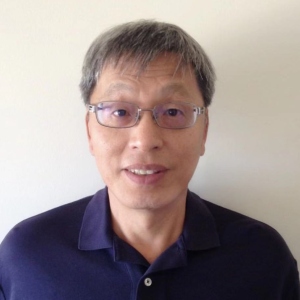
Chen’s background includes founding communications businesses. His published team page sits beside biographies of Michel Chu, a GigaMedia co-founder, and Ray Jamp, whose experience includes technical leadership and more than fifteen years at HP. Together, those biographies suggest the firm’s particular appeal: investors who have encountered the operational demands of technology companies themselves.
In a PwC interview, Chen emphasized international teams able to define markets and customers and speak to the world beyond Taiwan. Geography, in this account, matters because people, buyers and money are distributed unevenly. A founder needs a useful connection between them. Having addresses on opposite sides of the Pacific makes sense only if the company can turn those connections into work.
Small tools have business models, too
EndoSee offers another way into the portfolio. CooperSurgical acquired the company in October 2014 in a transaction valued at approximately $44 million. Its system put hysteroscopy into a handheld, battery-operated instrument designed for office use. A reusable display worked with a sterile disposable cannula carrying a camera and light source. The arrangement made portability and the handling of consumables part of the same product decision.
Cooper’s announcement explained the buyer’s interest: the system fitted its office and surgical strategy, and its existing infrastructure could support the product. For a startup, that is a specific commercial destination. Acorn lists EndoSee in its portfolio; the acquisition value belongs to the transaction and should not be confused with Acorn’s proceeds. The case illustrates how a useful instrument can fit inside a larger company’s distribution machinery.
- 01Find the frictionA precise user problem
- 02Build the evidenceA product worth adopting
- 03Reach the buyerProduction and distribution
Flat Medical supplies a different milestone. Its January 2020 Series B included Acorn as an existing shareholder, alongside a round led by Taiwan’s National Development Fund. EpiFaith, its epidural safeguard, had received FDA clearance and a CE mark in 2019. The financing supported product expansion and global business development. The sequence matters: regulatory progress was followed by the expense and effort of building the commercial operation.
“Safety improvement in anesthesia and critical care is a real need.”
Michel Chu · Flat Medical financing announcement · January 2020
The portfolio has a harder edge
Medical-device investing also requires scrutiny after the pitch. Acorn’s published portfolio includes Stimwave. In June 2024, its former chief executive Laura Perryman was sentenced to six years in prison for healthcare fraud involving a nonfunctional component implanted into patients. The Justice Department described a disturbing sequence: physicians found the working receiver too long for some patients; Perryman directed creation of a plastic substitute presented as functional.
This case concerns Perryman’s conduct. It establishes no wrongdoing by Acorn. It does, however, complicate any comfortable reading of a portfolio page. A persuasive technical proposition, a market and reimbursement arrangements can coexist with misconduct. For anyone assessing a medical-device business, the functioning product and the way it is sold deserve their own examination.
Begin with the thing that needs fixing
The useful lesson for founders is a question: which step gets better? With URO-1, the answer starts with tissue collection. With EndoSee, it includes where a procedure can happen. Capital and experienced guidance help a team pursue that answer, but the instrument still has to work, reach production and earn adoption. A founder approaching Acorn can start with its portfolio and its invitation to submit a business plan. Show the problem clearly. Then explain how the company gets from a working idea to a customer who can use it.