A certificate is an odd souvenir. You work for it, perhaps pay for it, then let it disappear into an inbox. The issuing organization records a completion. The learner gets a PDF. A future employer gets a line on a résumé and a small exercise in trust. Accredible was founded to alter that last part. It gives the certificate a public, verifiable address, and gives its holder a reason to take it out into the world.
- Accredible sells credential software to schools, associations, and companies; learners receive the badges and certificates.
- Its argument is that a credential should be easy to verify, easy to share, and useful after the course ends.
- The public Launch plan begins at $45 a month on a 12-month term for 50 recipients. Larger plans have custom pricing.
- The test is not how many badges are issued. It is whether learners and employers do anything with them.
The trouble with a finished course
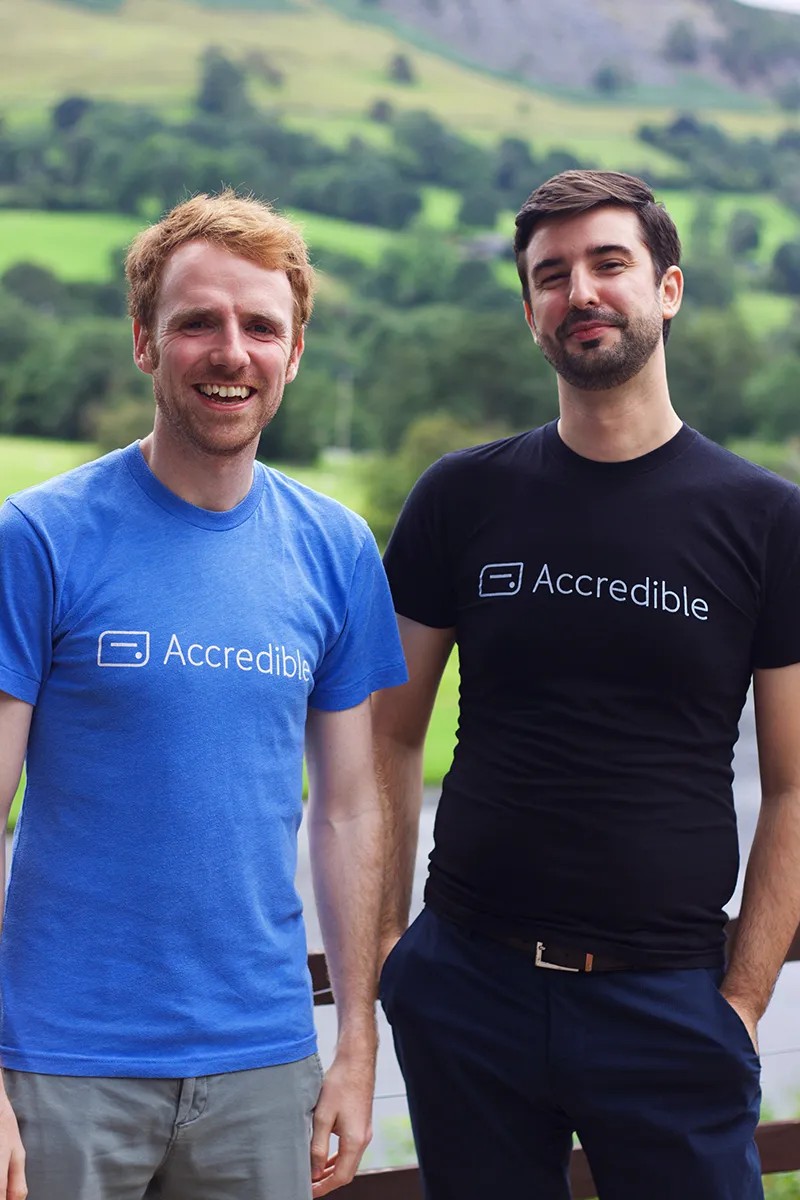
Danny King and Alan Heppenstall founded Accredible in 2013 after seeing how much conventional records left out. Grades could compress a person’s work into a thin signal; a paper certificate could say little beyond a name and a date. Their answer was software for issuing digital certificates and badges with verifiable information attached. King became chief executive; Heppenstall, chief technology officer.
The immediate buyer is the issuer. A university may need to recognize short courses across departments. A professional association may need to show whether a certification is current. A software company may teach customers to use a complex product and want that competence to be visible. Accredible supplies design, issuance, delivery, verification, branded pages, integrations, and analytics. The learner gets a record that can be shown on a profile or sent to someone who needs to check it.
This is enterprise software with a very human distribution problem. Accredible’s customers include Google, MIT, Skillsoft, McGraw Hill, and the University of Cambridge, according to the company. It reports more than 2,300 issuing organizations and more than 200 million credentials issued and verified. Those are platform scale figures, not evidence that every credential led to a job. The distinction matters. An issued badge has potential; an opened, shared, understood badge has an audience.
What a 50% discount could not buy
The Maker Group, a negotiation and sales training business, provides the sort of comparison software companies usually prefer to keep abstract. It used Accredible, then accepted a rival’s offer at a 50% discount. The rival was Credly. The Maker Group said onboarding disappointed it and credential sharing declined. Recipients had to create an account, verify their email, sign in, accept the credential, and only then post it. The firm returned to Accredible within months.
This is one customer’s account, and a bad experience with one implementation is not a universal verdict on a competitor. Yet the mechanism is easy to recognize. Every extra click between pride and publication asks a learner to remember why they started. The Maker Group said sharing had fallen to roughly 20% to 25% after its switch, against more than 80% engagement and sharing in its earlier Accredible experience. After returning, it reported year-over-year increases in credential opens and LinkedIn sharing.
“One-click share is what made us choose Accredible in the first place.”Paul Voisard, The Maker Group
That is the practical difference Accredible tries to sell. A badge can be issued in bulk by many systems. Accredible concentrates on the recipient’s next move, then lets the issuer see views, shares, referrals, and other signs of life. Workato, for example, connected Accredible to its Skilljar learning system so course completion could trigger credentials. Its Automation Institute reported 80% growth in program learners and more than 7,500 shares of earned credentials. Those results belong to Workato’s program and marketing as much as to any single software feature, but they show what the buyer hopes to measure.
The interesting measure is the distance between steps two and four.
A business model with an unusual denominator
Accredible’s public Launch plan starts at $45 a month, billed monthly on a 12-month term, for 50 recipients. It charges by unique recipients per year rather than by the number of credentials each receives. That makes a pathway of several achievements less costly to issue than a pay-per-badge model would make it. The larger Connect and Growth plans have custom prices and add features such as integrations, analytics, branding, customer support, pathways, and engagement campaigns.
The price of the software, of course, is only part of a credential program’s cost. Someone must decide what achievement merits a badge, what evidence it represents, when to issue it, and whether an employer can interpret it. Accredible has professional services for that work, but no platform can make a weak assessment rigorous by dressing it in a prettier border. The strongest cases pair clean issuing rules with a credential that recipients have a reason to display.
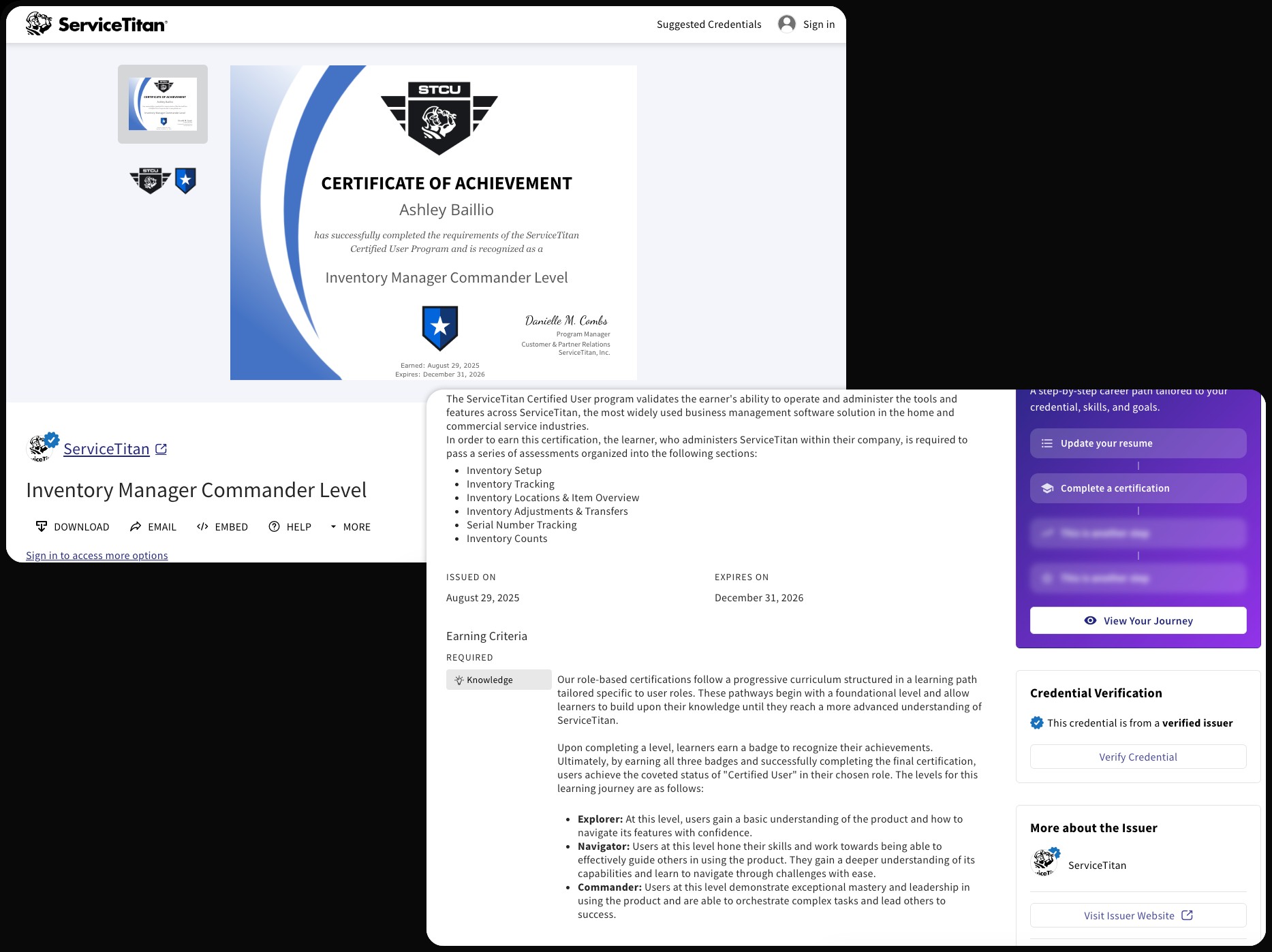
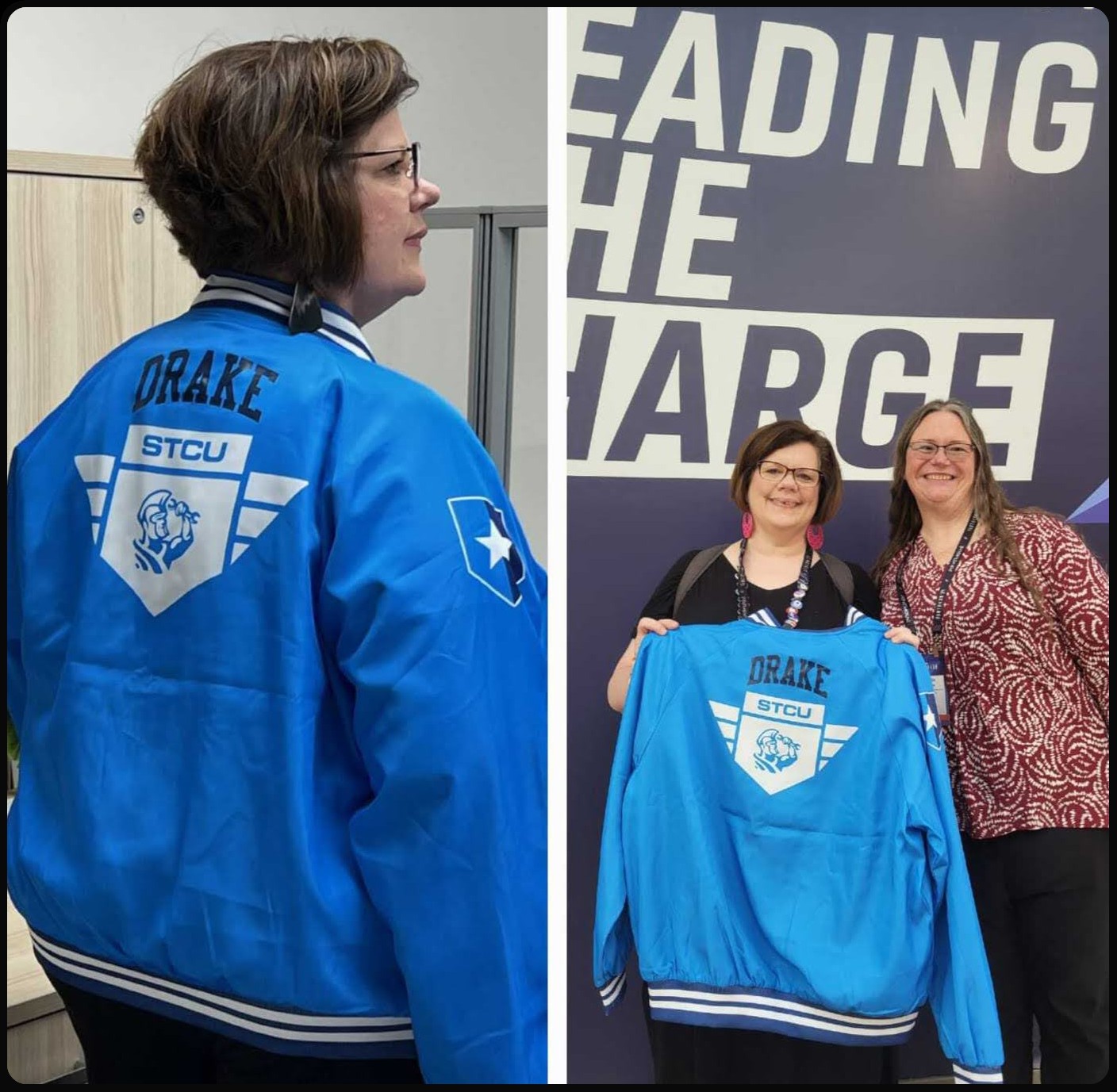
ServiceTitan offers a vivid example of what happens when that reason becomes social. Its customer and partner certification program uses Accredible credentials across several tracks. The company says it has maintained a share rate above 90%, and that credential links send more than 11 visits a week to its product demo page. At its conference, top certified learners can receive blue varsity jackets with patches for later achievements. The jacket is analog; the logic is digital. Recognition works best when other people can see it.
The badge grows up
Accredible’s product releases increasingly ask what happens after a credential is shared. In 2025 it launched transcripts that gather a learner’s verifiable credentials into a structured record. In January 2026 it introduced a Verified Career Record, a portable PDF that lets a learner select credentials and career information for an employer. The format is almost charmingly ordinary. A PDF is hardly a futuristic object, but hiring teams know how to open one.
The company also added support for Open Badge 3.0 and W3C Verifiable Credentials, allowing records to move across compliant systems. In August 2026, Skills Frameworks let issuers link credentials to O*NET, ESCO, NACE Career Readiness Competencies, or their own taxonomy. Rochelle Ramirez, Accredible’s product leader, described the underlying customer complaint plainly: issuers did not want to rebuild their programs around a vendor’s vocabulary. Accredible’s response was to let the vocabulary travel with the credential.
These features place Accredible in a wider market for digital badges, learner records, and skills data. Credly and Canvas Credentials are alternatives; an organization can also issue certificates from its learning management system or by hand. Accredible’s case for itself rests on what happens across the whole chain: issuance, standards, recipient experience, verification, and measurement. That bundle is valuable when an issuer has enough learners, enough achievements, and a genuine audience beyond the classroom. A small private course whose certificates nobody needs to verify may need much less machinery.
The honest limit of a badge
Accredible’s own 2026 credentialing research points to the unfinished work. In a webinar on the report, the company said demonstrating program value had become issuers’ top strategic priority, yet only 12% of surveyed issuers could show learner career advancement with data. That gap should temper any easy story about badges automatically producing opportunity. They can make an achievement legible. They cannot make an employer care, or prove that the underlying learning was good.
What can a program copy? Start with the end of the journey. Decide who should be able to verify an achievement and what they need to see. Make delivery automatic and sharing frictionless. Give learners a reason to share, whether that is professional recognition, a next course, a directory listing, or, if you are ServiceTitan, a jacket. Then measure the passage from issue to open to share to action. A credential strategy has failed when its dashboard celebrates issuance while the credential itself gathers dust.
The paper certificate’s old problem was that it stayed put. Accredible’s more interesting problem is that a credential can now go anywhere, and still has to mean something when it arrives.