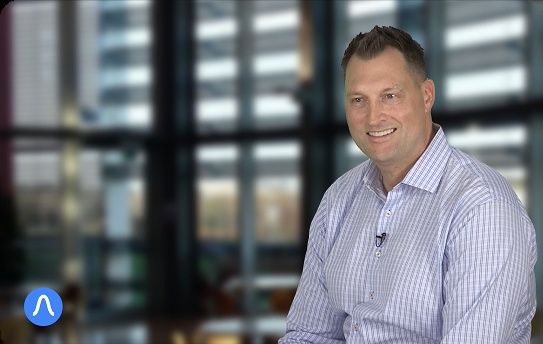
Aaron Brodt had a problem that success was making worse. Ashton Thomas Private Wealth was growing, but the technology supporting its advisors was becoming a job of its own. Separate systems meant separate tasks, repeated work, and people spending time keeping the machinery moving. More business had arrived with an awkward companion: more business to attend to before anyone could attend to the client.
The obvious response would have been another purchase, another integration, another consultant invited to explain why the previous integration required a consultant. Brodt chose to develop a platform inside the firm. That internal project became Amplify, a separate technology business with customers facing the same operational frustrations. A company created to advise people about their money had produced a company concerned with how that advice gets delivered.
It is an unusually practical origin for a software business. Brodt already had the users, the workflows, and the consequences of getting them wrong. The problem did not need a hypothetical customer. His own firm supplied one. By 2020, interest from other advisory businesses had turned the internal tool into a standalone platform. The work behind the client relationship had become a business in its own right.
Oil, portfolios, and a Scottsdale address
Brodt’s route into this problem began some distance from software. His first career stop was oil trading at Tosco, the company now part of ConocoPhillips. He subsequently worked as a financial advisor and portfolio manager for a multifamily office. Those are different kinds of financial work: trading a commodity, managing portfolios, and helping organize the affairs of families with several competing demands on their money.
In 2010, he founded Ashton Thomas in Scottsdale. The regulatory record puts his registration with the firm in June of that year. Earlier registrations include Global Financial Private Capital and The Planning Group. These dates give the founding a useful context. Brodt entered entrepreneurship after working within other advisory organizations, with experience of the business before he was responsible for designing one.
The firm’s offering grew around affluent individuals and families, foundations, and business entities. Financial planning sat alongside investment portfolio management, retirement-plan consulting, and tax consulting. The appeal of that arrangement is easy to understand. A family may experience its money as one interconnected set of decisions, even when the professionals handling those decisions inhabit different offices and different software systems.
Ashton Thomas gave its planning process a name, Your Wealth Blueprint. In the 2022 Citywire account of its expansion, the firm was Arizona’s fastest grower on the publication’s state-by-state list. The account described recruiting three-person Wells Fargo teams in Wyoming and Helena, Montana. Growth came with actual people, in actual places, bringing relationships that a central office would now have to support.
- 2010Ashton Thomas founded
- 2020Amplify becomes standalone
- 2023Ashton Thomas joins Arax
- 2026Amplify adds custody integration
When the operating system becomes the story
Amplify’s central idea was to bring the working parts of an advisory practice into a connected environment. Trading, reporting, client information, and onboarding would share an underlying structure. The attraction was less time spent moving information between tools and more time available for the advisor’s relationship with the person whose information it was.
Chief growth officer Vickie Lewin later described the project’s beginnings in an interview: Brodt had developed it for his own firm and advisors, before treating other firms as customers. That sequence helps explain the emphasis on everyday work. Opening an account and getting a portfolio implemented are hardly glamorous subjects. They are, however, quite capable of consuming a working day.
By 2024, Amplify was being considered for its fourth consecutive WealthManagement.com industry award. Its Client Dashboard was a finalist in the unified-systems category, bringing household and portfolio information together with access to trading, reporting, and analytics. The distinction was a finalist designation, a useful marker of recognition rather than a claim that the operational problem had been permanently solved.
The person beside Brodt in explaining the technical work is David Hatfield, Amplify’s chief technology officer. In their March 2026 podcast conversation with Craig Iskowitz, Brodt described looking at the daily experience of advisors, client service associates, and executives. Hatfield explained the discipline underneath: a consistent definition of an account, controlled access to it, and rules for how other parts of the system use it.
“Why can’t we build something better? Something simple that actually works for advisors?”
Aaron Brodt, on Amplify’s beginnings
A larger partner, with the founder still at the desk
While Amplify developed its outside market, Ashton Thomas entered another phase. In September 2023, the firm announced an agreement to join Arax Investment Partners, the wealth management platform backed by RedBird Capital Partners. The announcement described nearly $3 billion in assets under management and twelve offices across seven states. Brodt would continue as chief executive; Arax CEO Haig Ariyan would serve as chairman.
The relationship brought a different set of resources to the founder’s expansion plans. Arax offered a platform for acquisitions and growth, backed by RedBird’s financial-services experience. Ron Shurts, an Amplify co-founder and the co-founder of Annexus, was appointed to Ashton Thomas’s advisory board. Brodt’s circle of business connections now included a technology partner, a wealth-platform leader, and a private-capital organization.
Brodt framed the arrangement around advisors being able to expand while retaining an entrepreneurial culture. That ambition carries a familiar management question: how much can a firm centralize before local teams feel they have surrendered the thing that made their practices work? Bringing in resources is straightforward to announce. Making those resources useful to a particular advisor, with a particular client on the telephone, is the continuing assignment.
The part of scale a balance sheet cannot fix
Brodt’s professional record also contains customer disputes. His public investment-adviser record lists three settled disputes concerning investments purchased in 2014 and 2015, and another complaint closed without action. The settlements were made without admission of liability or wrongdoing. Allegations and settlements have distinct meanings; neither should be presented as an adjudicated finding of misconduct.
That history belongs alongside the expansion story because wealth management remains a business of specific recommendations and individual outcomes. A larger platform can improve the administration surrounding advice. Client trust still depends on the advice itself, the explanations given, and the care exercised in choosing investments. Operational efficiency and professional judgment have to coexist in the same practice.
Brodt’s firms express the service ambition in different ways. Ashton Thomas organizes its stated values into CREDO: community, respect, excellence, discipline, and opportunity. Amplify emphasizes helping advisory firms support growth through connected technology and service. These are management commitments with an everyday test. Someone has to translate them into what happens when an account needs attention.
The client record gets a bigger supporting cast
In March 2026, Amplify named Jason Rowley president and Kimberly Hill chief revenue officer. The company reported supporting nearly $24 billion in assets, 649 advisors, and more than 39,000 households. It also said its internal team had grown to more than 100 employees. These were platform figures, describing Amplify’s business, rather than the assets of Ashton Thomas alone or any measure of Brodt’s personal wealth.
The appointments put people around the work as the customer base expanded. Rowley would lead daily operations; Hill would drive sales and client acquisition. Brodt’s original operational frustration had grown into an organization requiring its own division of responsibility. There is a pleasingly businesslike irony here: software intended to reduce unnecessary work still requires quite a lot of purposeful work to build and support.
In July 2026, Amplify announced its Custody Command Layer integrated with Goldman Sachs Custody Solutions. The release described account opening and custody operations flowing into the platform’s data environment. Brodt said the design aimed to support same-day accounts and real-time data without reconciliation. Those are stated capabilities and ambitions of the offering, rather than a promise that every account at every custodian will behave identically.
An August partnership with Ned Davis Research addressed another piece of the advisor’s day. Research models would be available as managed portfolios through Amplify, with the platform handling trading, rebalancing, and performance reporting. Advisors could use them without a custodial change. The sequence makes Brodt’s current direction concrete: connect more of the work surrounding advice while keeping the advisor responsible for the client relationship.
Basketball, without the motivational poster
Before the founder titles, Brodt played NCAA basketball for the New Mexico State Aggies. He graduated from the university and later earned the Certified Investment Management Analyst designation. The credential is administered by the Investments & Wealth Institute, with coursework taught in conjunction with Wharton. His education combines a university background with a professional investment qualification, two distinct parts of his preparation for a career in financial services.
At home in Scottsdale, Brodt and his wife, Heidi, have two sons. He enjoys coaching the boys in basketball and spending time with his family. The basketball connection has therefore continued beyond his own college years. He has carried the game into family life while his professional work has moved through trading, advising, and technology. The connection is modest and specific, a welcome detail in a career otherwise crowded with platform terminology.
His stated ambition for Amplify extends to making advisors’ work more mobile and their information more usable as new tools arrive. In the 2026 conversation with Iskowitz, the discussion of artificial intelligence returned repeatedly to disciplined data and practical tasks. The useful question was what an advisor could do with the information, rather than how impressive the underlying vocabulary might sound.
Brodt’s two businesses meet at that point. Ashton Thomas puts him on the side of the firm trying to serve clients. Amplify puts him on the side building part of its operating machinery. The founder who encountered the problem now has to keep answering to both constituencies. Getting bigger supplied the original difficulty. Making a working day run better remains the more interesting measure.