Rich Steinmeier’s first paycheck went into mustard-yellow parachute pants. The MC Hammer kind. Years later, when the story had followed him into financial services, a friend gave him an original MC Hammer doll, complete with the outfit. Some executives acquire a reputation for a memorable transaction. Steinmeier also has a memorable pair of trousers.
He tells the story readily. In June 2025, sitting down again with interviewer Tony Sirianni, he found that an earlier conversation’s clothing purchase had survived longer in the memory than most business forecasts. There is something reassuring about a chief executive whose youthful capital allocation can still be questioned. The dollars were hard earned. The yellow was a choice.
His present work involves choices on a rather different scale. Steinmeier became LPL Financial’s chief executive in October 2024 after years spent persuading financial advisors and institutions to join the firm. The central question of his career now sits inside his job: how do you build an organization large enough to help independent businesses without making its size everybody else’s problem?
The coach who taught calculus
Steinmeier grew up in Harrisburg, Pennsylvania, with a single mother who worked several jobs. His account of that childhood emphasizes the people around them: relatives, neighbors, teachers and coaches who took an interest. Success, in his telling, had a crowded supporting cast.
One coach also happened to be his calculus teacher. When Steinmeier lost the starting quarterback position, the teacher delivered two pieces of news in a deliberate order. First came an A on a calculus test. Then came the change at quarterback. The young player’s disappointment was real; so was the reminder that his life contained more than the depth chart.
There is a useful restraint in that anecdote. A person can receive unwelcome news without being reduced to it. For an executive who talks about helping other people develop, the detail that matters is the order in which the coach spoke. He protected the student’s sense of possibility while making the decision the team required.
Learning the machinery
The education that followed took Steinmeier to Wharton, where he graduated with an economics degree in 1996, and Stanford, where he completed his MBA in 2002. At Stanford he was an Arjay Miller Scholar. The academic route looks orderly on a biography page. His working life crossed more boundaries.
He spent six years at McKinsey & Company and also worked at Ford. His consulting work included financial services and manufacturing. By 2006 he was at Merrill Lynch, taking on leadership responsibilities that included strategy, analytics and business development. He eventually ran the Merrill Edge Advisory Center.
In 2012 he joined UBS to lead its Wealth Advice Center and Emerging Affluent Segment. He later led digital strategy and platforms for its American wealth business. These were jobs concerned with the practical delivery of advice: how clients reach it, how a firm organizes it and what technology sits underneath it.
That experience helps explain why LPL hired him in 2018. His appointment announcement specifically connected his digital background to the challenge of attracting advisors. He would take over business development in mid-August, succeeding Bill Morrissey, and relocate from New Jersey to California. The assignment joined two subjects often discussed separately: the technology a firm builds and the people willing to move their businesses onto it.
The client behind the client
At LPL, the word client requires a moment’s attention. The financial advisor has clients. The advisor is also a client of LPL. That second relationship is the one Steinmeier spent years trying to win.
His growth responsibilities eventually ranged across corporate strategy, recruiting, employee advisors, capital solutions, marketing and communications. They put him close to the reasons an advisor might leave one institution and choose another. A recruiting conversation has an unusually concrete audience. The person across the table has a business to run the following Monday.
Before he became CEO, his growth tenure included the recruitment and onboarding of more than 7,700 producing advisors and over 100 institutions. Those figures describe a collective effort, and two distinct jobs. Recruiting gets someone to agree. Onboarding gets the relationship working. Confusing the two would be an expensive habit.
Producing advisors recruited and onboarded during his pre-CEO growth tenure, alongside more than 100 new institutions.
In a March 2025 conversation with Louis Diamond, Steinmeier returned to LPL’s founding premise: advisors are its customers. The firm began in 1989 through the merger of Linsco and Private Ledger, offering a route outside traditional Wall Street firms. By the time he took charge, preserving that premise required a much larger organization.
The distinction has consequences. Independence involves decisions about a practice, succession, affiliation and the kind of working life its owner wants. A platform must accommodate those decisions while supplying services the individual business would struggle to assemble alone. Steinmeier’s task is to make the institutional machinery useful without allowing it to dictate every choice.
Twenty days, then the whole job
Steinmeier became interim CEO on October 1, 2024. On October 21, LPL announced his confirmation as chief executive and his election to its board. The same announcement expanded Matt Audette’s responsibilities to president and chief financial officer. A recruiting and growth executive was now responsible for the whole enterprise.
His earlier remit had already stretched beyond bringing in new business. It included shaping the firm’s direction and allocating resources to advisors. The promotion expanded the consequences of those decisions: shareholders, employees, institutions and advisors would all judge the result from different seats.
In an April 2025 interview with Frank LaRosa, the questions included how a large firm could keep the feel of a smaller one, how affiliation models were changing and how advisors could realize the value of their practices. These are awkward questions for a growing institution, which is precisely what makes them useful. Personal service is easy to promise in a conversation. Delivering it repeatedly requires an operating system.
Commonwealth makes the question bigger
On August 1, 2025, LPL closed its acquisition of Commonwealth Financial Network. At the time, Commonwealth supported approximately 3,000 advisors managing $305 billion in assets. For Steinmeier, the transaction put the relationship between scale and culture under a brighter light.
The firms did not describe the plan as simply putting another name through the same machinery. Commonwealth would retain its brand, with its service experience and culture central to the promise. That made the transaction a test of whether a larger parent could supply resources while preserving the qualities that had attracted people to the acquired firm.
Ownership and operational integration also ran on different clocks. Commonwealth was to operate as a wholly owned portfolio company through the transition of its advisors to LPL’s platform. In July 2026, LPL said the conversion remained on track for the fourth quarter. Closing the deal had settled who owned the business. The work of making the combination function continued.
That interval is where Steinmeier’s earlier experience becomes especially relevant. He had spent years working on recruiting and onboarding. Now the promise was larger, the relationships were established, and the people being asked to move already had strong views about what good service should feel like.
A technology budget with a human explanation
In July 2026, LPL introduced Latitude, a unified technology experience encompassing data, cybersecurity, infrastructure, advisor workflows and investor applications. The company said it had invested nearly $2 billion over the preceding three years in its foundations and expected more than 35 major enhancements during 2026.
Those are company investments, rather than a personal invention to attach to the CEO. They matter to his story because they connect his digital past with his present recruiting argument. An advisor considering a move needs to know what becomes easier after the move. A technology strategy earns its place in that conversation through the work it helps someone finish.
The accompanying AI capability, Cyan, was presented as a way to offer contextual guidance and assist with everyday workflows. Its proposed development included drafting materials and helping initiate actions. These were plans and demonstrations, with further capabilities still ahead, rather than completed benefits to count in advance.
“The future of advice is more human.”
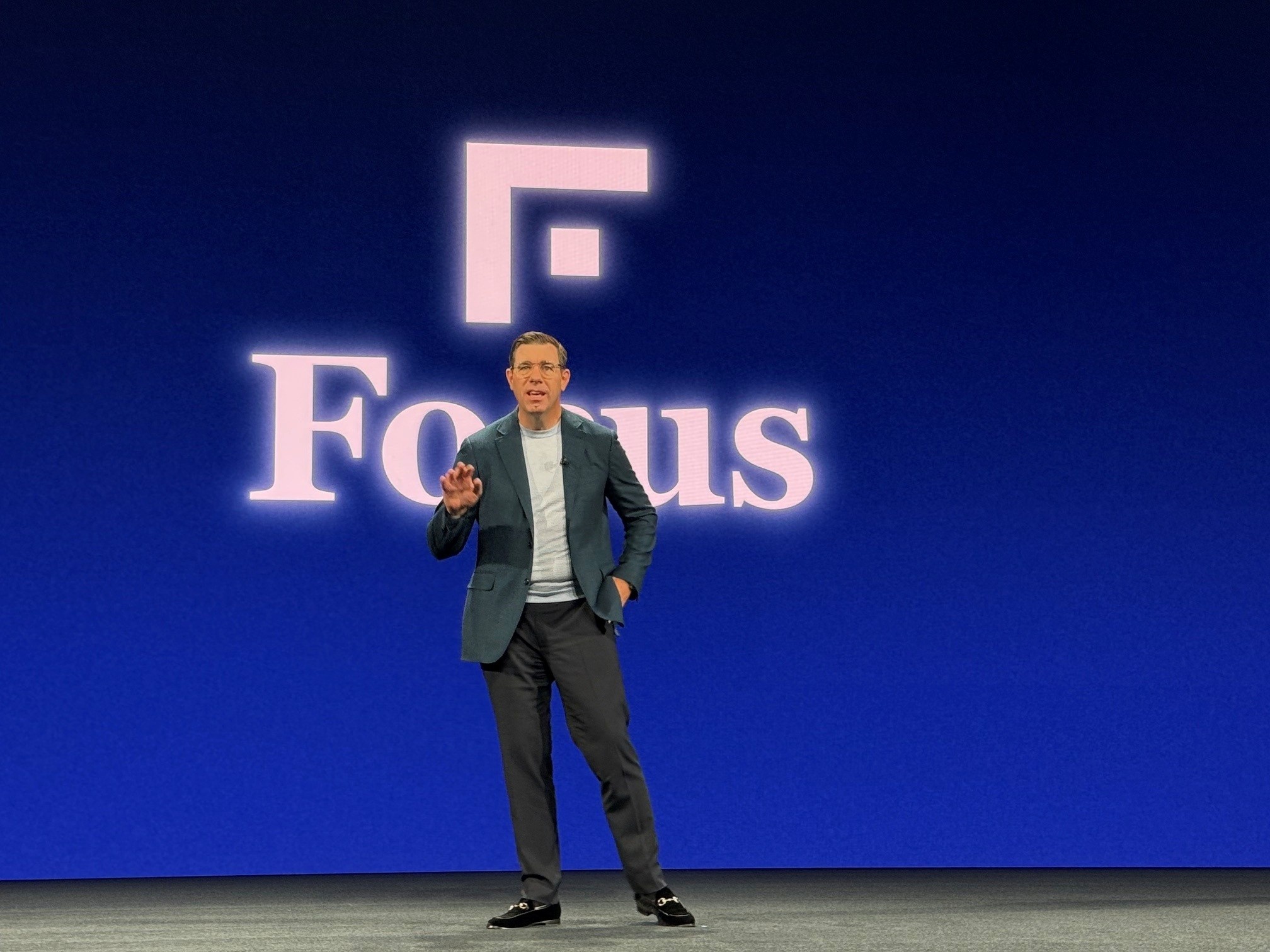
Rich Steinmeier · Focus 2026
At Focus 2026, speaking to more than 6,000 advisors, Steinmeier argued that AI would give people more capacity for judgment and relationships. It is a position with an obvious commercial logic for an advisor platform. It also sets a demanding test: the technology has to return useful time to the person using it.
The person outside the platform
The public glimpses of his time away from work are pleasingly ordinary. A 2022 executive introduction described a married father of three moving between soccer games, swim meets, tennis, family hikes and board games. It listed gardening, basketball, walks with the dogs and time at the beach among his interests.
His favorite book in that introduction was Stephen King’s Under the Dome. He watched Marvel films with his son and followed Cleveland sports. These details do not establish a management philosophy, and they need no such promotion. They give a recognizable shape to the hours that do not belong to an earnings call.
By October 2026, he was still drawing on his sporting past. A conversation with Don Yaeger returned to being benched after a winless start to a high-school football season, the effect of individual effort on teammates, and the importance of how a team wins. The calculus teacher’s former quarterback had found a much bigger organization to think about.
Steinmeier’s career has moved through consulting, cars, banks, digital platforms and advisor recruiting. The recurring work is arranging the conditions in which someone else can do a job. At LPL, his ambition now depends on thousands of people deciding that the arrangement serves them. The yellow trousers remain a good story. The next chapter will be judged by what the machinery lets its users accomplish.