A knee brace and a piece of cybersecurity software make unlikely dinner companions. One must fit a human joint; the other must withstand a human adversary. Yet both appear in the history of 434, Charlottesville’s startup accelerator. Their common problem is easier to understand than either technology: a young company needs people who can help it get to the next decision.
THE QUICK READ
- At least nine months of support for selected local technology startups.
- Free workspace, advisers, student talent and a grant application opportunity.
- Software needs early demand; hardware and science need proof of concept.
434 takes its name from the local area code. That small detail explains much of the enterprise. Its territory is the Charlottesville region, its beneficiaries are early-stage technology founders, and its working assumption is that useful people can be brought closer together. A company does not become viable merely because someone admires its pitch.
A summer is a short runway
In 2019, the program began under a different name: Catalyst. UVA, the City of Charlottesville and Albemarle County developed it together, with Darden’s Batten Institute administering the effort. The university had identified a practical gap. Its summer startup program needed a longer continuation for companies with growth potential.
That is the origin worth remembering. The intervention was additional time, with people attached. Catalyst planned to support 20 companies between fall 2019 and spring 2021. University affiliation was unnecessary. The region, rather than the student roll, defined who belonged.
“Catalyst is open to the community-at-large.”
David Touve · July 2019 launch announcement
David Touve, the launch program’s lead and now 434’s managing director, brought experience from university entrepreneurship programs and early technology companies. His own career account includes acquisitions and failures. There is a certain economy in having an adviser who has already paid for some of his education.
The price of staying local
The original machinery cost money. A two-year GO Virginia Region 9 grant supplied $475,000; UVA, the city and the county collectively matched the state support. In November 2024, VIPC announced a further $198,000 grant to Venture Central, 434’s host, with local, municipal and foundation matching funds.
This is a publicly and philanthropically supported program. Regional planning documents describe its in-person assistance as free of charge. Its users are founders; the public partners also have an interest in companies that can create jobs nearby. The program sits between university entrepreneurship, regional economic development and the venture community.
The founder-facing offer includes the opportunity to apply for up to $20,000 in grant funding. “Apply” matters. Treating that opportunity as an automatic cheque would make a poor opening assumption. Workspace and access to technical and business resources are separate benefits; advertised discounts are useful only when a company can actually use them.
A dinner is part of the machinery
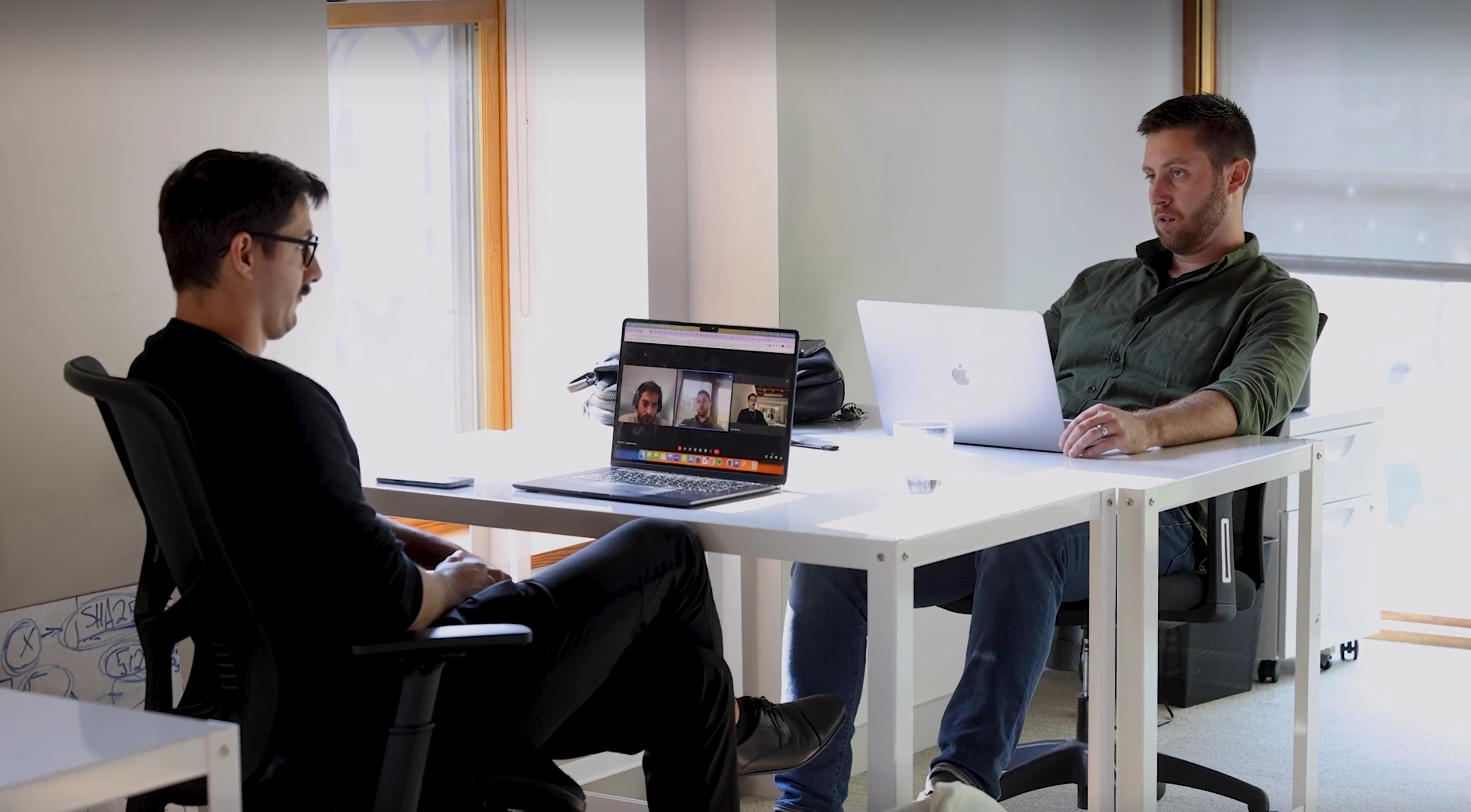
Venture Central has hosted 434 since 2023. The package includes workspace, founders-in-residence, industry experts and student project support. The long format gives those services a setting in which they can be used repeatedly. An introduction can become a conversation; a conversation can survive the discovery that the first question was the wrong one.
The calendar includes monthly dinners, check-ins and expert office hours. Founders are expected to attend. Here is the logic, as an inference from the design: repeated meetings lower the effort required to ask for help. The second conversation starts where the first ended. A founder can return with evidence instead of explaining the business again.
Consider what that allows. A team can take an expert’s suggestion, try it, and come back with the result. Perhaps the proposed customer will not buy. Perhaps the demonstration exposes a technical weakness. Those are hypothetical examples, but they explain why duration matters: advice becomes more useful when the adviser can see what happened after it was given.
Recurring contact is the design. Progress depends on the company.
Students are another part of the offer. UVA’s PhD Plus internship listing describes Fellows meeting regularly with the managing director and participating founders. Venture Central reports 20 UVA Fellows working with startups in 2025. The exchange gives companies additional hands and students a view of decisions before those decisions have tidy case-study endings.

The number belongs to the founders
The program reports nearly 60 startups and more than 105 founders supported since launch. Participating teams have collectively raised more than $100 million in capital and grants, and created or retained over 280 jobs. Those are cumulative company outcomes. They establish the scale of the group; they do not tell us how much of any outcome the accelerator caused.
Capital and grants raised by the companies, as reported by 434.
The range of companies helps explain the program’s position. The portfolio includes Liquet Medical’s catheter-based drug delivery, Scale Materials’ polymers and Chiefly’s resident scheduling software. An early graduate, Icarus Medical, completed Catalyst, won CBIC’s 2020 Startup of the Year award and raised $1.5 million, according to Darden’s account that year.
These businesses sell to different customers and confront different technical questions. A generalist accelerator can help organize access to expertise across them. More specialized organizations, such as CvilleBioHub, offer another route for life-science companies. Earlier-stage services such as i.Lab and ICAP help companies prepare. The choice depends on the bottleneck.
Bring something the network can use
434’s boundary is revealing. Software applicants should have an initial product and evidence of demand. Hardware and science teams should be at or beyond proof of concept. Ideas and pre-MVP projects may receive studio support and the Startup Series, an approach piloted in 2024. Applications roll throughout the year.
The application asks for a pitch deck, executive summary, founder information and a video demonstration. Eligible teams then meet a selection committee drawn from investors, grant makers and economic-development circles. Preparing those materials is useful work in itself: it forces the team to show what exists, explain who needs it and distinguish evidence from enthusiasm.
For another city, the copyable idea is coordination: connect experienced founders, student talent and recurring advice over a substantial period. But it requires people worth connecting and money to sustain the work. Regional founder feedback still identifies specialized hiring, pre-seed capital and physical prototyping as difficulties. A dinner cannot manufacture a testing facility.
For a local founder, the practical move is to bring a product, evidence and a question precise enough for someone else to help answer. The area code offers a useful invitation. The company still has to do the work.