Consider a perfectly ordinary service call. A customer needs a repair. A technician is nearby. On a map, the problem looks solved. Then someone discovers that the technician lacks the right skill, the replacement part sits in another depot, and the appointment clashes with a contractual deadline. This is an illustrative scene, but it captures the kind of problem ZSL’s FieldPower is designed to handle. The distance between two pins is only one part of the journey.
- ZSL combines enterprise software products with engineering and implementation services.
- FieldPower, Bank.Companion and Phoenix address field service, digital banking and insurance.
- A historical internal desktop pilot offers a concrete example of its approach.
- The wider Zylog group’s regulatory history belongs in the assessment too.
The spare part is the plot
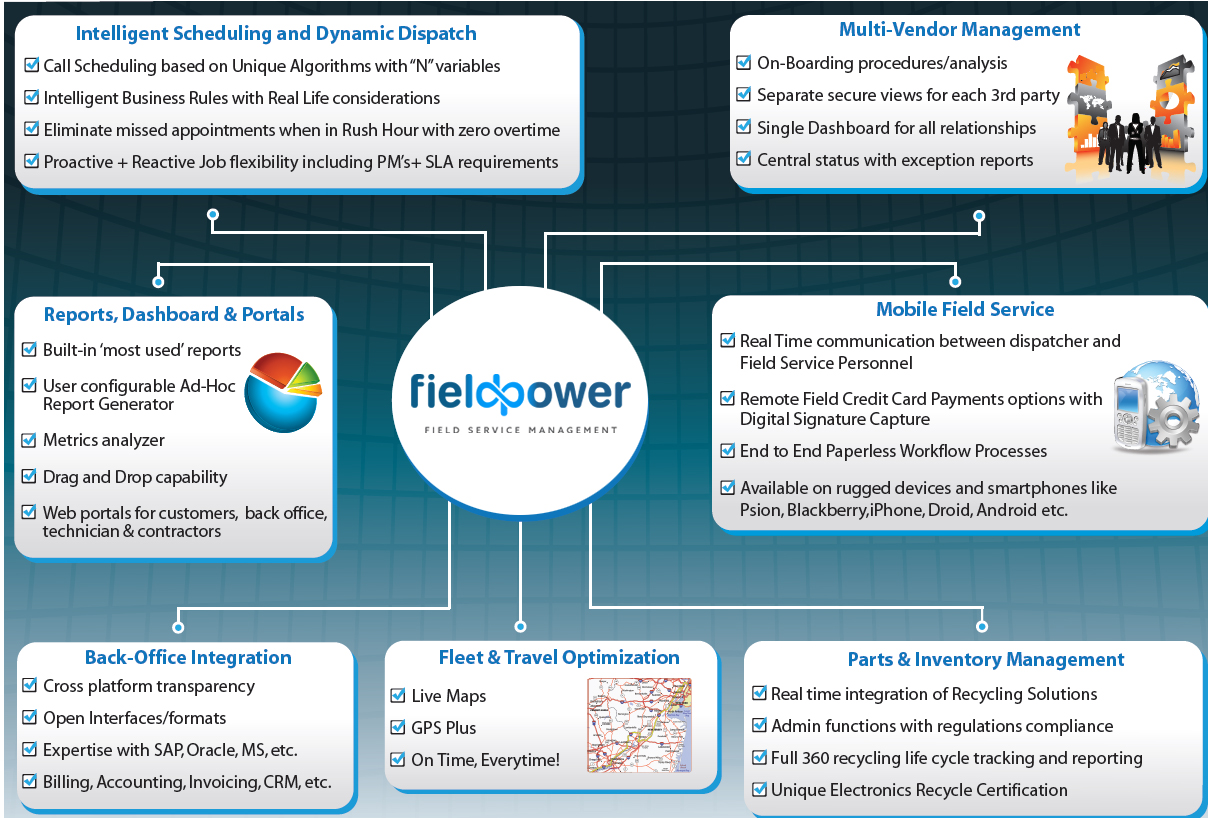
FieldPower’s published offering coordinates dispatch around skills, location, service-level commitments and cost. It also brings parts, inventory and mobile work into the picture. Its ambition is to make the appointment agree with the rest of the business. A dispatcher can choose a person; an integrated system must account for what that person can actually do.
The listed modules include GPS optimization, customer self-service, depot repair, asset management and interfaces to enterprise resource planning and customer relationship management systems. For businesses managing equipment or mobile workers, those connections can matter as much as the scheduling screen. The work order has a life before the van leaves and after it returns.
Three products, one recurring argument
ZSL’s other named products move into different industries. Bank.Companion is a digital banking framework for banks and credit unions. Phoenix covers property-and-casualty and general insurance operations, including underwriting, broking, claims, reinsurance and accounting. The first serves an institution trying to reach its customers through digital channels. The second serves an industry in which one transaction can involve several organizations and several sets of books.
Phoenix can be taken as an integrated suite or in separate components that connect to existing systems. That is a revealing design choice. An insurer may need a new claims component without wanting to replace every surrounding application. Modularity offers a way to change one part of the machinery while retaining the rest.
Read together, these products suggest a consistent commercial idea: make a particular industry’s transactions easier to coordinate. ZSL occupies the space where specialist software meets the existing estate of applications, records and habits. The buyer is an organization. The eventual beneficiary might be the technician, policyholder or banking customer who never learns the supplier’s name.
Illustrative workflow, based on FieldPower’s published modules. Each connection is part of the job.
A product still needs people
The broader services portfolio spans software development, migration, re-engineering and ongoing support. Its enterprise work includes CRM, ERP and content management; cloud and analytics add other routes into a client’s operations. This is a business selling both software and the effort required to make software useful.
Its Microsoft Dynamics practice makes the human part unusually explicit. The service page says requirements gathering, training and user acceptance testing work best in person. That preference makes sense when an implementation depends on discovering how employees handle exceptions. A process chart is tidy. The conversation about what happens when a delivery is late tends to be less so.
“requirements gathering, training and user acceptance test support are best done face-to-face”
ZSL’s Microsoft Dynamics services page
ZSL describes consulting, customization, implementation, upgrades and support for Dynamics, alongside an AX health check. These are the activities that surround the license purchase. They translate a general-purpose business system into the routines of a particular organization, then keep that translation working.
Its analytics offering starts with assessing needs and data quality, then extends into migration, metadata management, sensor analytics and enterprise data harmonization. That sequence is useful. A dashboard built on inconsistent records can give a messy operation a very polished reflection. Sorting out what the records mean comes before asking them for wisdom.
The customer inside the company
An IBM case study published in January 2010 describes ZSL tackling its own desktop costs. It assembled PowerCube from Ubuntu, Virtual Bridges VERDE and IBM Lotus software. After an internal pilot, ZSL offered the desktop service to customers. The document reported 30% lower licensing and hardware upgrade costs, deployment 60% faster than a Microsoft desktop environment, and provisioning reduced from a day to a few hours. These are historical results for a specific implementation, rather than forecasts for a buyer today.
Lower licensing and hardware upgrade costs reported in IBM’s 2010 PowerCube case study.
The broader lesson is an inference: an internal operational problem can become a useful product experiment. A team has to live with the consequences before asking customers to do the same. It also gets a chance to distinguish the inconvenience that people complain about from the expense that actually appears in the accounts.
The bill follows the connections
ZSL’s model combines business software with professional services. Phoenix explicitly offers licensed, hosted and subscription options. The practical buying decision therefore includes both the product and the work around it: implementation, integration, training, migration and support. Those tasks deserve to be discussed together, because an attractive license arrangement does not settle the cost of changing a workflow.
For a buyer, a useful evaluation starts with one complete transaction. Which system creates the record? Who updates it? Where does it become an invoice? Demonstrate the ordinary path and an awkward exception. Ask for the responsibilities and acceptance criteria to be written into the scope. This is practical advice inferred from the portfolio, rather than a claim about a particular ZSL customer’s contract.
The approach is most relevant when a business has multiple systems or an industry process that needs customization. A company with a simple workflow may have little reason to buy an extensive integration engagement. And coordination software depends on usable inputs: inaccurate stock counts or incomplete technician records can undermine an otherwise sensible dispatch plan.

A wider history, and a necessary distinction
ZSL Inc. is the US IT business associated historically with Zylog Systems. The distinction matters when reading old growth figures, group accounts or legal records. A group number does not become a standalone US result simply because the names resemble one another.
A 2010 CRISIL analysis of Zylog, excluding Brainhunter, described roughly 60% of revenue coming from IT services and 40% from products; much of the product business was implementation. It also described a 65:35 onsite-to-offshore effort mix. Those historical proportions help explain the combination of products and people, without establishing its current business mix.
The group’s later history is more troubling. Contemporary reporting described SEBI’s June 2013 interim restrictions against Zylog promoters and other parties. In July 2023, India’s Enforcement Directorate reported that a Chennai court had declared former promoters Sudarshan Venkatraman and Ramanujam Sesharathnam Fugitive Economic Offenders. The agency also alleged improper remittances through the US ZSL business. The reported court declaration and the agency’s allegations are distinct. SEBI published a further recovery order concerning Venkatraman in March 2026.
For anyone considering a supplier relationship, the implication is to assess the contracting entity, delivery team and governance alongside the product. Product capabilities answer what software is meant to do. Corporate records answer a different set of questions, and neither should be asked to substitute for the other.
Start with the hand-off
The useful thread running through ZSL’s portfolio is the hand-off: from dispatch to technician, from insurance claim to accounting, from a bank’s systems to a customer’s phone. Each is a point at which a business can lose time, context or control.
A reader can copy that way of looking at operations without buying anything. Pick one customer request and follow it through every system and every person. Mark where someone has to retype, reconcile or telephone. Those small interruptions are a practical starting point for deciding what software needs to change. The repair appointment may be ordinary. Getting all its moving parts to agree is the work.