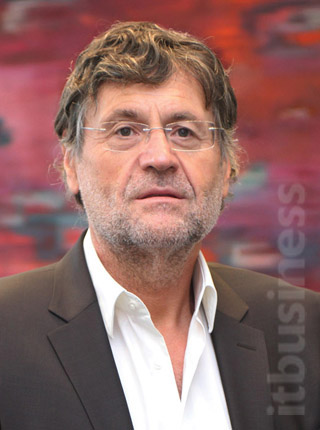
In 2017, with seventeen years of company building behind him, Zoltán Schvarcz went back to class. XAPT already sold business software abroad. Its founder had customers, colleagues and experience enough to offer advice for a living. Asked why he had joined a two-year business development program, he gave a refreshingly economical answer: to learn.
There is a pleasing inconvenience in that answer. We prefer founders to arrive fully assembled, clutching a business plan and an anecdote suitable for dinner. Schvarcz's career offers a more useful sequence: engineering, research, factory work, software consulting, sales, ownership. Each occupation supplied something the next one needed. Even after the business had crossed oceans, he was still looking for a classroom.
The engineer gets a sales result
Born in 1957, Schvarcz graduated in machine design from the Budapest University of Technology in 1981. His early work was in research, first at the university's geometry department and then in control engineering and simulation at the Institute for Heat and Systems Engineering. He subsequently spent a year in the United States on a doctoral scholarship.
After Hungary's political transition, he returned home and became chief engineer at an automotive parts factory. Consulting on enterprise software at IDOM followed. The route into information technology passed through actual machinery and an actual factory: a useful apprenticeship for someone who would eventually make a living helping equipment businesses organize themselves.
His own account adds a small surprise. During an MBA program in France, a personality assessment suggested an aptitude for sales. He joined Humansoft in 1994 and developed its Scala business. The technically inclined child had acquired a commercial job. The move makes his later career easier to understand: he could discuss how a business functioned, then persuade somebody that it might function differently.
A Danish answer to a Hungarian problem
At Humansoft, Schvarcz encountered the familiar difficulty of software that could handle some business requirements more comfortably than others. By 1999, he was looking beyond Scala with other distributors. Axapta, Navision and Great Plains made the shortlist. Axapta won, and XAPT Hungary was founded in 2000 with Schvarcz and Humansoft as owners.
The arrangement was less solitary than the usual founder legend. Humansoft supplied early customers and financed the team during its initial period. An international alliance of distributors provided connections. In 2003, Schvarcz bought out Humansoft's stake. Independence came through a transaction, after a period of dependence that had helped make the company possible.
One early customer supplied an unusually exact test. A Japanese automotive parts business needed prices carried to seven decimal places. Schvarcz recalled that XAPT's programmers made the necessary change in fifteen minutes. A tiny part had raised an awkward question about a large software system. XAPT's answer was to change the system. Precision, in this story, had a customer attached.
7 decimal places required
15 minutes to make the change, in Schvarcz's recollection
Boston before the border crossing
Recognition arrived before the North American expansion. At Microsoft's 2006 partner conference in Boston, XAPT received the award for its Dynamics AX partnership. The meeting brought together more than 7,000 companies. For a Hungarian software business, the award offered a credential that could travel farther than a domestic customer reference.
Schvarcz spoke publicly about the distinction and the company's admission to Microsoft's President's Club, based on license sales performance. The interesting point is how the relationship worked. XAPT was building its own expertise on somebody else's platform. It needed enough independence to solve a customer's particular problem and enough alignment for Microsoft to regard that work as valuable.
It is an arrangement with less romantic appeal than inventing everything yourself. It also puts a clear question to the customer: can this team make the system work here? Schvarcz's career had been preparing him for precisely that conversation. An engineering education, experience of factory operations and years of software sales were now meeting in the same room.
The export column starts moving
The numbers were beginning to change the company's geography. XAPT reported 2007 revenue of 2.253 billion forints, up 60 percent. Export revenue reached 766 million forints, twelve times the previous year's figure. Half of that export business came from Canada; the United States and Romania each contributed another fifth.
That distribution is worth lingering over. International growth had recognizable destinations and customers. The company's work included systems for heavy equipment dealers and a Canadian tire business. A Hungarian operation was earning a substantial part of its revenue by organizing businesses elsewhere. The export column had become a description of how people inside XAPT spent their working days.
Kelly Tractor in Florida and Fountain Tire in Canada were the first North American projects Schvarcz highlighted. Expanding in 2008 meant committing people and resources during a financial crisis. Housing staff abroad and managing simultaneous implementations belonged to the decision as surely as winning the contracts. A software export can travel electronically. The people responsible for making it useful sometimes need a suitcase.
A business acquiring an overseas life
Historical company revenue, not personal wealth. The 2007 export component was HUF 766m.
A prize, then a wider argument
In 2010, Schvarcz received the Gyurós Tibor Award as Hungary's IT Leader of the Year. The recognition put his name against an enterprise that had grown beyond its original domestic setting. It also returned attention to the earlier researcher and engineer whose commercial career had taken a less direct route than a conventional executive biography suggests.
By 2013, he was chairman of the XAPT group and had been elected to lead the large-company division of IVSZ, Hungary's information technology association. His responsibilities now extended into the industry's collective concerns. The company builder was participating in arguments about the conditions under which other companies might grow.
That year, he made the case for Hungarian software exports as locally created intellectual work. The association argued that better export policy and more training could help expand the sector. His emphasis on skills was consistent with the business he ran: software projects need people who understand both the technology and the customer. Export ambitions eventually become a question about who can do the work.
The classroom with only two IT companies
Which brings us back to the classroom. In 2017, XAPT joined the Budapest Stock Exchange's ELITE program. Schvarcz described an opportunity to study strategy, innovation and finance together rather than pick them up piecemeal. Only two companies in his group worked in IT. For him, the other participants' different perspectives were part of the attraction.
He was careful about what attendance implied. Joining the program did not commit XAPT to a stock market listing. He wanted to understand possible financing arrangements and what a substantial injection of capital might allow. A founder could investigate an option without turning it into a promise. That distinction is especially useful when the option comes with a stock exchange attached.
His 2018 discussion of ELITE returned to valuation and financing. XAPT was changing from upfront software licensing toward subscriptions and remotely delivered services. The questions had become practical: how much capital would accelerate growth, when should it arrive, and in what form? Having taught customers to change their systems, Schvarcz was studying changes to his own.
“I never saw myself as an entrepreneur but as someone who wanted to create something unique.”
Zoltán Schvarcz, 2025
The cash arrives differently
A subscription sounds like a change to a bill. For a software business, it can alter the timing of the money that pays for development, implementation and support. In 2018, Schvarcz was explicit that the transition required a different financing model. A company built around large license transactions had to consider the economics of payments spread over time.
This gives his interest in financial education some weight. Valuation and capital structure were connected to how XAPT would serve customers and fund its next stage. The cloud transition was reaching into the founder's job, changing the questions he needed to ask. Studying finance was part of managing a technical business through a commercial change.
Equipment dealerships remained the setting for the work. A machine can generate sales, rental, parts, maintenance and finance activity over its working life. Bringing those functions together demands detailed knowledge of the dealership. XAPT's current NAXT365 platform is built on Microsoft Dynamics 365 and the company describes more than 700 industry-specific processes. Specialization gives its accumulated experience somewhere to live.
salesRental
operationsParts &
serviceFinance &
customers
One machine creates work across departments. This schematic shows the business context of XAPT's software.
More people at the controls
The latest leadership chapter brings another person into the frame. On July 22, 2026, XAPT appointed Dmitry Ermolov Global Co-Chief Executive Officer. The announcement identified Schvarcz as founder and Co-CEO. Ermolov had previously served as chief operating officer, with responsibilities spanning delivery, development and the company's Microsoft relationship.
Schvarcz credited Ermolov's strategic judgment and operational leadership. The appointment placed market expansion, product development and AI adoption among the next priorities. It also made the leadership arrangement more explicit: the business that began around a founder's choice of software now had another executive sharing responsibility for its direction.
There is continuity here with the engineer who went into sales and the established founder who returned to class. Schvarcz has repeatedly moved into work that required a different kind of knowledge, while colleagues supplied expertise of their own. After all those changes, the most revealing detail may still be that brief explanation from 2017. Seventeen years into the business, he could give a perfectly respectable reason for sitting among people from other industries. He had come to learn.