At Musket, the commodity supply and trading company in the Love’s family, a price does several jobs. It informs a trade, then turns up in risk, accounting and settlement. That makes a faulty feed rather more troublesome than a broken cell in a spreadsheet. In Zema Global’s published customer account, Musket describes an aging pricing platform that struggled to import the information its business needed. The telling complaint was about upkeep. “The support was no longer reliable,” said Jeph McAlester, its director of business systems.
- Zema gathers market data, checks it and delivers it to business systems.
- Its three platforms cover data management, curves and portfolio analytics.
- The customer lesson: inspect the whole journey from price feed to decision.
01 / The trouble travels downstream
Musket chose Zema Enterprise after reviewing functionality, scalability and support. Implementation took just under four months, on time and on budget, according to the case study. The work included maintaining feeds into RightAngle, introducing Zema for Excel and preserving data in a warehouse. That sequence offers a useful buying lesson: a replacement has to protect the business already running while making room for the next requirement.
Zema’s broader proposition follows the same logic. An energy company collects information from exchanges, publishers and its own operations. It needs that material in a usable, consistent form before forecasting or valuation can begin. Zema automates collection, validation, transformation and distribution. It occupies the space between the outside world’s untidy information and the systems expected to produce a dependable answer.
02 / Seventy thousand chances to lose a number
SEFE Marketing & Trading supplies a second example. Its previous arrangement relied on hundreds of disconnected tools: website scraping, files, PDFs and email reformatted for analysts. Cuan Brown, executive vice president of trading IT, attributed most incidents across its trading environment to data problems. Zema’s customer account describes the response: centralizing more than 70,000 curves from over 100 sources.
“We need accurate data to make fast trading decisions”Cuan Brown / SEFE Marketing & Trading
The practical gain was visibility. Teams could identify failures and contact vendors rather than search the entire collection. That matters when a trading operation must keep prices, physical flows and downstream calculations coordinated. The inference is straightforward: when information passes through many improvised tools, repairing an individual tool leaves the larger coordination problem intact.
Company-published customer account
03 / Three products, three different jobs
Zema Enterprise is the configurable option for complicated data environments. It combines managed cloud operations with data and curve management. A forward curve organizes prices across future delivery periods; the construction and validation of those curves help teams price contracts and evaluate exposures. Enterprise’s appeal lies in the machinery around the numbers: integration, governance and repeatable processing.
Zema Marketplace puts greater emphasis on rapid deployment. It is a SaaS route to market data for trading, risk and analytical workflows, with less setup than a heavily customized environment. The distinction is useful. A team seeking ready-to-use information has a different implementation problem from a multinational trying to connect multiple bespoke systems.
cQuant Analytics addresses the next question: what do these inputs mean for the portfolio? Its tools model asset and contract value, simulate uncertainty and examine hedges. A power generator can evaluate combinations of positions rather than inspect each asset in isolation. The platform integrates with existing systems through APIs. Its stated focus is portfolio analysis under uncertainty, complementing the trade records and reporting already in place.

04 / A $52.4 million expansion of the job
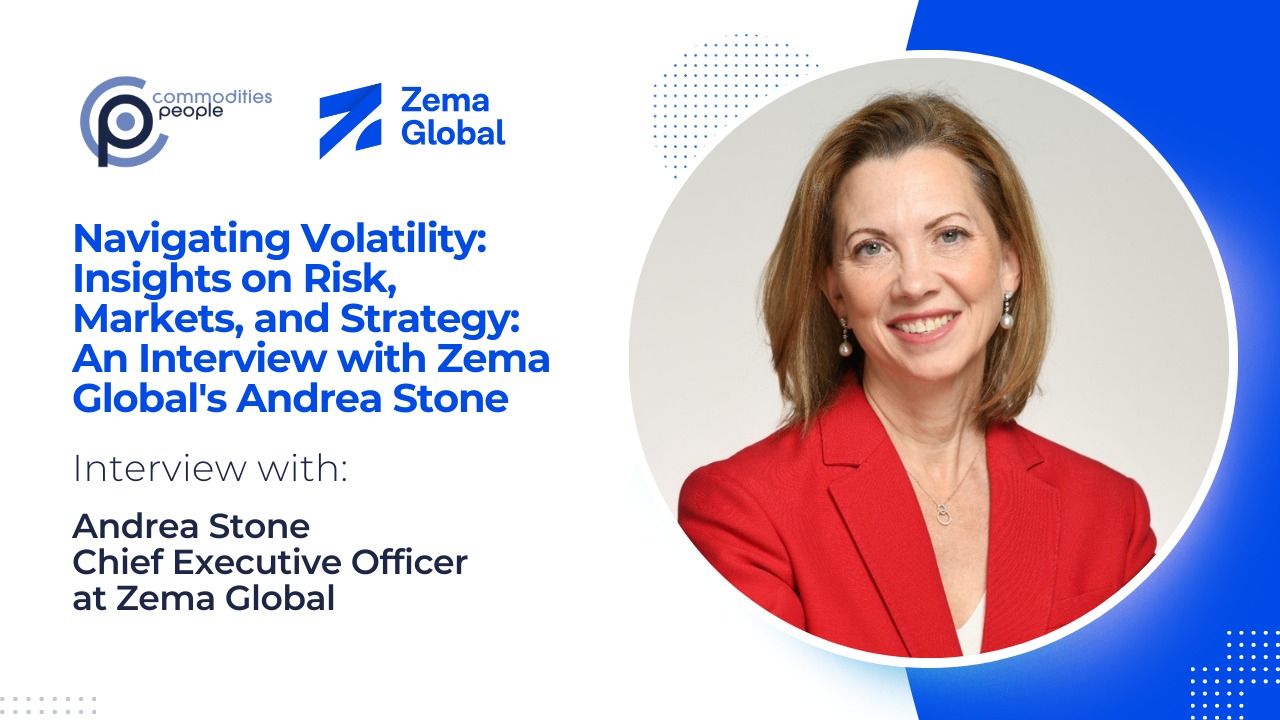
The company began in 1995 under founder Dr. Zak El-Ramly. In July 2024, a growth equity investment from FTV Capital arrived alongside a new chief executive, Andrea Remyn Stone, formerly head of LSEG’s data and analytics division. El-Ramly became chairman. The business also announced its change from ZE PowerGroup to ZEMA Global Data.
Then the scope expanded. Morningstar says it sold its Commodity and Energy Data business on September 30, 2024, for $52.4 million. In April 2025, Zema acquired cQuant.io with support from FTV. Together, those moves extended a data-management business toward a broader combination of market information and quantitative analytics. The strategic logic is easy to follow: serve more of the work between acquiring a price and deciding what a portfolio is worth.
The expansion also puts a practical test on Zema’s culture. Its stated values include Think Big, Make it Happen and Win as One, backed by commitments to employee training and professional development. For customers, the relevant evidence will be how effectively specialists across data operations, software and quantitative modeling work together. A wider product range creates more handoffs to manage.
05 / Buy the workflow, budget for the work
Zema sells enterprise software, SaaS and associated services to organizations whose data needs justify specialized infrastructure. Its reported customer base exceeds 240 worldwide. The market position is specific: industry data handling connected to curve and portfolio expertise. Building internally remains an alternative. The comparison should include the ongoing effort of maintaining interfaces, monitoring failures and supporting users.
There is recognition for that wider scope. Zema reported sixth place in the 2026 Chartis Energy50 ranking, up two positions from 2025, with category awards covering contracts, data and PPA analytics. Rankings provide a market signal; a buyer still needs to test the particular workflow being purchased.
A September 2026 expansion with Parameta Solutions illustrates that specialization. Customers gain access to end-of-day indicative OTC energy and commodity prices through Zema’s infrastructure. Those observations support valuation and risk work. Indicative prices require appropriate interpretation; they are not executable offers. Access to a feed and permission to use its contents also remain commercial questions.
For a prospective buyer, the sensible first exercise is to map one important workflow and price its dependencies: software, data rights, migration and continued support. Test whether the final application receives the intended number. A team with only a few simple feeds may have little reason to adopt extensive enterprise machinery. And even a well-managed pipeline cannot rescue a model built on unsuitable assumptions. Zema’s useful promise begins earlier: give the people making those assumptions information they can inspect, repeat and use.