A promotion can be a surprisingly expensive thing to withhold. In 1995, Zak El-Ramly was an executive vice-president at Powerex, the electricity-marketing subsidiary of BC Hydro. Someone else got the presidency. El-Ramly left and founded ZE PowerGroup. The rejected candidate had found another use for his experience: selling it to an industry learning to compete.
“I realized that my market value is higher than my corporate value, so I decided to leave,” he recalled. It is a wonderfully economical explanation. No thunderclap, no elaborate mythology of destiny. An engineer compared two valuations and acted on the difference. The business that followed became Zema Global Data, serving energy and commodities markets around the world.
Yet the company is only one part of the story. El-Ramly has also turned his observations into books of aphorisms, brought family members into business, and returned to his university to discuss the usefulness of having a direction. He has spent a working life moving between technical problems and human ones. The latter have proved quite resistant to a final calculation.
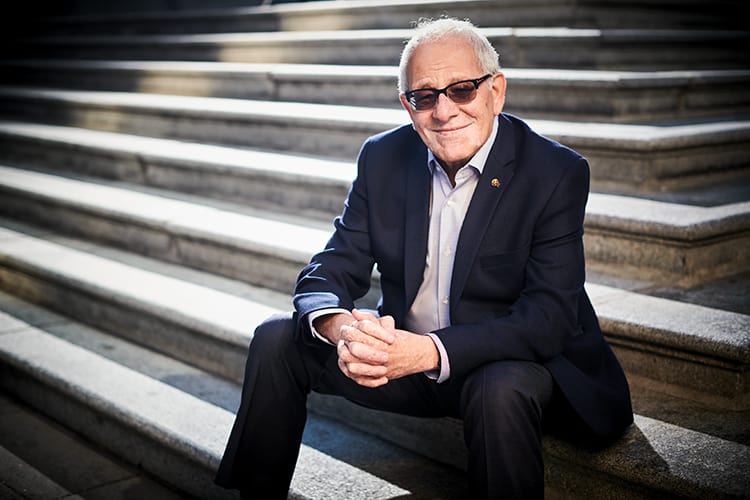
Ottawa, by way of Egypt and Kuwait
El-Ramly was born in Port Said, Egypt. His early career included teaching engineering at Ain Shams University in Cairo and working as an instrumentation engineer at a Kuwaiti oil refinery. In 1969, he arrived in Canada on a student visa and settled into graduate study in Ottawa. The journey already crossed several kinds of engineering before it crossed the Atlantic.
At Carleton University, he studied combustion and aeronautical engineering. He earned his master's degree in 1972 and doctorate in 1975. These are useful details in a career often described through its software business: the founder's original technical world involved energy, machinery and flight. Computerized market information came later, after years spent working with the systems behind it.
His immigration story eventually became part of Soft Landing, an animated project at the Canadian Museum of Immigration at Pier 21, curated by poet Ian Keteku. That is an apt change of format for someone who would later condense experience into maxims. A technical career can look like a sequence of appointments. An immigration story restores the distances between them.
- 1969Arrives in Canada for graduate study
- 1977Joins BC Hydro
- 1995Founds ZE PowerGroup
- 2024Becomes Zema's chairman
Before the software, the electricity
He joined BC Hydro in 1977, beginning in energy conservation. His work broadened into management, forecasting, rates and policy. Electricity has a way of forcing disciplines into the same room. Equipment, consumer behaviour, contracts and public policy all have a vote; the laws of physics retain a veto.
El-Ramly helped develop Power Smart, BC Hydro's conservation program. His responsibilities also extended to the rules governing electricity transactions and access to transmission. The progression matters. He moved from examining how energy was used to helping determine the conditions under which it could be exchanged.
At Powerex, which he joined in 1990, he served as vice-president of development and then executive vice-president of marketing. His remit included contract negotiations, sales and acquiring resources. He also worked on developing a short-term electricity market. These were practical preparations for his eventual venture, even though the venture did not yet exist.
He became an expert witness in regulatory proceedings, too. The work called for arguments that could withstand questions about tariffs, trading and the operation of electricity markets. A neat answer in a presentation has one life; an answer under cross-examination has rather more demanding accommodation. His public career includes both.
A consultancy discovers its next job
ZE PowerGroup began in 1995 as a consultancy helping organizations operate in increasingly competitive electricity markets. Utilities needed to understand trading, manage risk and translate new market arrangements into everyday operations. El-Ramly's experience gave him something specific to offer: familiarity with the institutions as well as the transactions.
The business moved into software as those customers' information needs grew. ZEMA became its data-management and analytics platform. Consulting and software make a revealing pair in this story. Advice helps a customer decide what to do; software can make the repeated work of doing it manageable. The company's development followed that practical connection.
By 2009, El-Ramly was speaking at Energy Risk USA about data management and energy-market risk. His topics included the effects of regulation, the needs of trading systems and the different information requirements inside energy companies. In 2010, his conference agenda went further into extreme market risk, probability and the problems of integrating systems.
Those subjects explain the business more clearly than a flourish about big data. Information has to arrive, be organized and reach the people and applications that use it. Risk calculations depend on that unglamorous sequence. The trading decision may receive the applause; getting the information into usable condition requires its own considerable craft.
Zema's later offerings combined data management, analytics and workflow automation for energy and commodities customers. Its international operations carried the business well beyond the utility environment where El-Ramly began. The customer problem remained recognizable: organizations needed reliable ways to work with complicated information before making consequential decisions.
Business runs in the family. So does publishing.
The initials ZE come from Zak El-Ramly's name. Other family names soon appeared in the enterprise. Aiman, Waleed, Manal and Nader held management roles in the group. The family connection also reached a different kind of product when Manal's Mattain Publishing released her father's Zakisms: Life, Simply Stated in 2015.
The book gathered his own observations alongside quotations that spoke to his views. He wanted to give lessons from experience a form that other people could use. This was an engineer's interest in transmission, applied to ideas. A lesson kept privately may guide one person. Put into words, it can travel without its author attending every meeting.
The dedication was to Salwa, his wife, for their fiftieth wedding anniversary. They had married in 1965. That places the book in a longer personal chronology than the company's twentieth anniversary, also celebrated in 2015. Business milestones have a talent for occupying the whole mantelpiece. Here, there was another anniversary beside them.
A second volume, Zakisms: Reflection on Business, followed in 2017. Its 92 pages are a modest physical space for a career's worth of observations. Brevity, of course, does not guarantee wisdom. It does at least require the writer to surrender some of the furniture before inviting the reader inside.
“I realized I had to stay ahead of the curve.”
Zak El-Ramly, at Carleton's 2015 Roadmaps lecture
Ambition with a flight plan
At Carleton's Roadmaps lecture in March 2015, El-Ramly talked about goals, direction and preparing for success. He traced his path through Egypt, Kuwait, university and the public sector to his own company. The subject suited an alumnus whose career had repeatedly changed course while retaining its engineering foundations.
His aphorisms return to the distinction between wanting something and intending to pursue it. Another compares a career to an airplane's controlled journey, favouring guidance and a landing over the spectacular speed of a rocket. The aeronautical engineer had found a second use for his subject. Even ambition, in this telling, benefits from competent navigation.
In 2017, he was still receptive to beginning again: “I would start a new business now in a second.” It is an arresting thought from someone already occupied with the company he had built. The appeal of starting appears to have survived the experience of operating.
His public reflections also make room for compromise and for recognizing other people's abilities. These are useful companions to ambition. A company can begin with a founder's judgment, but it eventually asks that judgment to coexist with many others. El-Ramly's writing gives that everyday negotiation a place beside the more conspicuous business decisions.
Making room for another chief executive
In July 2024, ZE PowerGroup became ZEMA Global Data Corporation and announced a growth investment from FTV Capital. Andrea Remyn Stone became chief executive. El-Ramly moved into the chairmanship, remaining involved with the business he had founded almost three decades earlier.
Stone brought experience leading the London Stock Exchange Group's data and analytics division. El-Ramly welcomed both her experience and the investor's ability to support further expansion. The arrangement gave a company built around his expertise access to another executive's knowledge and a wider network of relationships.
The board included Aiman and Nader alongside their father, with Stone and FTV representatives joining. There was continuity in that arrangement as well as change. A founder's business can acquire new leadership while keeping people who know its earlier decisions, its customers and the reasons certain habits developed.
The next chapter still needs engineers
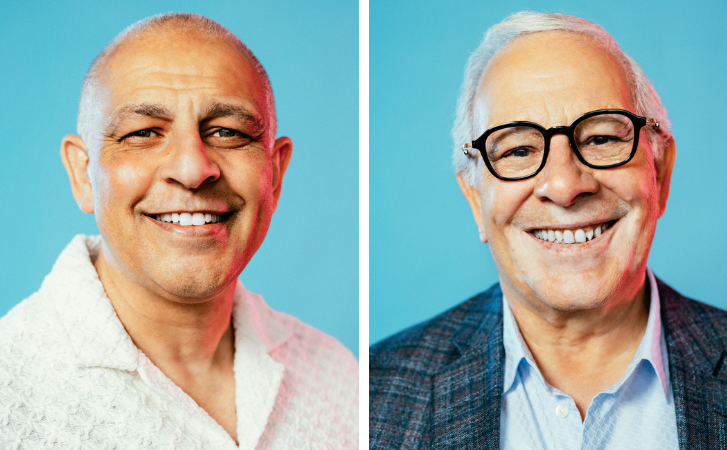
El-Ramly's interests also extend to ZE Power Engineering, founded in 2004 to serve utility infrastructure. Its work includes transmission, distribution, substations and telecommunications. In June 2026, he and Aiman were named EY Entrepreneur Of The Year Pacific finalists for that business. October's coverage again placed the pair among the finalists.
The engineering company has worked on distribution pole replacements, transmission structures and underground power infrastructure for the Surrey-Langley SkyTrain expansion. Alongside the data business, it keeps a physical dimension to the family enterprise. Electricity still needs structures, connections and careful engineering, however sophisticated the information surrounding it becomes.
There is a pleasing consistency here. El-Ramly has worked on using electricity more carefully, exchanging it between markets, organizing the data around it and engineering the infrastructure that carries it. He has also tried to put what he learned about people into words. The projects differ in scale and material. Each asks him to make experience useful beyond himself.