A bottle of wine can look like the simplest object in commerce: glass, cork, label, liquid. For a Brazilian importer, it is closer to a relay race. Someone has to identify the producer, negotiate the relationship, move the bottle across an ocean, handle a regulated category, preserve it, place it on the right shelf, teach a seller what makes it interesting and help a buyer choose it without turning dinner into an exam. Zahil Vinhos has spent four decades working on every handoff.
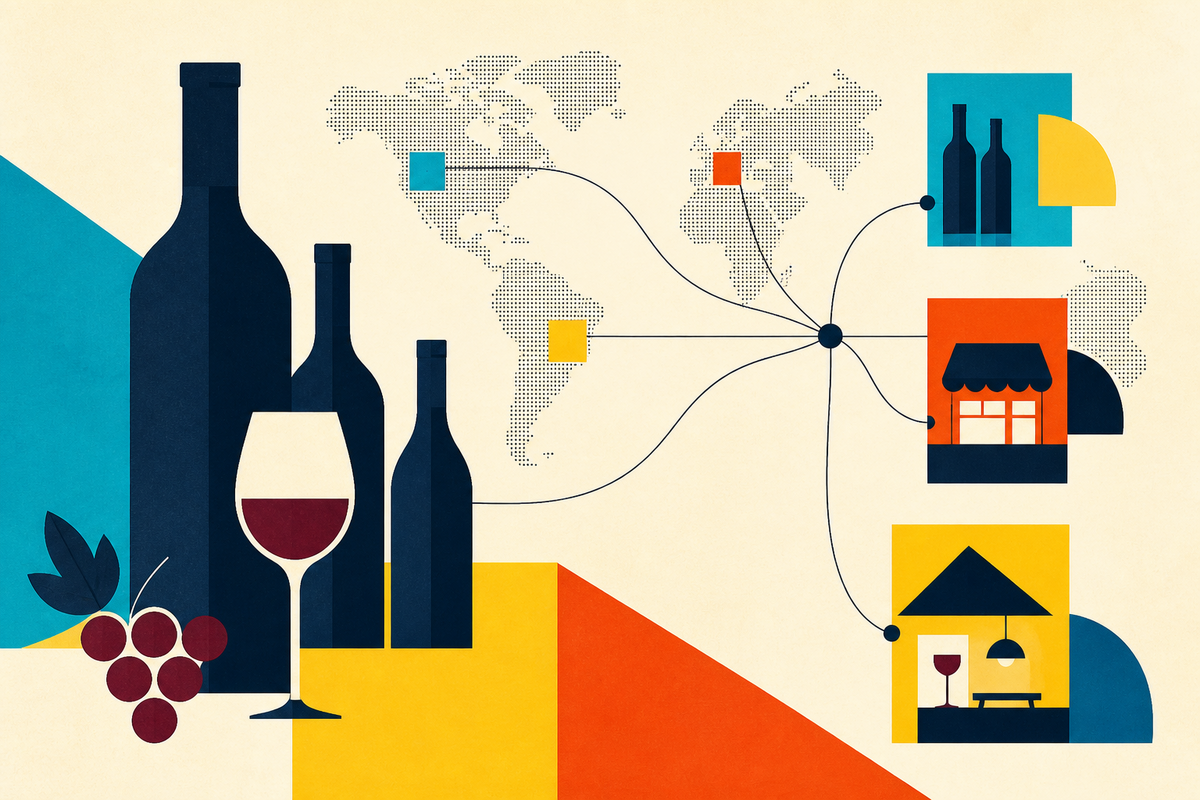
The São Paulo company sits between wineries and a fragmented Brazilian market. Its public portfolio now spans more than 400 labels from 70 producers in 14 countries. Those bottles reach more than 4,000 points of sale, along with Zahil's own stores, website and assisted-sales channels. On LinkedIn, the company says its wines appear on more than 1,000 restaurant lists. This is not the business of making wine. It is the business of making distant wine intelligible, available and commercially useful.
A narrow decision with a long tail
Zahil began in 1986, when Antoine Zahil, an immigrant from Lebanon, started an import business for food and beverages in Brazil. Thirteen years later, he and his brother Serge reorganized it around wine. The 1999 decision matters because specialization compounds. Every vintage adds knowledge; every producer conversation deepens the pattern recognition; every restaurant list becomes feedback about what survives the journey from tasting room to table.
By choosing one complicated category, Zahil could assemble capabilities that broad distributors often treat as extras. Its teams help restaurants compose wine lists, advise specialist shops on product mix, run tastings and activations, prepare merchandising, track orders and train the people facing customers. Wholesale accounts get a round-the-clock B2B ordering platform. Corporate buyers can commission gifts, memberships, paired dinners and themed workshops. Individuals can shop online, speak with a consultant or visit stores in Itaim Bibi and Campinas.
Wine is the starting point for something larger: the genuine meeting between people.Zahil, on its 40th anniversary
The company phrase is “wine treated with respect.” It sounds like a brand line, but it also describes an operating constraint. Wine is perishable in more ways than one. Temperature can damage it. Poor storytelling can flatten it. A wrong placement can leave it gathering dust. An overconfident recommendation can lose a customer. Respect, translated from copywriting into practice, means choosing carefully and protecting the choice through the chain.
What Zahil carries besides the case
The customer is also the translator
Wine has an information problem disguised as abundance. A shelf can ask a buyer to process grape, region, producer, vintage, farming method, price and occasion before the first sip. The person in the middle - a sommelier, waiter, shop clerk or corporate-gift buyer - becomes a translator. Zahil invests in that translator. Its sales-channel material says its specialists have trained more than 5,000 professionals, with programs led by staff holding Wine & Spirit Education Trust credentials.
That number reveals the economic logic. Zahil cannot place one of its own experts beside every bottle in 4,000 locations. It can give thousands of other people enough context to make an accurate, appealing recommendation. Education is therefore not a benevolent side project. It is distributed sales infrastructure - useful to the venue, reassuring to the drinker and valuable to a producer who needs more than a customs clearance stamp in a new market.
The range of channels also solves a producer problem. A boutique winery may make a distinctive bottle but lack a credible path into Brazil. Zahil can introduce that bottle to a sommelier, put it in a specialist store, explain it in an article, present it at a dinner and sell it directly. One relationship gains several routes to a consumer. On the other side, a restaurant or retailer can assemble a differentiated selection without negotiating separately across continents.
Curation that has to earn its keep
“Curated” has become a loose ecommerce adjective. Zahil's version is testable: the importer takes commercial responsibility for what it selects. Its roster stretches from established houses such as Portugal's Sogrape brands and Argentina's Rutini Wines to smaller properties from France, Italy, Spain, Lebanon, Australia, New Zealand, Chile, Uruguay and elsewhere. The catalog crosses everyday bottles, premium cuvées, sparkling wines, fortified wines and spirits. A bottle must fit both the portfolio and a route to market.
That breadth creates an apparent contradiction. How does a specialist remain selective with 400-plus labels? The answer is not minimalism; it is architecture. Price bands, grapes, countries, occasions and channels let the same collection serve different jobs. A weekday retail bottle and a rare restaurant label need not compete. They can occupy separate coordinates in the same system, supported by the same import operation and product knowledge.
Reading the graphic: the bars are an editorial diagram of linked capabilities, not market-share or performance data. Remove one layer and the bottle becomes harder to sell well.
Where the moat actually sits
Brazil has established wine importers, specialist merchants, clubs and marketplaces. Some compete with enormous selections, some with discounts, some with discovery. Zahil's differentiation is the density of its middle layer. Exclusive producer ties provide supply. Technical expertise gives the supply meaning. Trade services help an account move it. Direct retail supplies customer feedback. Events and content turn unfamiliar regions into approachable stories.
None of those pieces is unique alone. Together, they are difficult to reproduce quickly because they depend on accumulated trust. A producer must believe the importer will build the brand rather than merely clear inventory. A restaurant must believe a delivery will arrive and a training session will be useful. A drinker must believe the recommendation fits the occasion. Forty years does not guarantee those beliefs, but it gives Zahil many chances to reinforce them.
The 2026 anniversary made this cumulative advantage visible. Zahil assembled 40 labels that had helped shape its history, presenting them not as a greatest-hits shelf but as evidence of relationships sustained across decades. The company also joined Rutini Wines in supporting the 2026 season of São Paulo's state symphony orchestra, linking wine with another product whose value depends on attention, memory and shared experience.
The patience inside the brand
A private company rarely offers a clean window into its culture, but Zahil repeats a few ideas often enough to show the outline. Its anniversary account describes employees who remain and grow with the business, producers known by name and customers who return with each vintage. The sales operation puts trained consultants between the catalog and the order. Even the public educational material - explainers on grapes, regions, tasting and pairing - assumes that a better-informed customer is more valuable than a hurried conversion.
This patience has practical limits. Imported wine is exposed to currency moves, freight costs, taxes and changes in discretionary spending. Inventory also has a clock: some bottles improve with age, but cash tied up in the wrong mix does not. A portfolio of hundreds of labels creates choice while demanding sharp forecasting across channels. The work of curation continues after the buying trip, in deciding how much to import, where to place it and when to teach the market why it belongs.
Zahil's answer appears to be proximity at several scales. It stays close to producers through long relationships, close to trade customers through training and account service, and close to drinkers through stores, ecommerce, WhatsApp and events. Those channels do more than generate orders. They produce signals. A restaurant request, a consultant conversation or a fast-moving retail style can inform what the company brings in next. The romantic language of connection, in other words, also describes a feedback system.
The rush is merely a shortcut to the ordinary.Zahil's anniversary reflection
A merchant of reduced uncertainty
The practical benefit changes with the customer. A restaurant gets a coherent list and a staff better able to sell it. A shop gets a mix designed for its audience, backed by displays and activations. A corporate buyer gets a gift that carries more social meaning than another generic object. A home drinker gets help narrowing hundreds of possible bottles to one that belongs at tonight's table.
In each case, Zahil reduces uncertainty. Is the producer credible? Will the bottle arrive? Does it suit the menu? Can the team explain it? Is there another vintage or price point nearby? The company earns wholesale and retail margins for answering those questions with a portfolio, a logistics network and human judgment. The business model is old - merchant trade - but its current form is omnichannel, data-aware and educational.
The opportunity ahead is not to make wine less complex. Complexity is part of its pleasure. It is to decide where complexity should live. The importer can absorb the difficult work of selection and movement; the seller can receive useful language; the customer can keep the discovery. Zahil's position in the market is exactly there, between the vineyard's specificity and the buyer's desire for a good evening.