An uneventful bus journey rarely receives a standing ovation. The passengers arrive, the driver moves on, and the vehicle is ready for another trip. Nobody gathers around a spreadsheet to admire the collision that failed to occur. Yet this quiet outcome sits at the center of Yoav Oron’s business: finding a financial reason to make an ordinary day stay ordinary.
Oron is the CEO and co-founder of OpenEyes, which brings commercial fleet insurance together with technology designed to reduce accidents and manage claims. His route there ran through computer science, banking, public service and venture capital. In a career spent around the machinery of money, he eventually chose a problem with actual machinery: trucks and buses, driven by people, on roads that refuse to behave like a forecast.
The business has a pleasingly inconvenient premise. A higher insurance bill may help account for an expensive accident. It cannot reach back into the cab and change the moments that preceded it. Oron’s work asks whether an insurance business can get involved earlier, when there is still something useful to do.
A financier discovers the rearview mirror
Before OpenEyes, Oron worked at Investec, served as senior adviser to the director general of Israel’s Ministry of Finance, and led the structured finance and international trade division at Bank Leumi. The sequence places him inside institutions that arrange capital, assess obligations and make decisions under uncertainty. Fleet insurance would give those familiar questions a different setting.
His education crosses a similar boundary. He earned a bachelor’s degree in computer science at IDC, now Reichman University, and an MBA at the University of Chicago. A programming problem demands that instructions produce a result. A financial problem demands that the result make economic sense. OpenEyes needs both conditions to hold at once.
That combination is a useful way to read his career, without turning every previous job into a prophecy. A computer science degree does not automatically lead to cameras in commercial vehicles. A banking career supplies no secret shortcut through traffic. But the distance between software and a balance sheet becomes smaller when someone has had to take both seriously.
Oron’s diagnosis of commercial auto insurance was that expensive accidents encouraged higher premiums while the underlying risks remained. In that cycle, a fleet could face another difficult renewal without getting much help changing the conditions behind its claims. The price was responding. The road remained available for a repeat performance.
For a founder with his background, the interesting question was where to intervene. Risk could be assessed when a policy was priced, revisited when it renewed, or investigated after a claim. OpenEyes proposed adding another opportunity: the working life of the vehicle itself.
The idea begins between disciplines
Oron and Dan Charash met as venture partners at Pitango. The pairing brought a finance background into contact with an experienced technology founder. Charash had co-founded semiconductor company Provigent and later worked at Broadcom. Together, they developed the idea behind OpenEyes. The venture capital office became a place to begin a company of their own.
Dr. Omry Sendik completed the founding trio as CTO. His earlier work included leading Samsung’s Israeli algorithms group, and his doctoral research at Tel Aviv University focused on image synthesis using neural networks. Oron became CEO; Charash became chairman. The division of roles reflected the range of work the business would require.
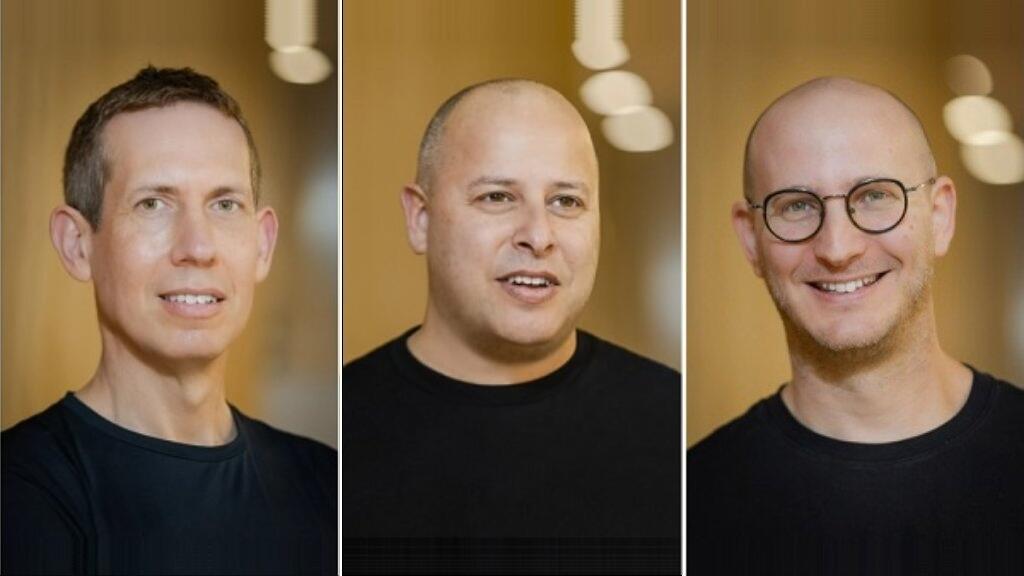
It is tempting to write the lone-founder version of a company’s beginnings. Here, the collaboration is the more revealing detail. Understanding financial risk, building computer vision and organizing an insurance operation require different kinds of knowledge. Putting those abilities in the same company is part of the proposition.
In February 2023, Oron described OpenEyes as a technology business whose product was insurance. The description leaves plenty of work for everyone involved. Technology has to be useful in a moving vehicle. Insurance has to function when a customer needs it. A clever camera cannot negotiate away either obligation.
“We are actually a technology company that sells insurance.”
Yoav Oron · February 2023
Give the information somewhere to go
OpenEyes describes an approach that joins risk prevention, personalized coaching and claims management. The point is to connect information from the fleet with decisions people can make. A manager needs to know where attention belongs; a driver needs an intervention that helps; the insurance operation needs a clearer account of what it is covering.
There is an ordinary management problem underneath the technology. Collecting information is easier to celebrate than using it. A screen can fill with observations while the working day proceeds as before. For Oron’s model to make sense, the observations have to travel into training, underwriting or the handling of a claim.
and coachingInsurance
underwritingClaims
management
A diagram of the company’s approach, rather than a promise of any particular outcome.
The appeal is that one operational improvement can matter to several participants. A fleet wants its vehicles available for work. An insurer wants a sound understanding of risk. A driver wants a manageable day behind the wheel. Those interests do not always line up neatly, but accident prevention gives them a practical meeting point.
That also makes the product harder to judge from a polished demonstration. The relevant setting is a working fleet, with schedules, repeated journeys and people who have other things to do. The business must earn its place there. The spreadsheet eventually has to answer to the depot.
What $23 million was meant to buy
OpenEyes emerged from stealth in February 2023 with an $18 million Series A led by Insight Partners and Pitango First, with MoreVC participating. The announcement brought cumulative funding to $23 million. The stated plans included developing the technology and hiring to support expansion in the United States.
Funding makes a convenient chapter break in a founder’s story. It comes with a date, an amount and a photograph. Its practical value is less photogenic: more people to build and operate the service, more capacity to support customers, and time to turn a proposition into repeatable work. Oron’s company still had to deliver on the roads.
Cumulative funding at the public launch. Company financing, separate from personal wealth.
At that launch, OpenEyes reported reductions of more than 25.5 percent in accident frequency and more than 30 percent in claim severity, describing the results as independently validated. The two figures measure different things: how often accidents occurred and how costly claims became. They were reported results from that period, rather than a forecast for every fleet.
For Oron, the pairing matters. Fewer incidents and less expensive claims address separate parts of the insurance equation. Neither is adequately captured by saying that a system notices things. The economic argument rests on what changes after someone notices.
In May 2023, OpenEyes added Gary Flaherty as chief insurance officer. Flaherty had been senior vice president of commercial auto at Nationwide E&S, with earlier executive roles at Progressive and Canal Insurance. His brief covered the strategy and development of the insurance platform. The appointment gave the technology proposition an experienced insurance counterpart.
It was a revealing leadership decision. Oron’s shorthand about selling insurance could sound breezy. Recruiting someone with that underwriting, risk and claims background acknowledged the weight of the noun at the end of his sentence.
The next chapter had 1,900 buses
In April 2024, OpenEyes announced an expanded agreement with Metropoline, the public transportation operator whose fleet was described as comprising 1,900 buses. The companies had already been working together for two years. The agreement would deepen the integration of OpenEyes technology across that fleet, with accident and claims risk at the center of the work.
This was a different kind of milestone from a funding round. A bus operator has departures to make and journeys to complete. Its relationship with a supplier extends past the launch announcement into the daily work of managing vehicles and claims. For a CEO proposing to connect data with insurance results, an existing customer expanding the relationship offers a concrete next chapter.
Oron’s explanation of the agreement emphasized using data to improve insurance outcomes and supporting fleets alongside insurance companies. That is consistent with the career that preceded OpenEyes: the system matters, and so do the institutions expected to act inside it. The technology is only one participant in the arrangement.
The 1,900-bus figure describes Metropoline’s fleet in the announcement. It gives the agreement a useful sense of scale without pretending that fleet size alone proves effectiveness. The more interesting detail is the two-year relationship behind the expansion: time in which the product and the operator had already encountered each other’s working routines.
An ambition with a quiet finish
Oron is based in New York, leading a business with connections across the United States and Israel. His company biography also describes him as a husband and father of three. Those details place a person beside the institutional itinerary: the banking titles, the government post, the founders and the financing.
His stated ambition at the 2023 launch was to bring the company’s approach to more customers in North America. The ambition has a measurable commercial side, but its everyday expression is modest. A vehicle remains available. A manager has a useful conversation with a driver. A journey ends without becoming a claim.
There is a certain discipline in building toward that kind of outcome. The impressive event is the one that leaves little to report. For someone who moved from arranging finance to leading a technology and insurance company, it is a fittingly practical target. The day goes according to plan. Nobody applauds. Everyone has somewhere else to be.