Founder Profile / Health Benefits
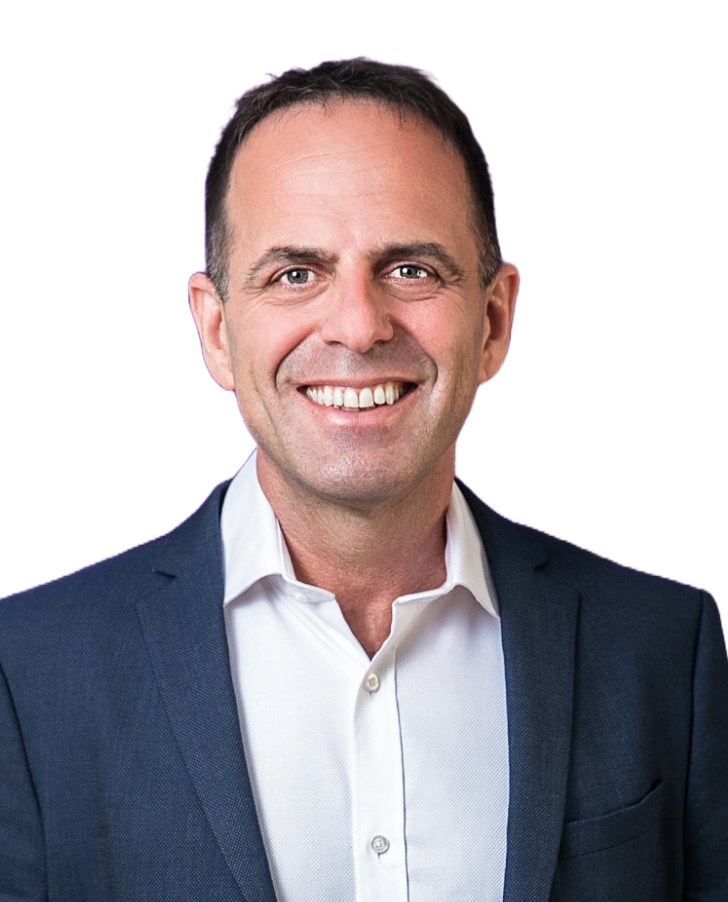
Guy Ezekiel
The healthcare operator turned venture investor who left the fund to rebuild how America pays for health benefits.
The healthcare operator turned venture investor who left the fund to rebuild how America pays for health benefits.
Guy Ezekiel runs Zorro, a New York and Tel Aviv company that is trying to make one of the driest corners of American work life - health benefits - feel personal. His pitch is simple to state and hard to pull off: let employers hand each employee a set amount of money and let people choose their own individual health plan, with software doing the heavy lifting. The mechanism is called an Individual Coverage Health Reimbursement Arrangement, or ICHRA, and Ezekiel is convinced it is on the edge of going mainstream.
In June 2025, Zorro closed a $20 million Series A led by Entrée Capital, with existing backers 10D and Pitango returning. That brought total funding to $31.5 million. The number that Ezekiel likes to talk about, though, is not the raise. It is that Zorro-initiated enrollments grew more than 800% year-over-year for 2025, and that more than 75% of employees who enroll through the platform pick a plan based on its recommendations without ever talking to a human.
He frames the whole thing as a repeat of a shift that already happened once in American benefits. Pensions gave way to the 401(k). Employees took control of their retirement, and an entire industry grew up around helping them do it well. Ezekiel argues health benefits are heading the same direction, from rigid group plans toward individual coverage that each worker owns.
Zorro sells to three audiences at once: brokers who need quoting and administration tools, employers who want predictable budgets and compliance handled, and employees who need help choosing among 50 to 100-plus plans. The August 2025 product release leaned into the broker side, adding advanced plan design and real-time ICHRA quoting. It is a deliberately unglamorous product wrapped around a genuinely contrarian bet.
Before Zorro, Ezekiel spent more than 25 years building healthcare companies. He worked across medical devices, pharmaceuticals, and digital health, with a resume connected to Medtronic, Bayer, Brainsway, Marval Pharma, and Ventor. Early in that run he helped build a heart valve company that was later acquired by Medtronic - the kind of high-stakes, life-and-death engineering that defines a certain era of medtech.
Then he switched sides of the table. Ezekiel became a managing partner at Pitango, Israel's largest venture capital fund, where he backed disruptive healthcare companies. It was there that he met Maya Perl, a fellow HealthTech investor who would become his Zorro co-founder. Both, by his telling, kept a quiet secret: they enjoyed investing, but they wanted to be back in the arena building something themselves.
That realization reframed his ambition. He had spent decades on the frontier of medical science - the heart valves, the devices, the procedures. But most people, he came to believe, do not lie awake over cutting-edge surgery. They worry about affording a doctor's visit or a prescription. Zorro is his attempt to work on that more ordinary, more universal problem, at scale.
He is candid that he did not fully grasp how hard the benefits industry would be. He calls it "strategic naivety," and treats it as a feature rather than a flaw - the quality that lets a founder start a thing that a fully informed person might never begin. He made the same admission about the heart valve company years earlier.
25+ years in healthcare leadership across devices, pharma, and digital health.
Helps build a heart valve company later acquired by Medtronic.
Managing Partner at Pitango; meets co-founder Maya Perl.
Co-founds Zorro to build a personalized ICHRA platform.
Zorro launches from stealth with an $11.5M seed round.
$20M Series A led by Entrée Capital; total funding hits $31.5M.
Set a fixed allowance, hand off compliance and administration, and get engagement insights instead of open-ended premium risk.
AI-powered guidance and chatbots help each person choose from 50 to 100-plus plans matched to their own needs and budget.
Quoting, plan modeling, and administration designed around how brokers actually work, with real-time ICHRA quoting added in 2025.
Rush Memorial Hospital, a rural Indiana employer, saved roughly $2.25M a year moving to ICHRA through Zorro while keeping equitable allowances.
"If something is working well, I see no need to change it."
"You're living this and know the challenges, so I am not going to teach you something you don't already know."
"The biggest concern is not a heart valve. It's the ability to afford and access basic healthcare."