A dinosaur was causing trouble. Yaron Ben Shaul's nephew wanted to find one on the internet, but he had misspelled the word. The information existed. The child wanted it. Between the two stood a search box expecting a skill its customer had yet to acquire. As an explanation for a business, it has advantages over a diagram with six arrows: you can immediately see the problem.
Ben Shaul and his partners, Victor and Joel Vidal, created Alfy, a web portal for young children. Pictures and sounds helped visitors move around without depending on written instructions. This was an internet entrance designed for people who could not yet confidently read the signs. The dinosaur did not need a better marketing campaign. The child needed a way to reach it.
Years later, Ben Shaul would help build Hometalk, where adults shared instructions for improving their homes. The distance between a children's portal and a home-improvement community is considerable. Yet the early anecdote gives his later work an interesting frame: a person wants to do something, a conventional route proves awkward, and a product makes the first step easier.
A dinosaur at the door
By September 2000, Ben Shaul was Alfy's founder and CEO, and the company had developed Clever Island, an educational subscription website for children aged three to eight. Its games addressed reading, mathematics and computer skills. Sounds and animation helped make the activities usable for young learners. Teachers contributed to the design, while parents and children evaluated it.
The product also allowed the difficulty of activities to change as a child learned. That is a modest design detail with a large implication. An entrance can be simple without assuming the visitor will remain a beginner forever. Someone who gets through the first exercise needs a reason, and an opportunity, to try the next one.
Alfy's annual family subscription was advertised at $39.95 for up to three children. The offer made the business proposition unusually legible: parents paid for a place where time online could include learning. At the turn of the millennium, Ben Shaul was already working on the question of what a person should be able to accomplish through a screen.
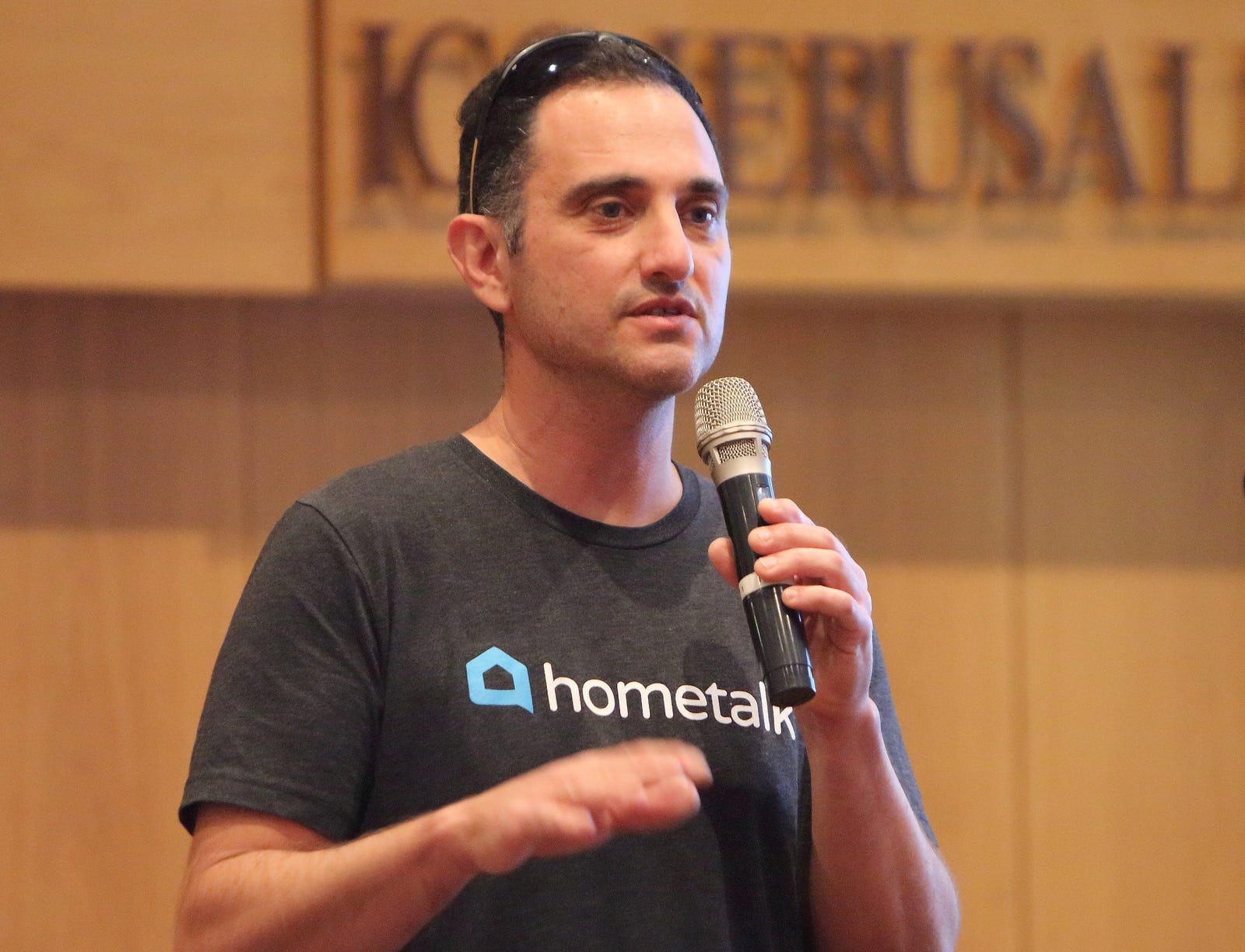
The homeowners changed the brief
His route into home improvement came through Networx, the business connecting homeowners with contractors. Hometalk began in 2011, with Ben Shaul, Miriam Illions and Celeste Kumelos as co-founders. The original opportunity sat close to the referral business: give homeowners and professionals a place to exchange information, show projects and get to know one another's work.
The anticipated contributors were contractors. The people who made the idea interesting were homeowners, sharing their own projects. That difference changed what Hometalk was for. A visitor could arrive to discover how somebody else had made an improvement, then attempt it personally. The business had opened a conversation about hiring help and found an audience eager to exchange know-how.
Its June 2012 redesign still explicitly welcomed homeowners, renters and home-improvement professionals. Members could post photographs and video, ask for advice and look for local contractors. More than 100,000 people were already part of the community. The early product held several possibilities at once; the eventual emphasis emerged through use.
There is something pleasantly domestic about that kind of business development. You put a room to one purpose and discover that everyone gathers somewhere else. Hometalk's co-founders followed the gathering. The company's own account describes the shift toward what people could do themselves, giving the amateur a much larger part in the proceedings.
to do the jobHomeowners meet contractors
to do it yourselfMembers share projects and advice
A hundred thousand ways to begin
By February 2016, Hometalk had announced its hundred-thousandth user-generated tutorial. The same announcement described 1.9 million registered members and six million monthly visitors. Those figures belong to that moment in the company's history. They capture a growing library whose authors were also available for conversation.
A tutorial could continue to develop after publication, with questions and replies around the project. Hometalk said members typically received answers within minutes. Illions emphasized the generosity of contributors who supplied instructions and helped others finish. The finished object was only part of the contribution. Explaining it, and returning to answer a question, made the work useful to somebody else.
Consider what that format offers a beginner. A photograph can provide a destination, but the steps offer a route. A question beneath those steps creates room for the reader whose circumstances differ. The sequence turns admiration into something a person might attempt. The comment box acquires a more demanding job than collecting compliments.
For Ben Shaul, practical capability was part of the appeal. He used his own reliance on Waze as a humorous illustration of a skill becoming rusty when software takes over. His argument for DIY concerned the confidence and know-how people could gain by making things. An internet business was encouraging its audience to leave the screen and try something with their hands.
User-generated tutorials.
One person's finished project becomes another person's starting point.
What the spreadsheet left out
Ben Shaul has also described a change closer to home. Becoming a father altered how he understood leadership. He recalled an earlier emphasis on numbers and performance when assessing a project or an employee. Parenthood brought a greater sensitivity to the people involved and changed his relationships across the business.
“Fatherhood has helped me become a more compassionate leader.”
Yaron Ben Shaul, 2016
His account extended beyond being nicer in a meeting. He connected that personal change to the attitude of an entire organization: how employees and customers were treated, and how invested people felt in the work. He still discussed long-term business success. The difference lay in the attention he gave to the relationships supporting it.
It is a revealing admission from a founder. Numbers are convenient because they appear to settle a discussion. People require the discussion to continue. Ben Shaul's reflection acknowledges that his own way of evaluating work had needed more room for the individual doing it. The fatherhood lesson gives the business biography a human hinge.
Hillel Fuld, who worked with Ben Shaul and Illions, offered another view in March 2019. He described Ben Shaul as humble and strongly oriented toward execution. That is a colleague's assessment, with the affection of an ongoing working relationship. It suggests a founder whose public manner attracted less attention than the work Fuld saw him deliver.
Money for the next experiment
Hometalk's early development relied on bootstrapping. In April 2019, the company announced a $15 million growth round led by NFX, with Altair Capital and Adam Neumann participating. Ben Shaul was its CEO. The funding introduced a different stage in a business that had already spent years developing its community.
He described using the new money to test services and develop experiments that proved useful. Possibilities included video advertising and a marketplace for paid expertise. The distinction matters: these were plans being explored in 2019. The announcement gave Hometalk resources to investigate what its next commercial products might become.
For a community built around freely shared help, that is a substantial design question. Each paid offer must find its place beside the contributions that made people visit. The audience has arrived with a project in mind. A business can propose another service, but it still needs to be useful to the person standing halfway through the job.
Growth funding$15m
Acquisition cash consideration$43.34m
On November 14, 2021, VerticalScope USA acquired Hometalk and its Israeli development subsidiary. The buyer's financial statements recorded cash consideration of $43,340,087. Hometalk's business then included Foodtalk and Upstyle, extending its community publishing approach into food and fashion. The transaction placed those properties within a larger company operating enthusiast communities.
The subsequent leadership story belongs to that wider organization. In June 2025, VerticalScope named Ezra Menaged, previously Hometalk's CEO, its chief operating officer. Ben Shaul's place in Hometalk's history is as a co-founder and former CEO. The company he helped start had entered a corporate life beyond its original independent years.
The next person through the door
Put the episodes beside each other and an interesting pattern appears. Alfy addressed an obstacle faced by a child using the web. Hometalk developed around adults willing to share practical knowledge. His account of fatherhood describes a leader learning to see more of the people inside the organization. These are different experiences, connected here by the attention each gives to another person's starting point.
A founder cannot prescribe exactly what an audience will make of an invitation. Hometalk's homeowners demonstrated that rather cheerfully. They arrived with projects, instructions and questions, and helped give the business its purpose. Somewhere between the original plan and the next helpful reply, Ben Shaul and his co-founders found a community worth building around.