At Superprime, a commercial production company, the pictures moved faster than the payroll. In its published account of switching providers, the team describes scanning documents, submitting a batch and waiting four or five days for a response. Costs became visible too late. Accounting data needed another round of typing. A company hired to produce moving images had acquired a peculiar sideline: moving information very slowly.
THE STORY IN FOUR TAKES
- The job: pay entertainment crews and connect payroll to production spending and accounting.
- The small invention: a worker profile that can follow its owner between participating productions.
- The buyer: production companies; cast and crew use the platform free.
- The next ambition: connect the shooting schedule to the financial back office through Cinapse.
Wrapbook sells a way out of this administrative limbo. It combines onboarding, payroll, spend and production accounting in a cloud platform. The interesting part is where it begins. A film ends. A commercial wraps. A crew member takes another job. The person remains the same, but the employer changes. Why should so much of the paperwork begin again?
The worker remembers. The paperwork forgets.
That question fits co-founder Cameron Woodward’s background. He had been an executive producer at his own production company and had experienced the paperwork himself. Founded in 2018, Wrapbook brought him together with Ali Javid, Hesham El-Nahhas and Naysawn Naji. Javid remains its CEO. The founding problem was specific enough to sound small: make the financial chores around a production easier to complete.

An ordinary office is built around continuity. Film work is built around projects. Each new production needs to hire people, establish payment arrangements and collect the right documents. Workers may cycle through many employers. Wrapbook’s early investor Andreessen Horowitz singled out portable employment profiles as a reason to back the company: information could travel with cast and crew, rather than remain stranded at the previous employer.
The useful distinction is between the person and the assignment. A reusable profile holds worker information. A new project still has its own invitation, terms and required startwork. Wrapbook’s worker guide walks users through joining, completing tax and identity documentation, selecting payment arrangements and submitting timecards. Portability saves repetition; it does not turn a new job into an old one.
ONE PERSON / MANY PRODUCTIONS
What broke was the handoff
Superprime’s account describes more than a dislike of paper. The previous arrangement required scanning, waiting and re-keying information, with unreliable connections to corporate accounting. Repeated service disappointments pushed the team to change. The lesson is fairly merciless: a payroll system can produce a paycheck and still leave everyone around it doing too much work.
SMUGGLER encountered another version of the problem. It hired familiar crew repeatedly, then repeated their onboarding. In its customer account, early hesitation gave way to adoption after Wrapbook helped train production teams and assisted first-time users on set. That detail deserves attention. A cleaner interface was useful; having somebody there when a crew member met it for the first time helped make the change practical.
“We switched to Wrapbook to future-proof our company’s payroll process.”
Andrew Colón / COO, SMUGGLER
SMUGGLER also reports saving at least a day on each payroll wrap process. Treat that as a customer’s experience, not a promised result for every shoot. But the mechanism is intelligible: if data has already been collected in the right place, wrapping can involve checking it rather than typing it again. The administrative finale becomes shorter because less has been postponed until the end.
A paycheck has a supporting cast
Wrapbook occupies the overlap between software and a financial service. As an employer-of-record payroll provider, it takes on specified responsibilities for withholding, payroll taxes, unemployment and workers’ compensation. Producers and accountants get tools for managing the project; workers and agents get tools for completing startwork, submitting timecards and following payment status. Its named customers range from commercial houses to film and television producers.
The product has widened accordingly. Payroll sits beside a general ledger, purchase orders, budget-versus-actual tracking and reports. Bessemer’s September 2024 investment account places the production-accounting launch in the preceding year. This was a consequential expansion: once payroll information enters the accounting workflow directly, a production can ask about spending while the work is still happening.
Accounts payable extends the same logic to vendors. Wrapbook advertises AI invoice reading and purchase-order matching, configurable approvals and several payment routes. Its September 2026 release added Direct ACH vendor payments with automatic ledger updates, invoice merging and agent-led talent onboarding. These are unromantic improvements. Their value lies in the number of times a person no longer has to carry the same information between screens.
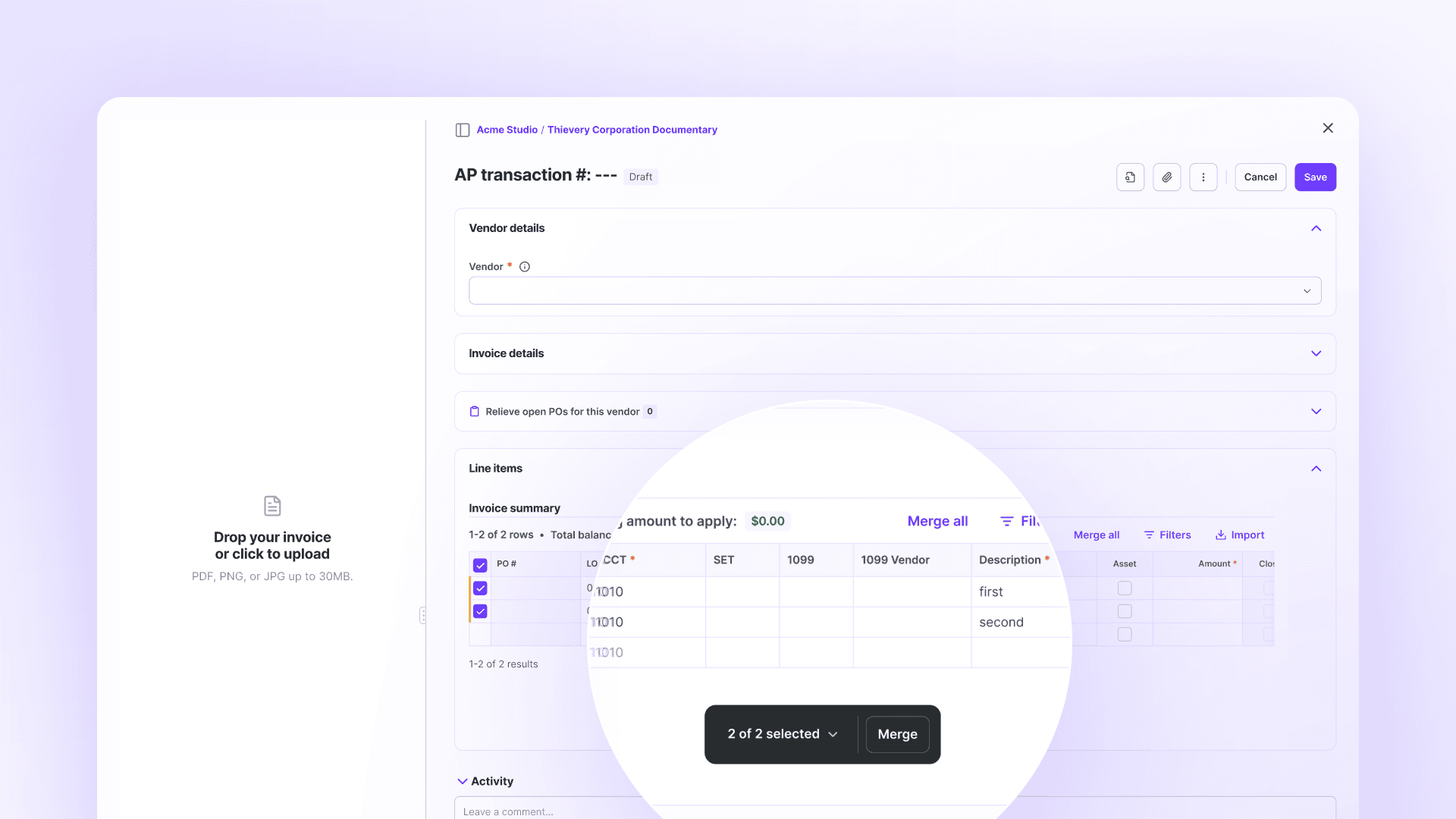
Corporate accounting still matters. Wrapbook lists connections to Sage Intacct, Acumatica, NetSuite and QuickBooks Online, alongside budget imports and payment integrations. Its implementation pitch includes help mapping data correctly. That is a revealing promise: connecting two systems means agreeing on what their information means, not merely giving them permission to talk.
The invoice is larger than the fee
Production companies pay; workers do not. Wrapbook’s public estimator describes processing fees without monthly, annual or technology fees. Project-specific quotes matter because payroll expenses also include employer taxes, workers’ compensation and, where applicable, union fringes. A platform’s charge is one line in a larger bill. Comparing providers by that line alone can produce an impressively tidy mistake.
READ THE WHOLE PAYROLL BILL
Illustrative categories, not a quote. Wrapbook’s Invoice Fee Summary separates these costs for a payroll run.
There are practical boundaries. The public estimator is a rough tool for non-union payroll, not a final production budget. Its international-production guidance requires a U.S.-based company and workers eligible for U.S. payment; international coverage is therefore conditional. The iOS app lets workers handle tasks on the move, while Android users access the mobile website. A production should check its actual agreements, locations and accounting needs before switching.
Competition makes those checks worthwhile. Entertainment Partners and Cast & Crew are established alternatives; GreenSlate also serves production finance. Wrapbook’s argument is the combination of portable worker profiles, connected financial workflows and specialist support. General payroll software may suit a simpler operation. A production with changing crews and supported union agreements has different questions to ask.
First the money. Then the schedule.
The funding story has its own edit. Wrapbook announced a $100 million Series B in November 2021 at a $1 billion valuation. In September 2024, it announced $20 million from Bessemer at $750 million. That is a lower financing valuation, even as the product’s scope expanded. Those two observations can coexist. Investor pricing does not measure the number of useful chores a customer can now complete.
TWO FINANCING SNAPSHOTS
Announced round valuations. The second is 25% lower; neither is a live share price.
In December 2025, Wrapbook bought Cinapse, a collaborative production-scheduling platform. The attraction is easy to see: schedules influence crew needs, days worked and spending before an invoice exists. The acquisition aims to connect planning with financial execution. Wrapbook’s September 2026 FAQ still calls Cinapse a separate product, so the ambition should be distinguished from a fully unified customer experience.
The company is courting bigger productions in other ways. In March 2026, it announced up to four grants of $200,000 each. Eligibility requires U.S. filming, a budget of at least $15 million and a commitment to Wrapbook for all project payroll. The offer has both a filmmaking purpose and a commercial condition. Producers can assess the two together.
Keep the person. Change the project.
Wrapbook’s expertise is partly embodied in people: veteran paymasters and labor specialists alongside the software. Its careers page describes remote hiring across the U.S. and Canada, with customer empathy, ownership and candid feedback among its values. The product requires both technical coordination and knowledge of the industry it serves. Software can carry a rule; specialists help establish which situation the rule belongs to.
The idea other builders can borrow is quite concrete. Find the information a person keeps submitting because institutions keep forgetting them. Give that person a durable profile. Connect the recurring transaction to the records needed downstream. Then help the first reluctant users through the change. This approach needs repeat participants, compatible workflows and careful handling of sensitive data. Without those conditions, portability offers less.
For a producer, Wrapbook offers a way to get crew aboard, pay them and see costs with fewer handoffs. For the crew member, its most appealing feature may be less grand: the next job should require less repetition. Film production has enough moving parts. There is little artistic merit in moving the same paperwork twice.
Go behind the paperwork
Try the tools, watch the conversations, or follow the next release.