Before Winston Utomo’s media company had an investment round, it had a flight schedule. Every two weeks, he would leave Singapore for Surabaya, carrying money from his Google salary to help pay the people working on his website. The founder was also, in a fairly literal sense, the cash delivery service.
He put the share at about 40 percent of his salary. The arrangement lasted a year. It is a useful detail to keep in mind when looking at IDN today, with its news outlets, creators, performers and festivals. An enterprise that now sells many kinds of attention began with someone deciding how much of a monthly payslip he could spare.
Utomo had built the first version of Indonesian Times overnight in 2014. After work the next day, he checked the analytics and found hundreds of visitors. A little website had acquired an audience before it had acquired the machinery of a company. There was something here worth returning to.
“I just like building things.”
Winston Utomo, on the early website
A country bigger than its capital
Winston was born on November 23, 1990, in Surabaya, and grew up there with his younger brother William. He attended SMA Petra 1 before leaving for the United States. His undergraduate studies took him to the Marshall School of Business at the University of Southern California. His subsequent working life and education would move him between American cities before he returned to Asia.
He worked at St. John Capital in San Francisco and earned a master’s degree at Columbia University in New York. His subject there, negotiation and conflict resolution, makes an interesting entry on the résumé of a future media founder. A company built around different people finding a place in a national conversation would give him plenty of material on which to practise.
At Google in Singapore, he encountered the technology startup world. The problem that interested him was back home: he felt Indonesian media paid too little attention to young audiences and too much attention to Jakarta. For someone raised in Surabaya, the distance between the capital’s conversation and other people’s lives was more than an abstract market segment.
The proposed audience was Millennials and, increasingly, Gen Z. The aspiration was access to relevant information across Indonesia. That combination gave the project both a demographic and a geography. A young reader’s life could matter even if it happened well outside the familiar centres of power.
The company dates its beginning to June 8, 2014. Its first product, Indonesian Times, would become IDN Times. Winston wrote the early articles himself. There were no inherited newsroom credentials to smooth the way. He later described learning through books, conversations with experienced people and YouTube. The curriculum was available; the examination arrived every time he pressed publish.
An audience with a byline
Publishing for people outside the capital raises a practical question. Who is going to write about their lives? A staff based in a few offices can only see so much. IDN’s answer included opening the platform to contributors, letting readers become writers and giving them a financial reason to keep contributing.
By 2022, Winston was explaining a system of curated user contributions. Material passed through technology and editors before publication. Contributors could receive points exchangeable for money. Their names and badges also gave them recognition on the platform. The model tried to make participation repeatable, rather than depend entirely on someone’s spare enthusiasm.
The editorial gate matters. Inviting people to publish brings questions of accuracy and quality along with the welcome new perspectives. The company’s approach paired the invitation with curation. Its purpose was to create more routes into publication while retaining a process for deciding what should appear.
For Winston, this connected the business to his original concern about whose experiences reached a national audience. A contributor in a smaller city could offer a perspective a central newsroom might miss. The reader could encounter a place through someone who lived there. The relationship also became reciprocal: the platform offered reach, while contributors supplied knowledge and stories.
His arguments about formats were similarly practical. At the 2022 Fortune Indonesia Summit, he described demand for content as persistent, even as the means of consuming it changed. Newspapers, television, internet publishing and video could all meet familiar human interests. The operator’s job was to adapt quickly enough to follow those interests into their next form.
That is a less comfortable position than simply declaring oneself a newspaper person or a video person. It requires a founder to remain interested in the audience after the audience changes its habits. Yesterday’s successful product becomes tomorrow’s thing that needs attention, investment or replacement. Affection for the original website can only carry a business so far.
Two brothers, separate job titles
William joined the venture after having considered a career in investment banking. The brothers eventually settled into the roles by which they are now known: Winston as CEO and William as COO. Their shared upbringing supplied a history that a new business partnership ordinarily has to build from scratch.
They have spoken about trust as a working advantage. They know each other’s strengths and weaknesses, and Winston has described being able to speak honestly. William has also explained the need for boundaries: work requires them to act as colleagues, while their relationship as brothers needs time of its own outside the company.
There is a certain economy in choosing a co-founder who already knows the family stories. There is also nowhere especially convenient to hide. What makes their account useful is its acknowledgement that closeness needs rules. Shared values can support decisions; they do not remove the need to decide who does what.
In 2017, the brothers appeared in Forbes Asia’s 30 Under 30 selection for Media, Marketing & Advertising. The profile then described a company with 13 million monthly visitors, a news and entertainment site, a video production house and a digital agency. These were early figures, attached to that moment, but they show how quickly the project had acquired several commercial parts.
In 2025, they represented Indonesia as finalists at EY World Entrepreneur Of The Year. Recognition arrived with both names attached. A venture that began with a call between brothers had become a business partnership substantial enough to take them to an international stage together.
When the audience leaves the screen
By 2022, Winston was already discussing live streaming as an important direction for IDN. He pointed to better smartphones, internet access and the appeal of interacting with creators in real time. The format offered a different relationship from reading an article or watching a finished video. The audience could answer back while the event was happening.
In 2024, IDN Media shortened its name to IDN. The business had accumulated enough activities beyond publishing for the old name to feel restrictive. The shorter version left room for the company’s involvement in entertainment, live streaming and the creator economy alongside its digital media operations.
JKT48 and BOSS Creator illustrate the change. The former brings performances, merchandise, digital content and an established fan community. The latter, behind the Pestapora music festival, brings live events. Both offer relationships that extend beyond an occasional click. People buy tickets, follow performers and make plans with friends.
The commercial possibilities extend across sponsorship, partnerships and experiences. They also put different demands on the company. A festival needs people to arrive, move around and enjoy themselves; an idol group needs an ongoing relationship with its fans. Attention may connect these businesses, but each has its own craft and its own reasons people return.
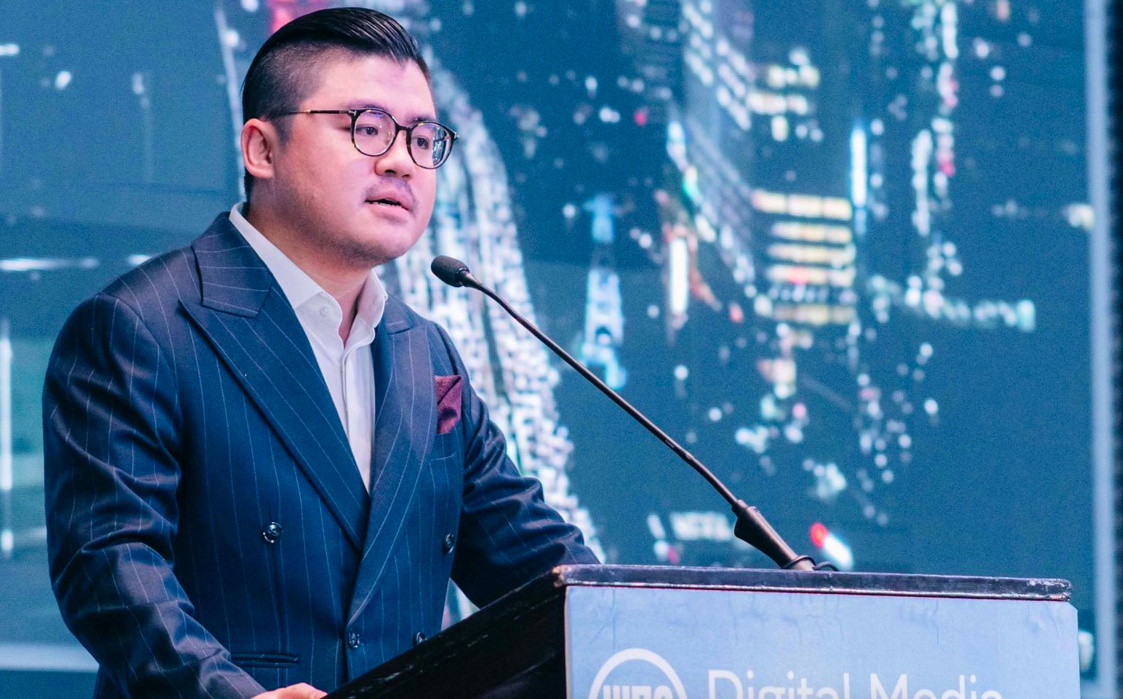
“We are the business of attention.”
Winston Utomo, Digital Media Asia 2026
At the Manila conference in 2026, Winston discussed the limits of relying on traditional content and advertising. He also talked about young audiences’ interest in experiences and real-world connections. By then, the company’s changing portfolio gave that argument a visible form. The website had become one entrance into a much wider set of activities.
On May 11, 2026, IDN announced the acquisition of M Bloc Group. Its locations included M Bloc Space, Pos Bloc Jakarta, Pos Bloc Surabaya, Pos Bloc Medan and Lokananta Bloc Solo. They would sit within IDN Bloc while retaining their individual names. The expansion gave the group actual places where its audience could gather.
For a founder concerned with the country beyond the capital, that list of cities has particular resonance. Surabaya is there again, alongside Medan and Solo. The idea now includes stages and shared spaces as well as articles. A digital company has found reasons to care about what happens when people put their phones down.
Digital media→Contribute
Creators→Gather
Live experiences
A map of IDN’s activities, rather than a prescribed route for every reader.
The next hundred years start early
Winston’s account of an ordinary morning is quieter than the portfolio suggests. He has described starting at five with espresso, reading and writing, then reaching the office by seven. He generally protects mornings for concentrated work, with Mondays and Tuesdays more occupied by internal meetings. A company full of events still needs time in which nothing is happening to its calendar.
His leadership language emphasises showing up and setting an example. That is consistent with his early description of himself as hands-on. The scale has changed the work around him, but he still talks about moving between a strategic view and individual product details.
His public ambitions have become longer in duration. In July 2026, the brothers’ account of building IDN set out a hundred-year horizon: an institution capable of surviving changing technologies and generations. That remains an aspiration, with decades of work ahead of it. It is an unusually extended deadline for something begun after office hours.
The line back to Surabaya remains clear. Young Indonesians were the people Winston wanted to reach at the start, and they remain the people around whom he organises the argument for expansion. Their reading, writing, performances and gatherings now require a larger company. The next chapter depends on whether those people continue to find something here worth making part of their lives.