When William Fry went back to eastern North Carolina, the businesses were familiar. The question facing their owners had changed. Family friends were thinking about retirement. Their children had moved to bigger cities. A company that had supported a household for decades suddenly needed an answer to a deceptively small question: who gets the keys?
Fry had grown up around those businesses. In his recollection, the landscape was baseball fields, tobacco fields, and the small companies that made the local economy work. Their importance was easy to understand before he had a vocabulary for acquisitions. They belonged to people he knew. Going home made the approaching handover difficult to treat as somebody else’s problem.
Today, he is based in Austin, running American Operator. The company buys businesses alongside experienced operators and helps those operators work toward majority ownership. The idea follows a particular observation: knowing how to run a company and having the resources to buy it are two different accomplishments. Fry has spent the intervening years trying to bring them closer together.
A hometown question with no easy buyer
The missing successor was the detail that caught his attention. Owners had spent years building something useful. The next generation had understandable reasons to live elsewhere. Neither fact supplied a plan for the business. Moving away could be a sensible personal decision and still leave a considerable problem back home.
In Fry’s account, conversations about retirement kept recurring. He began to see the handover as a problem that reached beyond one town. There were businesses worth continuing and people capable of leading them, yet the route between the two was often awkward. An owner’s next chapter depended on a buyer’s ability to get through an unfamiliar transaction.
His work now concentrates on that route. American Operator’s team connects owners, operators, financing, and industry experience. Its leadership includes board members Joe Lonsdale and Baris Akis, with advisors spanning trades and services such as manufacturing, plumbing, distribution, and landscaping. The breadth reflects the kinds of companies Fry wants to keep moving after their founders step away.
Before the keys, there was code
Fry’s first building material was software. His father, an electrical engineer, designed computer chips. Fry took apart old computers and became interested in programming’s combination of low cost and possibility. In high school, he ran an app-development company that made iOS apps for nonprofits, including the Parks and Recreation Association of North Carolina.
Later, studying abroad in Germany, he freelanced as a programmer and noticed how often developers repeated the same work. He and Penn alumnus Jacob Wallenberg co-founded SolutionLoft in 2016. The idea was to reuse software components so a new project would require less rebuilding. Fry compared the approach to movable type: choose the pieces and arrange them for the job.
He studied international studies and business in Penn’s Huntsman Program. Programming remained something he could pursue alongside it. That combination makes his subsequent career less surprising. His interests already included both making things and figuring out how an enterprise could be organized around them.
“It just takes a big weight off our shoulders.”
William Fry, on receiving Penn’s innovation funding in 2017
In 2017, SolutionLoft earned him Penn’s President’s Innovation Prize. The award provided up to $100,000 for the venture and a $50,000 living stipend. It also brought workspace at the Pennovation Center and continued university support. Jeffrey Babin, an engineering entrepreneurship mentor, worked with him on the project.
The award gave a graduating founder room to pursue a company he had already started. It is an early, concrete example of something that would recur in Fry’s work: capability becomes more useful when someone supplies the conditions to put it to work. For the student entrepreneur, those conditions included money, time, and advice.
The view from the broker’s desk
Fry started a business brokerage in 2020. Through Beacon, he came to see the succession question from inside the transaction. Owners wanted a buyer they could trust. The people suited to carry a business forward often lacked acquisition experience or the capital needed to complete the purchase.
He has described the uncomfortable alternatives. A seller might finance an individual buyer and accept the uncertainty of getting the transaction finished. Another route was a financial buyer with more resources. Fry’s concern was the prospect of local businesses concentrating in the hands of a few distant firms.
He also set a specific ambition: help 10,000 small and medium-sized businesses remain locally owned and operated. That was a goal, rather than a count of completed deals. Its scale helps explain why brokerage alone would not be the endpoint.
The brokerage experience mattered because it exposed the practical obstacle. Encouraging a capable person to pursue ownership is easy. Helping them complete an acquisition takes infrastructure. Fry moved toward a business that could participate in that work and remain involved once the new operator was responsible for the company.
A stake on day one. A route to the rest.
The enterprise founded in 2021 was known as Mainshares before becoming American Operator. In a January 2026 conversation with Joseph Cabrera, Fry discussed the change and the thinking behind a more direct role in ownership transitions. The new name puts the person doing the work at the center of the proposition.
American Operator’s published model starts by matching an experienced operator with a business seeking a successor. The firm handles financing and deal structuring. The operator leads as CEO, receives an initial ownership stake, and has a route toward majority ownership with support from the team and an experienced industry advisor.
A model of the handover, not a promise of timing or returns.
One example is Greenway Painting in Jackson, Wyoming. American Operator describes Erik and Kassie handing leadership to Anthony Douglas. A specific company, in a specific town, gets a named successor. That gives the ownership proposition a shape more useful than an abstract promise to support entrepreneurs.
Fry’s December 11, 2025 announcement reported helping shepherd nearly 100 businesses, worth more than $300 million, into the next generation of owner-operators. Those were figures describing work over the preceding years. The announcement also explained the shift toward taking a greater role in acquisitions while allowing operators to buy back ownership incrementally.
small businesses helped into the next generation of owner-operators
Over $300M in reported business value across that transition activity.The judgment behind the spreadsheet
Finding the successor remains demanding. In a May 2026 conversation, Fry and Cabrera explored the balance between technical ability and people leadership. They discussed the judgment involved in estimating work, the difficulty of taking over an established culture, and the possibility that a departing owner can complicate the transition.
These are questions about how a person behaves when other people depend on them. An operator’s technical knowledge matters. So does the ability to bring employees along and adapt to the business as it actually operates. Fry’s discussion resists the comforting idea that a strong résumé answers every question.
He has carried that argument into manufacturing. In his March 2026 writing, he described profitable shops whose pricing, customer relationships, and investment decisions still depend heavily on a single owner. A business can look stable while having very little room for that person to leave.
His proposed successors are often already nearby: people running shifts, programming machines, managing schedules, and handling bids. Their knowledge is accumulated through work. Ownership planning, in his view, belongs alongside maintenance and workforce development as an operating responsibility. Preparing the handover gives a company time to transfer knowledge and responsibility before a transaction forces the issue.
Small, local, and hard to automate away
Fry’s technology background has not disappeared from his thinking. He sees an opportunity for small businesses in the AI era, particularly where customers need customization and relationships. His examples include short manufacturing runs, quick printing jobs, site visits, and services fitted to a particular need.
That is his argument about resilience, rather than a guarantee about any industry. A local company’s work can involve details that customers need somebody to understand and respond to. Fry believes those characteristics give parts of the small-business economy protection while new tools can also help small teams become more productive.
In April 2026, he discussed those possibilities with Joe Lonsdale, alongside the mechanics of operate-to-own. The link to his earlier software work is suggestive: he once wanted to reduce the repetition involved in programming. Now he is interested in what better tools can do for people running existing businesses.
A larger ambition, with the work still local
American Operator’s long-term plans include becoming a publicly listed company. Fry has described that destination as a way for everyday Americans to participate in the businesses the firm helps steward. It remains an ambition. The immediate work is to grow the portfolio and carry out transitions with operators and experienced advisors.
There are signs of the company’s development. Inc.’s 2026 Southwest regional list ranked American Operator No. 38 and reported 164% growth over two years. Fry continued discussing succession publicly in September 2026. Growth and attention put more weight on the underlying task: choosing people and supporting businesses through a change of ownership.
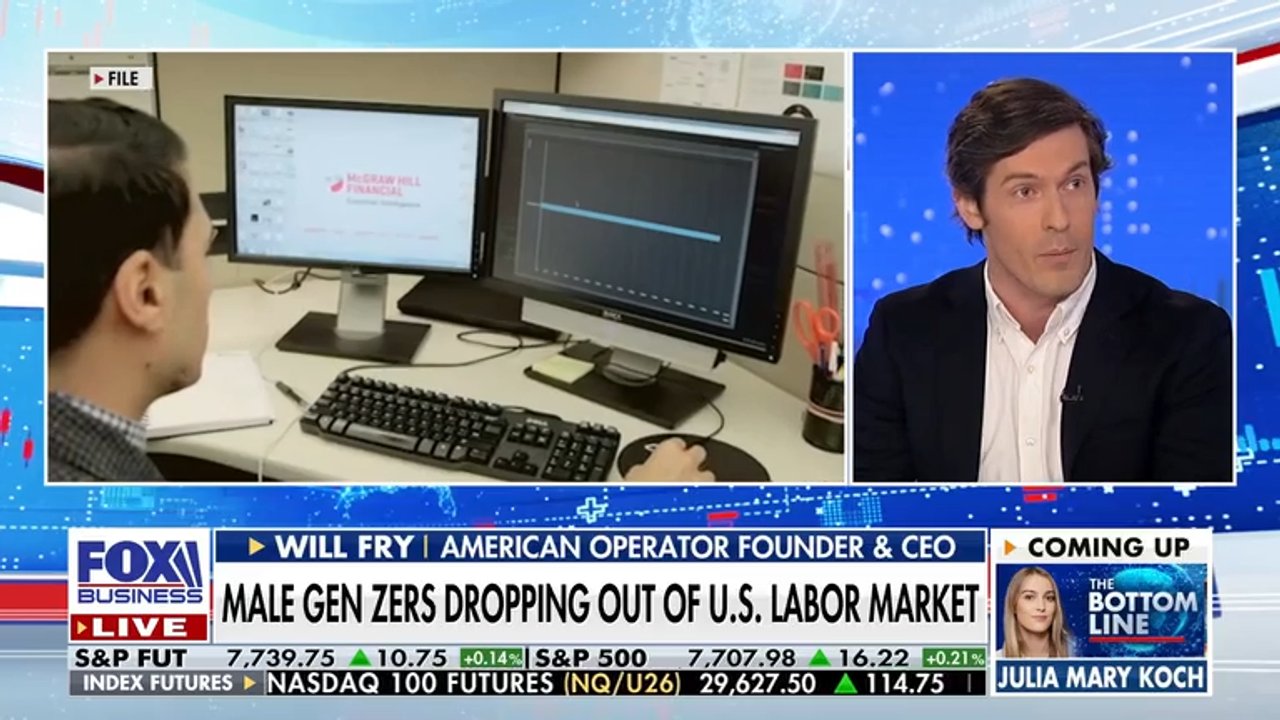
His account of his own habits is less ceremonious. He can listen to the same song for weeks, to his wife’s annoyance. A puppy he initially attributed to her enthusiasm became his best friend. He also remembers an early office break-in that turned into a police pursuit after a teammate located missing AirPods through Find My. Entrepreneurship occasionally supplies its own farce.
“Are we moving fast enough, and are we heading in the right direction?”
William Fry
That question is how Fry describes checking his work. It suits a career that has moved from code to brokerage to ownership. The businesses that first interested him already had histories. His job now is to help someone else take responsibility for what happens next, with enough support to make the handover possible.