The trouble began with the fifty-first truck. In WEZOM’s account of its work for Logicorp.inc Logistics, the carrier’s dispatch software allowed just 50 trucks per account. The workaround was three accounts, with staff moving between them. Here was a business whose software had become another job to do.
- WEZOM builds software around a company’s operating routines.
- Its logistics work joins dispatch, driver apps, documents, and accounting.
- The buying question: is the workaround expensive enough to replace?
That is a useful introduction to WEZOM. Enterprise technology is often described through enormous nouns: transformation, intelligence, automation. A dispatcher switching accounts gives those nouns a desk, a person, and a wasted minute. It also supplies a better question for a software buyer: where, exactly, does the work get stuck?
The workaround becomes the brief
Logicorp wanted to leave its existing service. It also saw a commercial opportunity: build a transportation management system, then sell access to other operators. WEZOM says the engagement took about 12 months. The resulting system combined a browser workspace with driver apps for iOS and Android, covering orders, routes, signatures, and financial reporting.
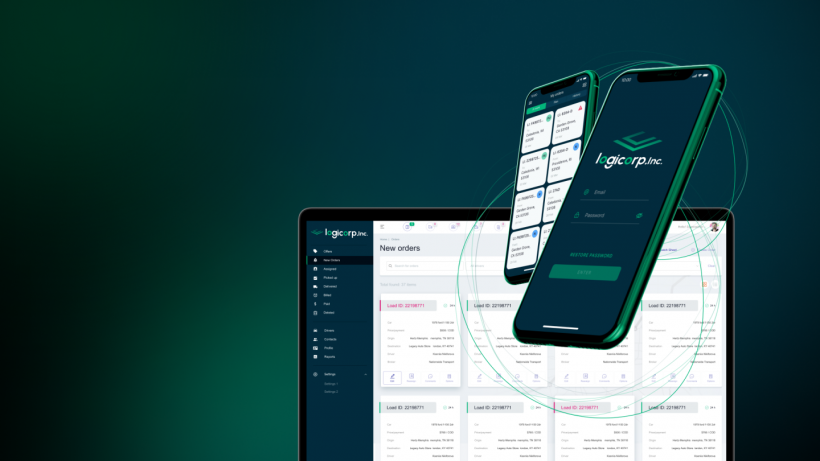
One stubborn detail concerned photographs. Drivers needed to send images from their phones, but background image uploads on iOS required extra engineering. That is the sort of problem a feature checklist conceals. “Photo upload” occupies two words in a proposal; making it behave during an ordinary working day takes considerably more thought.
WEZOM reports that Logicorp subsequently offered subscriptions to partners. The interesting change is in the customer’s role: a carrier became a software seller too. That creates another set of responsibilities. Other carriers need onboarding, support, and a reason to renew. Solving your own inconvenience is a promising beginning for a product, with plenty of work still attached.
Internal tool → Subscription offering
Conceptual diagram of the published Logicorp case.A modem, some books, and $100
WEZOM’s origins were smaller. Founder and CEO Serge Guzenko recalls starting a web studio in Ukraine in 1999, aged 21, with friends, a computer, a modem, and books. Their first website took a couple of months and sold for $100. Over time, the work moved from static pages toward the systems running behind them.
Today the company sells custom development, consulting, design, testing, cloud engineering, and continuing support. It builds online stores, mobile applications, warehouse tools, and AI systems. The breadth can make it look like a general-purpose development shop. Logistics gives the offer a more definite shape: software for businesses moving physical things through complicated chains of people.
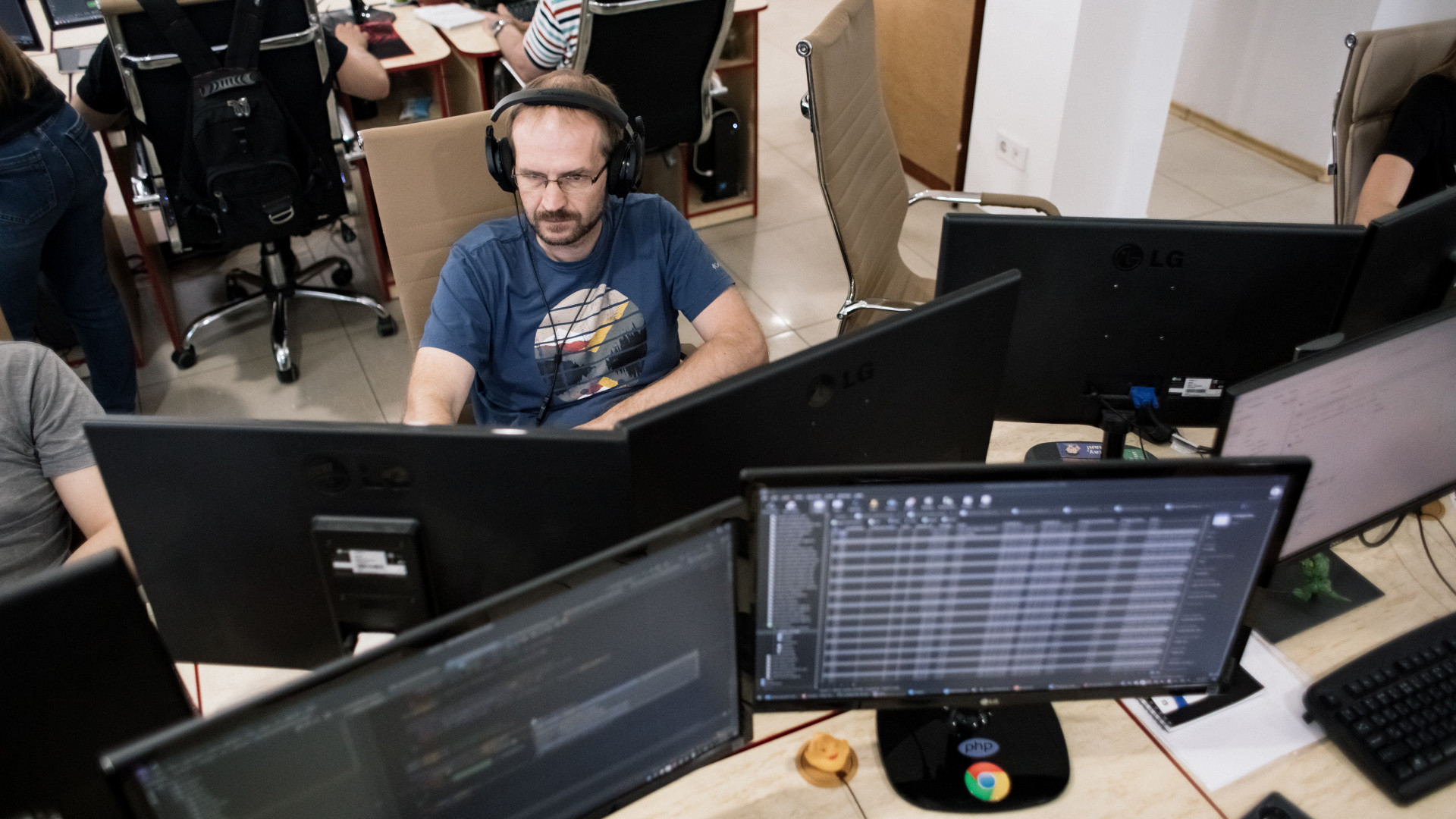
Its published client roster includes Toyota Material Handling, Metinvest, Cooper&Hunter, and H2H Movers. WEZOM’s about page reports more than 275 full-time professionals. There is also an external marker of its development: WEZOM SOFTWARE appears at No. 3,630 on the 2024 Inc. 5000. The ranking supplies context; the individual project still deserves its own examination.
The second-project customer
In a 2021 interview, Guzenko described an ideal ecommerce customer with an unusually revealing qualification: this was their second or third project. They already understood online trading and had established processes. Experience had taught them what to ask for. A developer working with that buyer can discuss inventory, conversion, integrations, and operating discipline without first explaining why an online business needs them.
That helps locate WEZOM in the market. Buyers can choose packaged software, assemble an internal team, or hire an engineering partner. WEZOM competes for the last assignment. Its case rests on understanding a client’s particular process and carrying the implementation across design, code, and testing. A familiar technology stack alone offers little reason to choose one firm over another.
The current portfolio stretches into voice AI. In its VoicePilot AI case, WEZOM describes a one-month 2025 implementation for a US service company handling repetitive inbound calls. The system addresses routine questions and lead qualification, with escalation to human operators. WEZOM reports reduced operator workload. The more instructive design choice is that escalation path: someone decided where automation should stop.
Put a price on the awkward part
WEZOM’s Clutch listing advertises a minimum project size of $50,000 and hourly rates of $25 to $49. Those figures are a starting point for a conversation. In his 2023 interview, Guzenko describes time-and-materials billing, alongside fixed-price work paid by stages. The model allows requirements to develop as the team learns more.
Clutch listing · $25-$49 per hour
Scope, staffing, and support shape the actual bill.
For a buyer, the arithmetic should include maintenance, internal staff time, and the cost of replacing an existing workflow. A useful exercise is to price the repeated inconvenience first. Count account changes, duplicate entries, corrections, and delays. Then ask whether a packaged alternative already fixes them. Custom development makes more sense when the remaining problem is both expensive and particular.
The practical constraint is participation. A client must be able to explain exceptions, settle priorities, and put someone in charge of decisions. Otherwise, a custom system can preserve every disagreement in code. Before hiring a team, choose a workflow you can describe, a person who owns it, and an outcome you can check. That modest preparation makes the first demonstration much more useful: people can argue about whether the work improved, rather than whether the screen looks finished.
Trust needs something to look at
WEZOM encountered a version of that problem in its own sales. In a Worksection interview published in July 2026, Guzenko described wartime outreach involving roughly 60 Zoom calls. Prospects did not know the company; conversion was low. The team offered free discovery work and further conversations, allowing potential customers to see its thinking before buying.
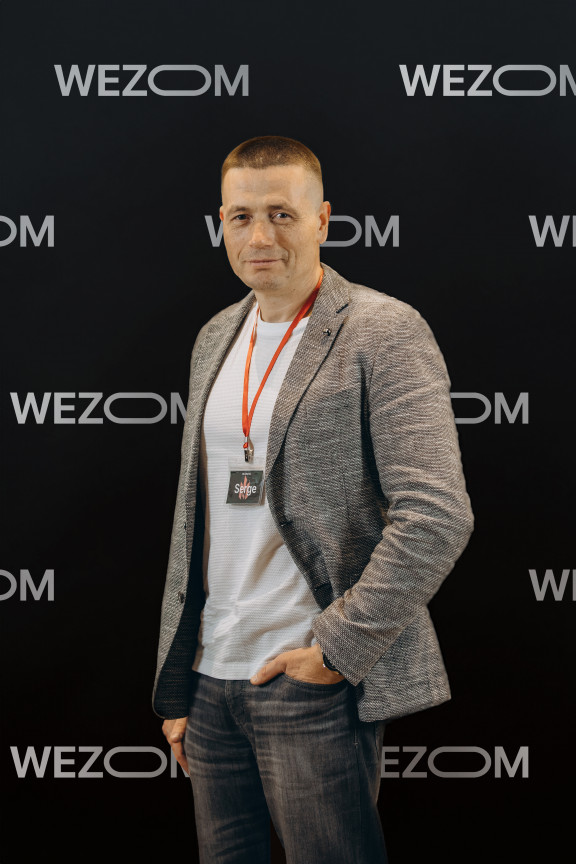
“It was all built on my own mistakes, of course.”Serhii Huzenko · Worksection interview, July 2026
The same interview describes planned-versus-actual time reporting and the continuing difficulty of getting people to track hours. There is something reassuringly specific about that admission. A company selling operational improvement has its own operational friction. The transferable lesson is to make the problem visible early, while there is still time to change the result. Start with the fifty-first truck.