The first customer paid $99 a month. For Webb Brown, that modest payment was evidence that a question he had been carrying around could support a business. Companies were running applications on Kubernetes, the software that coordinates containers across computing infrastructure. Money was leaving their accounts. Understanding exactly where it went was another matter. A cloud bill could arrive with considerable confidence and remarkably little useful explanation.
Brown and his co-founder, Ajay Tripathy, had worked on infrastructure monitoring at Google. They understood the engineering beneath the confusion. They also understood that a perfectly sensible technical decision could have consequences elsewhere on the invoice. Their eventual company, Kubecost, would put those consequences in front of the people making the decisions. In September 2024, IBM acquired it.
The distance between those two events is the interesting part. Brown approached a large, expensive problem through small experiments. He wanted people to use something, react to it, and reveal whether the trouble was serious enough to deserve their time. The early business began with attention earned one conversation at a time.
A bicycle, a lunch, a possibility
Brown remembers riding across Google’s Mountain View campus to meet a former teammate for lunch. Kubernetes was still young, and the teammate was working on it. Over the meal, Brown heard the ambition: make container orchestration available across cloud providers and data centers, with open source software and neutral governance. The excitement was about who would get to use it, and who would get to shape it.
His own experience sat close to that possibility. At Google, Brown was a product manager working on monitoring and developer tools; Tripathy was an infrastructure engineer whose work included cloud billing. They brought complementary views of the same machinery. One saw the information developers needed. The other knew something about the systems that turned computing into charges.
Brown had also worked in finance and private equity. When asked about the connection between finance and development in a 2020 interview, he said he enjoyed both and had been unable to separate them. Kubecost made that combination useful: a technical product whose basic subject could be understood by anyone who had ever opened an unexpectedly large bill.
Entrepreneurship already felt familiar. His father had been an entrepreneur, and Brown described an early sense that he would eventually build an independent business. The Google lunch gave that inclination somewhere practical to go. An open platform was expanding. Around it, a new set of unanswered questions was forming.
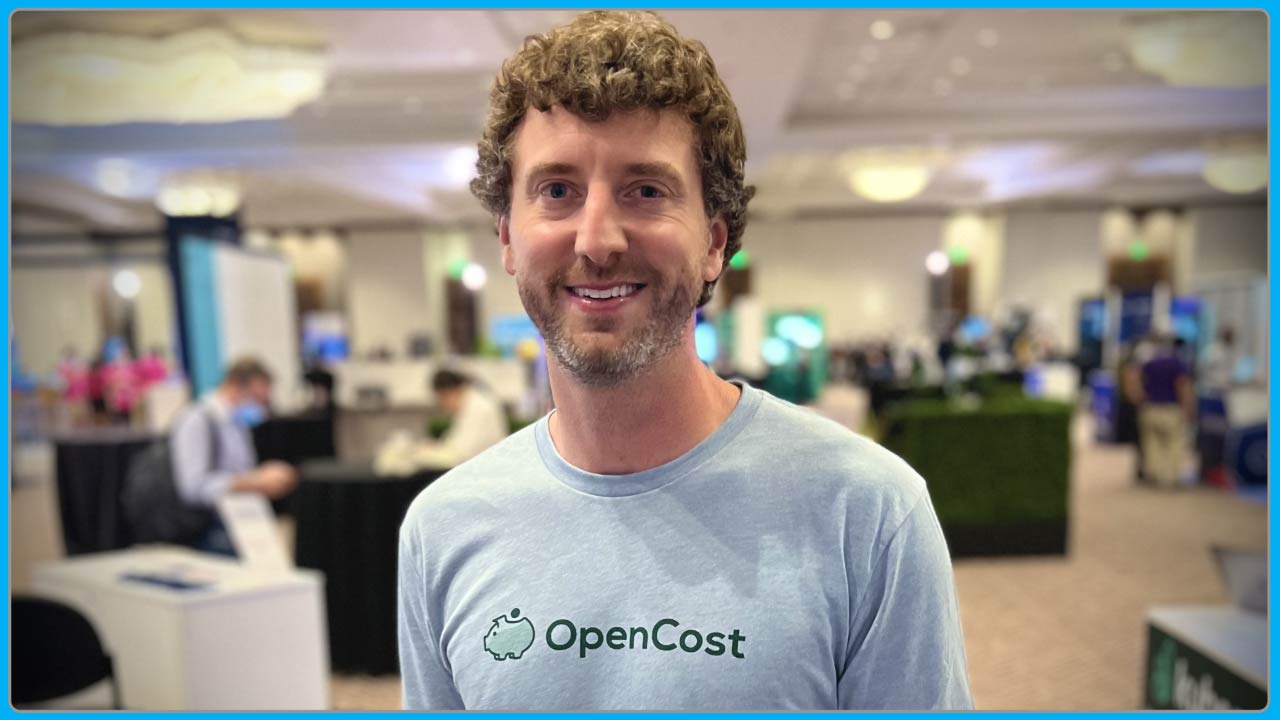
Permission to be wrong
Brown and Tripathy first met at Google in 2013. Brown left in 2017, stayed close to the Kubernetes community, and returned to the cost problem as he heard it repeated. By 2018, the two were exploring a solution together. Their first dashboard used Grafana and took a weekend to assemble. It was deliberately limited, something people could try before the founders committed themselves to a polished product.
They spent roughly two months talking with about 120 teams. The useful responses came from people willing to install unfinished software and ask for improvements. Some were prepared to pay before the company had even been formed. “Most people thought we were crazy,” Brown recalled of the early approach.
His insistence on leaving room for error is revealing. The experiment needed to test the idea, including the possibility that the idea was wrong. A weekend’s work was easier to reconsider than a year’s work. That gave the founders a chance to listen without having every answer become a referendum on their own judgment.
the first dashboard
validation interviews
conversations
The invoice has no idea who owns the problem
Kubernetes makes it easier to share computing resources and move applications around. Those advantages complicate the accounting. Several teams can use the same infrastructure. Applications can expand and contract. A cloud provider’s view of a machine does not automatically explain which internal service, project, or department should bear its cost. Shared resources have many beneficiaries; the bill has fewer conversational skills.
In his 2019 introduction to Kubecost, Brown put allocation first. Before recommending changes, teams needed a picture of how resources and spending were distributed. That picture could reveal waste and show where optimization work was most worthwhile. A cost per service was more actionable than a large total belonging to everyone and therefore, in practice, to nobody in particular.
The first allocation model was open source under the Apache 2 license. Teams could deploy it in their own clusters, examine it, or modify it. The wider product added dashboards and a straightforward installation path. Brown’s stated ambition was to make capacity planning and cost management accessible to teams of different sizes. That required meeting engineers inside the working environment they already had.
The engineering tradeoff remained important as the product grew. Reducing a bill by starving an application of resources is an economical way to create a different problem. Brown’s interviews repeatedly return to the relationship between spending, performance, and reliability. His product’s usefulness depended on helping teams reason across those concerns together.
Please do not make the engineer call sales
By February 2022, Kubecost announced a $25 million Series A led by Coatue Management, with participation from First Round Capital and Afore Capital. The announcement said the software was managing more than $2 billion in Kubernetes spending. Those were company figures for a particular moment, rather than a forecast of money saved. They showed how far the founders’ original visibility problem had traveled.
Brown’s description of the product experience was unusually specific. Developers should be able to install and modify software quickly. They should retain control of sensitive spending information. And they should be able to try the thing without first arranging a conversation with sales. “We want everybody to have access to our software, no matter their budget,” he said.
There is a recognizable personality in those choices. An engineer with a job to finish has limited affection for a calendar invitation standing between a question and an answer. Brown designed around that impatience. The purchasing decision could come later; the experience of understanding a cluster needed to come first.
That approach extended to how he described the company’s working culture. Autonomy, experimentation, and open collaboration mattered to him. So did flexibility over where and how teammates worked, with optional meetings among the practices he highlighted. The product and the workplace shared a preference for giving capable people room to act.
“We want everybody to have access to our software, no matter their budget.”
Webb Brown · February 2022
A common language for everybody’s costs
As Kubecost developed a commercial business, the team also helped create OpenCost. The project addressed a broader question: how should Kubernetes costs be measured consistently across different environments? A company can sell a useful dashboard. A shared specification has to make sense to people who may never buy from that company.
Brown described that ambition in 2022 while discussing work with ecosystem partners. Contributing code was part of it; building agreement around measurement was another. OpenCost entered the Cloud Native Computing Foundation’s Sandbox in June 2022. Its collaborative origins included participation from experts at organizations such as Amazon, Adobe, Google, Microsoft, and SUSE.
In October 2024, OpenCost advanced to CNCF incubation. The work had grown beyond an individual company’s interface into a community project with its own contributors and expectations. Brown, writing about the milestone, emphasized the open core model and the importance of continued contributions. For him, commercial development and a shared foundation were proceeding together.
The distinction is worth keeping clear. Kubecost was the business IBM bought. OpenCost was the open source project whose measurement work could serve the wider ecosystem. Brown’s story includes both forms of building: creating a product people would pay for, and helping establish something other developers could use, inspect, and extend.
IBM buys the company. The question keeps growing.
IBM announced the acquisition on September 17, 2024, identifying Brown as Kubecost’s co-founder and CEO and Tripathy as co-founder and CTO. The addition brought Kubernetes cost visibility into IBM’s FinOps portfolio alongside Cloudability and Turbonomic. The practical rationale was clear: organizations needed to understand container spending as part of their wider technology finances.
That setting enlarged the original problem. A platform team might care about a particular application’s resource requests. A finance team might want to allocate the costs of several environments. A business leader might want to understand the consequences of moving workloads. Brown’s early insistence on useful information for engineers now sat within a portfolio intended to connect more of those decisions.
The product also continued reaching developers through cloud partnerships. In September 2024, AWS described the availability of Kubecost 2.0 for Amazon EKS, extending work that had begun in 2022. Better cost visibility was becoming part of how customers operated Kubernetes, rather than a separate investigation reserved for the day an invoice became alarming.
By August 2026, the OpenCost project was addressing AI inference costs. Its integration work connected infrastructure consumption with models and tokens, distinguishing the expense of keeping a model available from the expense of its active work. This was an ecosystem development, described by its project contributors. It also showed the durability of the question Brown had helped put on the table: what, precisely, are we paying for?
- 2019Kubecost’s public launch
- 2022$25 million Series A; OpenCost joins CNCF Sandbox
- 2024IBM acquisition; OpenCost reaches incubation
- 2026OpenCost adds AI inference cost tracking
A road with a rather good name
Away from cloud accounting, Brown has described another kind of resource-intensive activity: cycling. In 2020, he recalled visiting Glacier National Park and riding Going-to-the-Sun Road when it was closed to car traffic. The climb was demanding, and the scenery stayed with him. His enthusiasm made the road sound like a recommendation worth remembering, even for listeners who had arrived to hear about Kubernetes.
The name of the road briefly stopped the conversation. Going-to-the-Sun sounded sufficiently extravagant that a host checked whether it was really called that. It was. For once, the appealing product name had already been taken by a mountain road.
Brown’s career has been spent around systems that hide complexity so other people can do their work. His contribution was to ask what that convenience costs and to put the answer within reach. The first experiment was small enough to revise. The question has proved large enough to keep following.