Before the dashboard, there was the telephone. Wang Taizhou remembers an early difficulty at Ele.me: persuading restaurant owners to buy a computer. Without one, an online order could still finish its journey as a call from a customer-service worker, reading the details aloud. The internet had reached the customer. Someone still had to get it into the kitchen.
There is something pleasingly unglamorous about that memory. A delivery platform promises speed and convenience; behind the promise stood a merchant who needed equipment, a workable routine and a reason to change. Wang would spend years developing the platform. Eventually, he would build a company around the merchant’s side of the arrangement.
Today he is the co-founder, chairman and CEO of Shiheng Technology. Its work connects restaurant operations with software: the orders arriving through different channels, the money being divided, the goods being purchased, the stores that headquarters needs to manage. Dinner is the visible transaction. The business underneath has rather more moving parts.
The student who joined the ordering business
Wang joined Ele.me in 2011. He was a third-year computer science student at Shanghai Jiao Tong University and became employee No. 14. It was an unusually close vantage point from which to watch a consumer habit take shape. His responsibilities grew to include website development, product planning and research and development for the transaction platform.
In later accounts of that period, he recalled a team made largely of students, learning while competing with delivery websites around the country. Building the software meant participating in a business whose scale and competitive demands were changing around it. An order had to become something the platform could process and a restaurant could act upon.
His subsequent recognition would arrive in the familiar language of entrepreneurial lists. In 2019, Forbes Asia included Shiheng and its co-founders in its Under 30 enterprise technology coverage; Forbes China profiled Wang, then 29, as a founder and senior vice-president. These were early-career distinctions attached to a business already operating beyond its founding city.
The other side of the screen
Shiheng was founded in April 2017. Wang’s early titles included senior vice-president and chief technology officer. The initial opening was delivery operations: helping restaurant brands run the online business that the platforms had made possible. The customer could find an app easily enough. A restaurant still needed to turn that presence into a functioning operation.
By March 2019, Shiheng described a business working with more than 300 restaurant chains across 100 Chinese cities, including Starbucks China and Yum! China. It had raised three funding rounds within a year. Backers included Sequoia Capital China and Gaorong Capital, with a later round involving the TPG and SoftBank Ventures Asia joint fund.
Those details locate Wang in a particular part of the delivery economy. His company worked alongside brands and platforms, supplying operating capabilities. A familiar restaurant name could attract attention, but the online version of that restaurant still needed to be arranged and managed. A dining room does not arrive in an app simply because somebody uploads the menu.
His partner Zhang Wei brought another route into the same problem. After nearly a decade at Tesco China, Zhang had left to start an online restaurant brand and provide operating services to others. When he met Wang, they found complementary resources and technical capabilities. Their partnership joined experience of retail operations with experience of internet systems.
A restaurant multiplies. So does the work.
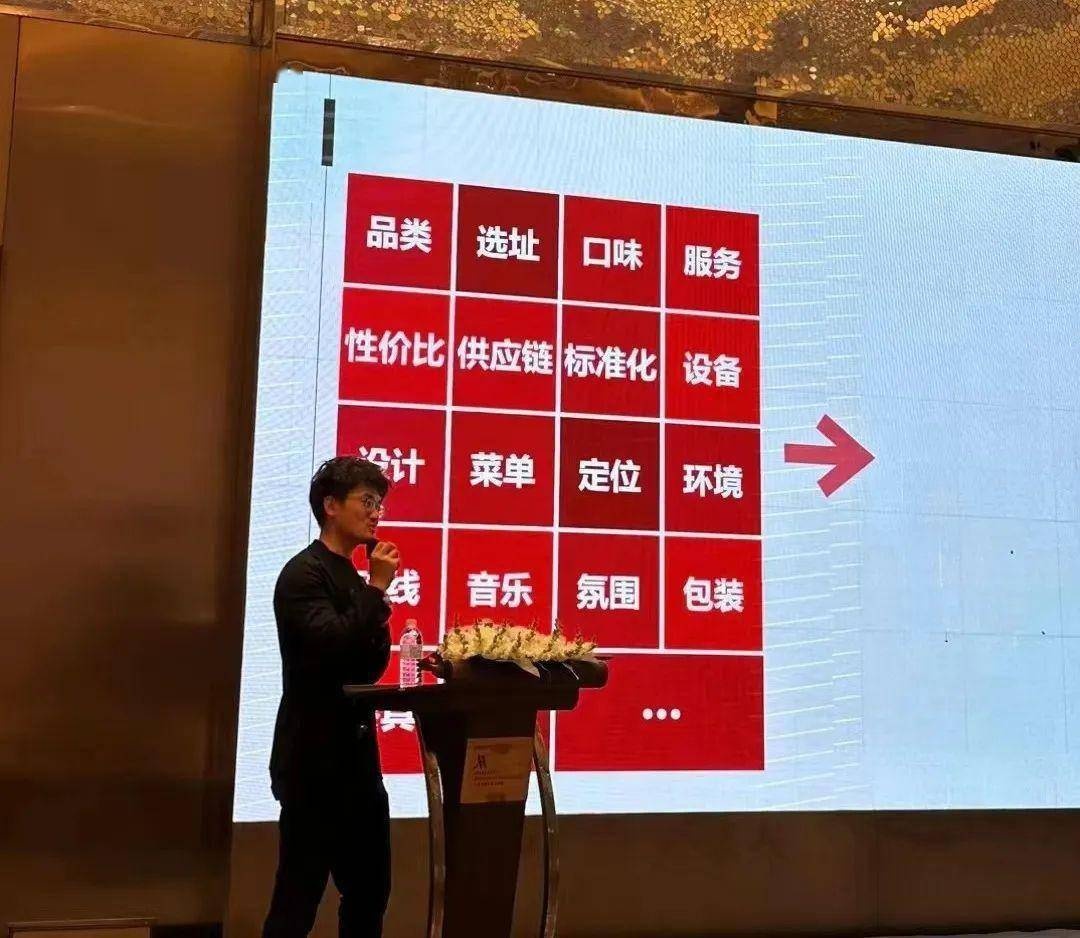
At a September 2021 enterprise services summit in Shanghai, Wang gave a presentation with a pleasantly direct title: “Digital management makes running restaurants simpler.” He described two connected jobs. First, improve the operating model of an individual delivery store. Then make that model work across a large collection of stores.
The second job changes the nature of the first. A good menu and a workable promotion are useful. Reproducing them requires information to travel between people who may work in different cities, hold different responsibilities and manage stores under different ownership arrangements. Store staff, managers, supervisors and headquarters all occupy a place in that chain.
For the founder, this creates a demanding product problem. A system has to preserve enough local detail to be useful without leaving every store to invent its own procedures. The person looking across the network needs a common picture; the person running a store needs something that helps with the next decision. Wang’s focus on processes and information addresses that tension. The promise becomes practical only when people at both ends of the chain can use what the system records.
Wang’s answer was software combined with service. Shiheng would take what it learned through operating work and turn repeatable methods into systems. His argument put process visibility at the center of expansion: capture what happens, make it available to the people deciding what to do, and reduce the chances of an expensive mistake.
Three connected management jobs in Shiheng’s current offering. A conceptual diagram, not a performance chart.
The current product range makes that progression concrete. Shiheng offers smart-store tools, financial settlement and supply-chain systems alongside multi-platform delivery management. Headquarters can work with information about stores, transactions and purchasing within a connected offering. The company’s language has moved closer to the daily machinery of a franchise network.
In October 2024, Wang spoke at a restaurant supply-chain gathering involving almost 100 chain and industry brands. At the time, Shiheng reported having served more than 250,000 stores and over 6,000 restaurant and new-retail brands. The scale belongs to the company’s account of its reach; it also explains why a small operating inconsistency can become a substantial management assignment.
The flags, and the people between them
In 2020, Wang worked in a modest office, sparsely furnished except for a desk. The eye went to a large map of China on the wall, dotted with small colored flags. For a company extending its operating network across cities, it was a more informative decoration than a motivational poster.
Asked about the company’s development tensions in 2020, he half-joked about the gap between the good opportunities appearing in the market and Shiheng’s capacity to seize them. Even for a technical founder, the constraint involved people: finding and developing the team able to do the work.
Early recruitment had its own practical difficulties. Shiheng was growing before it had much name recognition. Shanghai and Hongkou employment authorities helped with introductions and support policies. The early support also included a RMB 500,000 guaranteed small-business loan and subsidies. The founding story includes public assistance alongside venture investment.
Wang’s technical role remained substantial. He led a small early team building the business and technology framework; the company later developed its iShiheng information center over two years. Its tasks included detecting unusual store opening or closing status, menu-display problems and delivery exceptions. These are the small failures a customer may encounter as a missing dinner option.
“Digital management makes running restaurants simpler.”
Wang Taizhou · 2021 presentation title, translated
The buffet test
By October 2024, Wang’s public discussions were spending considerable time on restaurant costs. On the podcast 窄播一下, he examined a market shaped by demand for affordable meals and an excess of supply. Restaurants carry substantial operating commitments. A change in customer spending reaches a business that cannot effortlessly rearrange itself overnight.
His explanation of buffets was particularly revealing. The customer must feel the meal is good value while the operator avoids losing money and maintains the food and service. That combination requires exacting cost control, with retail and marketing abilities added. A buffet looks wonderfully simple when someone else is doing the arithmetic.
It is a useful companion to his software work. Behind the products sits a continuing interest in how restaurants function economically. A format can be fashionable, a promotion popular and a dining room busy. Those observations still leave the owner with the task of understanding the relationship between what customers pay and what serving them costs.
What survives the discount
In February 2026, reflecting on the previous year’s delivery-platform competition, Wang returned to that relationship. He argued that delivery discounts were changing consumer price expectations while putting pressure on merchants’ cost structures. Orders shifting from dining rooms to delivery channels could bring additional packaging and platform-related expenses along with them.
He distinguished the ability to purchase order volume from the slower work of developing operating capability. His emphasis was efficiency under sustained pressure on margins. Shiheng, he said, had continued growing its customer base. For 2026, he wanted to keep focusing on franchise chains with strong operational control and make support more accessible to early brands.
In April, he received the 2025 Emerging Entrepreneur Star recognition at an entrepreneurship awards ceremony in Hangzhou. It was another public marker in a career that had started with a student joining an ordering platform. The operational question running through that career had become more detailed with every stage.
First, get the order to the restaurant. Then help the restaurant handle the orders. Then help a chain understand what is happening across all its restaurants. The screen can announce that another sale has arrived. Wang’s work follows it further, through the store and the accounts, to the less theatrical question of what remains.