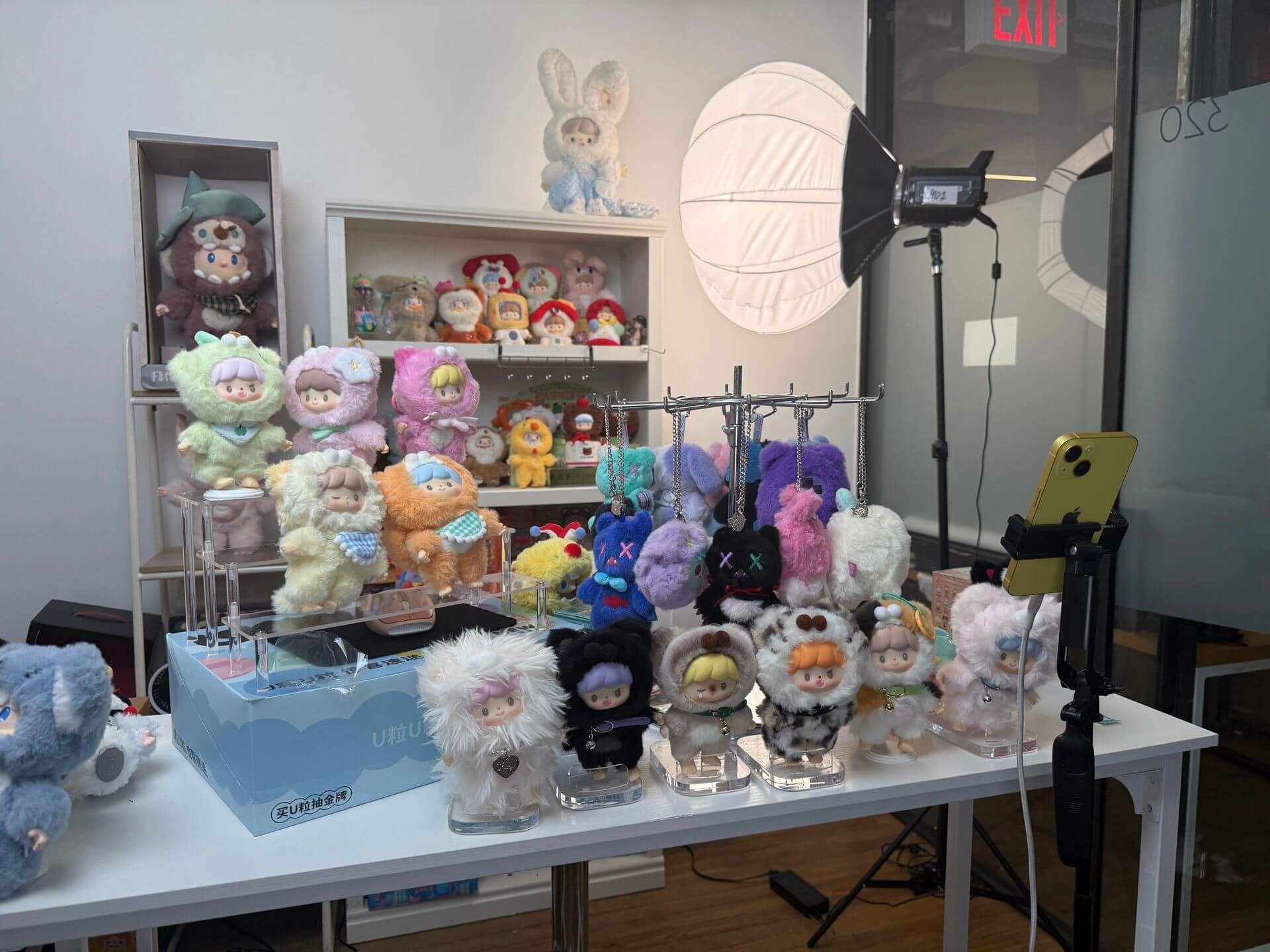
Look at Wahool’s studio photograph and the first thing you notice is the toys. Small, furry creatures crowd a table, each with the expression of somebody who has been promised a television career. Then you notice the softbox, the mounted phone, the careful tiers of display stands. Even the plush animals have a lighting budget.
The picture captures Wahool’s proposition better than a slogan could. Live shopping needs an appealing product and someone who can sell it. It also needs preparation, equipment and coordination. Wahool has made those surrounding tasks its business. The performance is public; the machinery is where the company has found something to sell.
- For brands: hosts, studios, campaign execution and content production.
- For creators: products to promote, coaching and AI selling prompts.
- For operators: Opsique, the internal toolkit offered as standalone software in 2026.
01 Amazon first, TikTok next
There are two beginnings to this story. The underlying Chinese business, Beijing Simeijiale Technology, was registered in 2014. Wahool’s own account begins its live commerce chapter in 2021. That distinction matters: an incorporation date tells you when a legal entity arrived; it tells you little about when the business found its present work.
Its early route was Amazon Live. By April 2022, reporting described a service that linked merchants, influencers and supply chains, taking on product selection, marketing, quality control and after-sales support. Named brand collaborators included Govee, EcoFlow and eufy by Anker. Nearly $10 million across two financing rounds backed the expansion, with GSR and Ceyuan among the investors.
The later company timeline adds sourcing and influencer brand development in 2022, a TikTok-focused shift in March 2024, and expanded brand livestream services in April 2025. The sequence explains why calling Wahool a fashion dropshipper now feels incomplete. Fashion was part of the route. Running live commerce became the organising problem.
agency
focus
software
In 2026, the toolkit gained a standalone offering called Opsique. Its public history describes internal systems becoming available to other TikTok Shop sellers. The agency had accumulated a practical education in what a live room demands. Software became a way to package that education.
02 Three jobs, one live room
Wahool serves several customers who occupy different positions around the same camera. A brand needs presenters, production and a campaign. A creator needs suitable products, enough product knowledge to speak confidently, and an opportunity to earn. An operator needs the show to start, the promotion to fire and the right item to appear when the host mentions it.
The agency offer covers host selection, campaign planning, studio execution and content that can be reused after the broadcast. Wahool advertises studios in New York, Austin, Seattle and Nashville. Physical infrastructure remains part of the offer: sets, samples, lighting and crew are useful even when the script has an AI assistant.
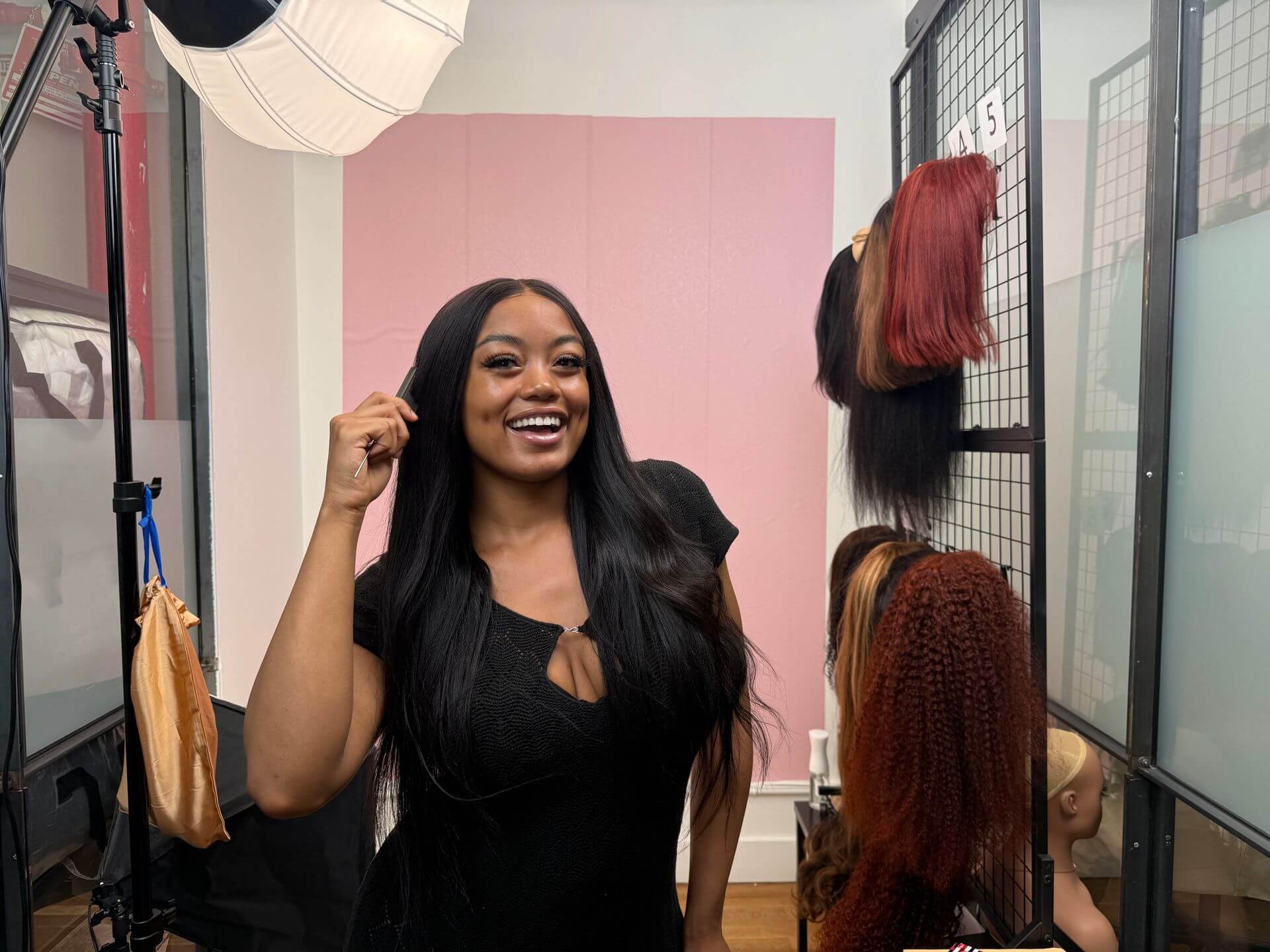
Creators can enter through affiliate, remote-host or studio-host tracks. Those choices affect whose account they use, how their schedule works and their working arrangement. An affiliate uses their own TikTok account; studio hosts work on brand accounts. The distinction is practical. Someone posting occasional product videos has different needs from someone working fixed studio sessions.
LiveQ, the assistant promoted on Wahool’s main website, supplies plans, scripts, cue cards and performance insights. The cue card is a telling detail. A host cannot remember every fabric, size and price while responding to comments. Put the information within reach and the performance has one fewer opportunity to stumble.
03 The price of getting organised
Opsique moves further into the operating room. Its three connected applications give the operator a desktop command hub, the host a mobile app and the studio a display screen. Planning, promotions and post-show review belong to one workflow. Its platform also advertises creator settlements, bringing the unglamorous business of calculating pay into the same system.
- PLANProducts, scripts
and host assignments - RUNCues, chat
and promotions - REVIEWPerformance
and creator pay
The business model now includes software subscriptions alongside managed services and creator commission opportunities. Opsique advertises a free Creator tier and a Pro offer at $897 every three months, with a 15-day trial. That works out to $299 a month, billed quarterly. Published plan pages disagree on some seat and hour allowances, so the checkout terms deserve attention.
$299 monthly equivalent • 15-day trial
Wahool’s claimed advantage is the combination of operational experience, software and people. For a seller, the alternative may be another agency, or native TikTok tools held together with messages and spreadsheets. Wahool offers to take more of those handoffs under one roof. Whether that earns its price depends on the coordination work it actually removes.
04 What a seller can borrow
The company’s explanation for building Opsique points to the strain of running live rooms at scale. Its retrospective locates the pressure in repeated execution: keeping multiple rooms, hosts and tasks aligned as the operation expands. The software is presented as a response to work its own operators had encountered.
“We built it inside live rooms that were breaking down at scale.”Opsique’s account of its beginnings
There is a useful method here even for a seller who never buys the product. Arrange the product information before broadcasting. Rehearse the sequence. Give each promotion a planned moment. Review which products attracted purchases after the show. These are ordinary habits, made valuable by the fact that live selling leaves little time to recover from confusion.
The method assumes something worth demonstrating, accurate product details and a host who can hold attention. A teleprompter cannot manufacture demand. Automation needs correct pricing and shipping information; more rooms create value only if those rooms can sell. The sensible test is a small run with a measurable operating problem, rather than a purchase justified by imagined scale.
Wahool sits between the creator economy and retail operations, where entertainment acquires a schedule and somebody has to reconcile the proceeds. Its studio photograph makes the point quietly. The toys are ready. The light is on. Somebody has made sure the phone knows where to look.