Before there was a company, there was a pair of earphones that Vitaliy Belonozhko was willing to dismantle. His wife, Anastasia, sang and played music. He wanted to make her a custom set of in-ear monitors, the small earpieces performers use to hear their mix onstage. Buying a pair was a stretch. Taking his own apart offered a different route. Out came the components; then came the problem of putting them together for somebody else’s ears. Romance, in this household, involved a little disassembly.
The experiment began around 2008. On July 16, 2010, he founded 1964 Ears, later renamed 64 Audio. That interval matters. It leaves room for the unglamorous part of invention: learning how to make a thing before deciding how to sell it. The first question had a particular person attached to it. A market would come later.
By September 2026, Belonozhko was making a different sort of decision. He would step away from running the company every day, retain a role in strategic decisions, and put more of his attention toward family. The business that began with something for his wife had grown large enough to require a deliberate handover. Its founder could now change his place inside it.
A household with its own rhythm section
Belonozhko moved from Ukraine to the United States in 1992, aged ten. His family had left amid religious persecution. He was the second oldest of twelve children, and music became both a shared activity and a practical education. Touring with the family band through the 2000s meant learning what performers needed while standing close enough to experience the problem himself.
The household’s habits were useful preparation for a workshop. Money was limited; making things could take the place of buying them. His interest in electronics grew alongside music, and his route into engineering ran through doing the work. He had taken an electromechanics course at school, but had no formal engineering education. When he needed to understand a manufacturing process, he searched for instructions and taught himself.
Four brothers formed the early company’s core: Vitaliy, Roman, Vlad and Bogdan. All brought experience as musicians and sound engineers. In a business selling equipment for live performance, that gave their discussions a common vocabulary. They knew the difference between enjoying a recording and trying to hear a useful mix while playing in a band. The customer’s problem was familiar before it became a product brief.
The bedroom becomes too small
The business first occupied a spare bedroom in Portland. By February 2011, it needed a larger, more professional space. Another move followed in September 2012. These are modest milestones beside a product launch, but anyone who has tried to work around boxes at home will recognize their significance. A growing company announces itself partly by becoming inconvenient to live with.
One early product, the four-driver Quad, also changed through use. Vitaliy worked with the Newsboys’ monitor engineer, Jeff Nolte, to give the band more midrange. The resulting Qi tuning proved popular enough to become standard. A request from a working engineer had altered what the next customer would receive. Listening happened twice: first to the person explaining the problem, then to the earpiece meant to solve it.
New people learned alongside him. His younger brother Alex visited the lab at sixteen and became absorbed by watching Vitaliy assemble monitors. He wanted to do the same work. Vitaliy eventually handed him training pay; Alex had been enjoying himself enough that the employment arrangement apparently needed explaining. The detail gives the workshop a recognizable atmosphere: curiosity came in first, and a job followed it through the door.
Alex later helped build the universal-fit line. His account of the early expansion includes a pleasingly practical limit to the family-business model: eventually, they needed more workers than the family could supply. Shared enthusiasm could start the operation. Keeping pace with orders required a wider circle.
First, persuade somebody to listen
Being able to make an earpiece did not automatically persuade a professional to buy it. Early customers were largely local musicians and audio enthusiasts. Others hesitated to trust a new manufacturer. Belonozhko went to trade shows himself, demonstrating the monitors and meeting the people who might use them. An unfamiliar name on a case needed a person beside it.
The team attended Rocky Mountain Audio Fest in Colorado in 2012, finding a home in its CanJam personal-audio section. At NAMM in 2014, Truth Drums let them share a portion of its display. In 2015, the borrowed space expanded to half a booth. By 2016, 64 Audio had its own. There is an entire small-business history in that floor plan.
Demonstrations suited the product. A customer could put on a pair, listen, ask a question and watch someone take the answer seriously. The encounter offered Belonozhko information as well as a possible sale. For equipment whose appeal depends on a private listening experience, the trade-show booth made an unusually useful public meeting place.
“Good design means balance and uniqueness.”
Vitaliy Belonozhko, 2019
What an earphone borrows from jewelry
His design interests extend beyond audio equipment. He likes organic shapes that follow the ear’s geometry, and materials associated with jewelry and handmade objects. Those preferences make sense in something worn so closely. A monitor must fit into a very small space, but its visible face can still have character. Belonozhko’s objection to bland design is that it appears to have received too little thought.
The company introduced genuine wood faceplates in 2011 and began using 3D printing for acrylic custom shells in 2015. One development gave customers a different surface to look at; the other changed how the underlying shape was produced. In 2023, the team engineered a way to secure Tiffany & Co. diamond faceplates for Beyoncé. Jewelry had become a literal manufacturing assignment.
There was more work inside the shell. The tia system, introduced in 2016, changed the conventional arrangement in which sound travels from a balanced-armature driver through a narrow tube. Opening that route gave the designers a different set of acoustic possibilities. The task was sufficiently demanding that Belonozhko identified the tia Fourté as his hardest earphone to design.
Changing the route changes the designer’s options. Simplified illustration; individual models use different layouts.
The cabbage test
For all the hardware, Belonozhko describes tuning in terms of musical judgment. In 2021, he explained that measurement equipment helps with comparison and consistency, while listening decides whether he likes the result. Once a sound is approved, its measured response becomes a reference for production. Taste makes the choice; measurement helps the next pair resemble the approved pair.
He also makes distinctions between audiences. A performer may need a warmer presentation or a little more vocal presence. A listener at home may want greater emphasis on clarity and small details. These are choices about use, rather than a claim that every earphone should arrive at one identical answer. His own preference tends toward smooth treble and a warmer tone.
Asked about a perfectly flat earphone measurement, he offered a culinary warning: “it would sound like wilted cabbage”. It is a useful flash of personality in a discussion that could otherwise disappear into graphs. He was explaining that an earphone’s response needs to account for how it delivers sound. A line that looks tidy on paper can still produce an unsatisfying listen.
His judgment also has company. By then, another engineer, also named Vitaliy, was doing much of the tuning before they listened and revised together. Prototypes went to about half a dozen trusted people outside the immediate process. He recognized the risk of becoming too absorbed in his own preferences. Inviting other ears into the room gave an idea somewhere to meet resistance.
A tool for somebody else’s music
In 2020, the company released a tenth-anniversary documentary assembled from footage and interviews. In 2021, Vitaliy introduced its mission publicly in a video. The company described its move from the slogan Hear Everything to Hear. Feel. Create. That sequence follows the work outward: from the equipment, through the listener, toward whatever the listener makes next.
It is a fitting ambition for someone whose customers include performers. The monitor is one piece of another person’s working life. It must earn its place beside instruments, microphones and the people running a show. Belonozhko’s account of customer service has the same long view. A purchase begins an ongoing relationship, with help available when the product needs attention.
There is room for unexpected taste within that relationship. Asked in 2017 about an unusual customer request, he remembered someone wanting an IEM deliberately tuned for a lo-fi sound. An audio designer can spend years removing unwanted effects, only to meet a customer who rather likes them. The job still begins by understanding what that person wants to hear.
Turning down the daily volume
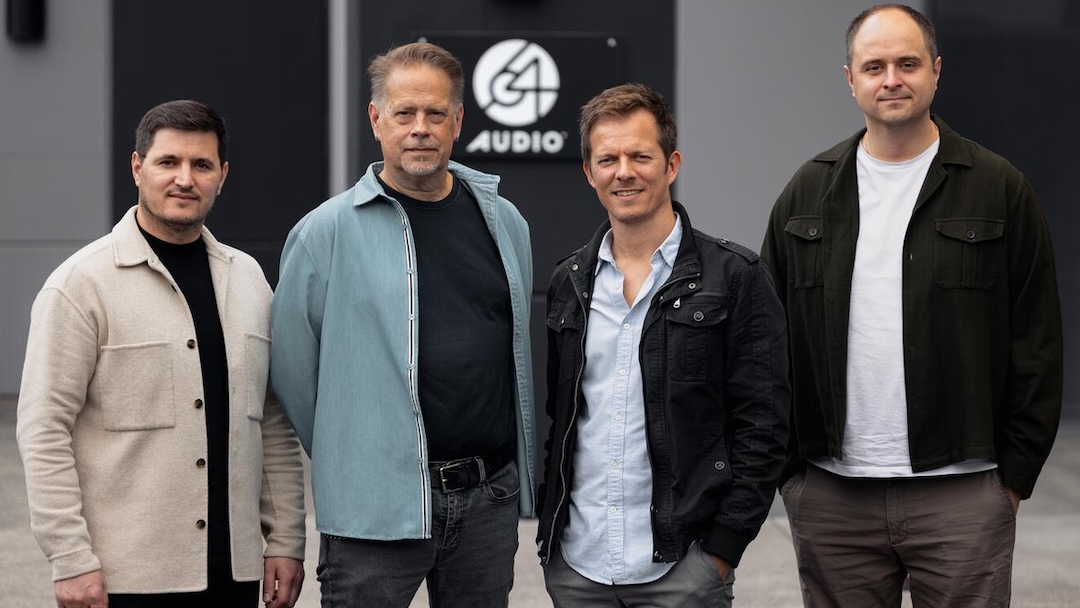
The September 30, 2026 announcement gave the daily leadership role to Stewart Millager, previously chief operating officer, as fractional CEO. Nick Matev became chief business development officer, and Filipp Sklyarov became director of sales and marketing. Belonozhko remained involved in strategy. He explained his decision through the need to focus on family and his confidence in Millager’s ability to carry the work forward.
The change puts a fresh meaning on an old concern. His first monitor project asked what he could make for somebody close to him. Sixteen years after incorporation, the question concerned how much of himself to keep giving to the company it became. He had learned to take an earphone apart, reconsider its arrangement and make it serve its purpose. Now the arrangement receiving his attention was his own working life.
Keep listening
Conversations, films & places to follow the work.