The trouble with a practice haircut is that the hair does not grow back. A student can repeat a video indefinitely. A mannequin offers a finite supply of second chances. Put those two objects beside each other, and you have a surprisingly good introduction to Pivot Point International: a company concerned with what happens between understanding a technique and trusting your hands.
- Design principles give students a reason for each move.
- Curriculum, digital lessons and practice tools work together.
- Replaceable hair caps let the headform stay for another lesson.
Its customers are beauty schools, educators, students, working stylists and brands. Its shelves contain textbooks, shears, student kits and heads with impressively patient expressions. Its software organizes courses and records progress. The interesting question is how those pieces became one business.
A design school hiding in a haircut
Leo Passage founded Pivot Point in Chicago in 1962, starting with five students. A Belgian-born hairdresser, he brought an idea influenced by the Bauhaus: craftsmanship could be taught through an understanding of design. Before making something, analyze its structure. Before cutting, understand the shape you intend to produce.
That changes the teacher’s assignment. Demonstrating a beautiful haircut gives students a result to imitate. Explaining the relationships underneath it gives them something they can use when the next client wants a different result. A repeatable vocabulary makes a practical skill easier to discuss, diagnose and teach.
“Knowing WHY allows you the freedom to create.”
Leo Passage, founder
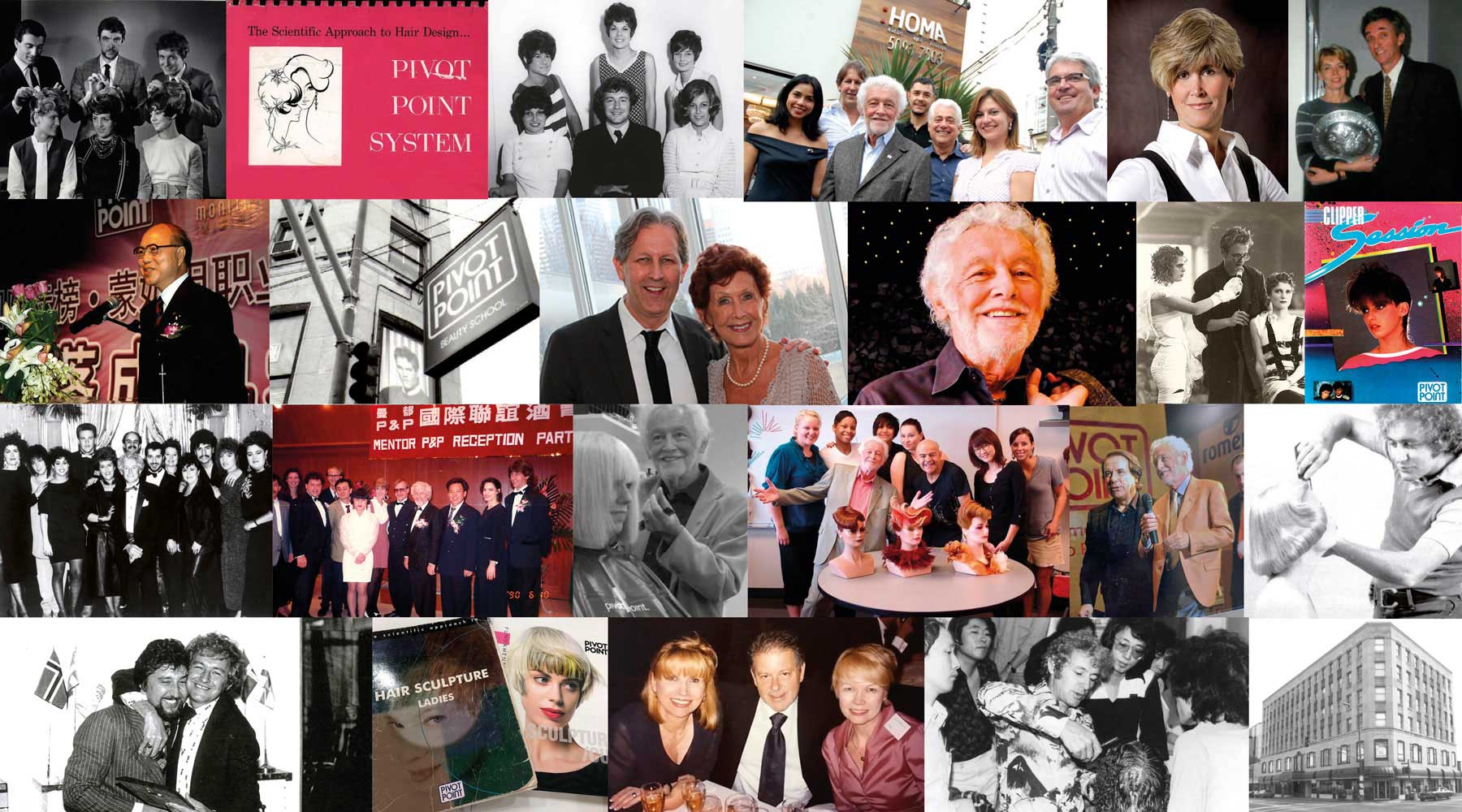
The company’s Scientific Approach to Hair Design emerged in 1965. Other schools wanted the system; a member-school network followed in 1969. Teaching could travel beyond the founder’s own classroom. Today, the family business combines educational publishing, digital learning and physical training equipment.
The head is reusable. The lesson keeps moving.
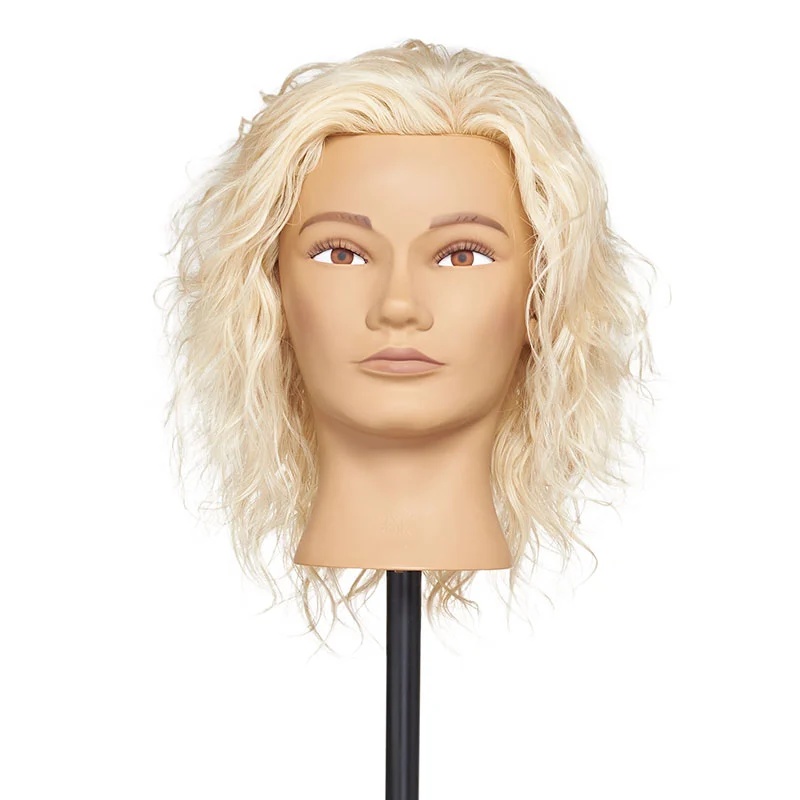
Consider the Cap Series. Rather than replacing an entire mannequin after its useful hair is gone, a learner can replace the hair cap and keep the underlying headform. Different lengths, colors and textures can share that foundation. It is a small physical distinction with consequences for storage, shipping and classroom planning.
The current student bundle combines five caps, a reusable headform and a dryer post. A hair-usage chart maps them to 63 Fundamentals: Cosmetology workshops. The teaching sequence matters: using the available length deliberately makes the consumable useful across more exercises. In 2024, Pivot Point says its foamless mannequin production exceeded its foam-filled production.
The price needs a closer look. Lana Cap, an ultra-light human-hair option for color practice, is listed at $65 in the US store. Its compatible small headform is another $17.60. That makes $82.60 before tax, shipping or a holder. The cap listing recommends color deposit and advises against further lightening. Buying practice hair means matching the material to the exercise.
The classroom has more than one texture
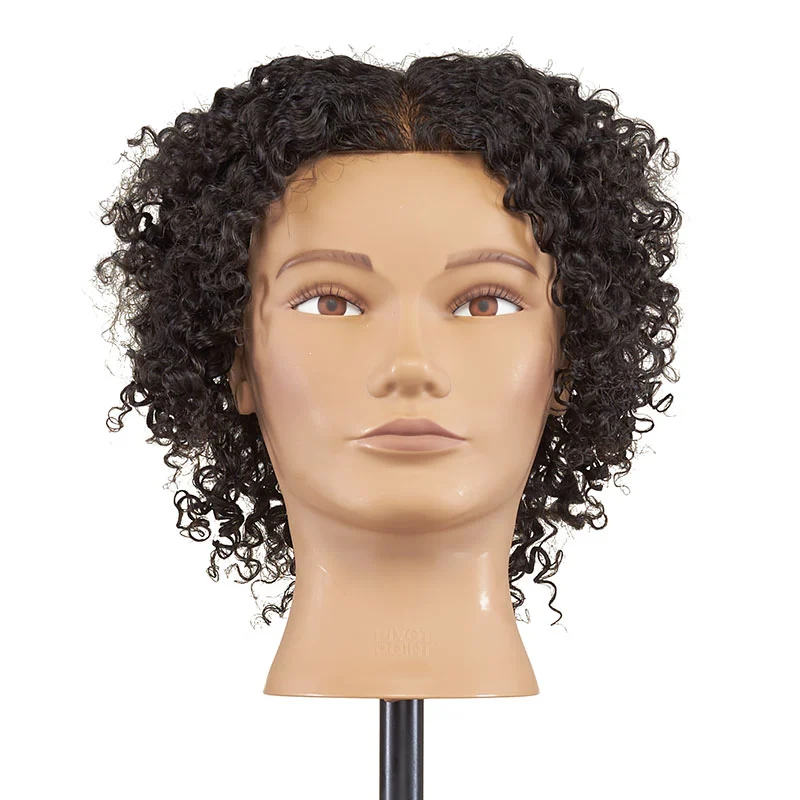
Pivot Point’s textured-hair offering pairs theory with practice: cleansing, hydration, cutting, styling and color, supported by mannequins spanning wavy through coily patterns. Its stated starting problem is specific. Schools can lack experience teaching texture; professionals who feel unprepared may decline services.
A lecture alone leaves that gap partly open. Students also need material on which to practice. This is where owning both the educational content and the practice-tool range makes sense. The broader lesson for any training business is useful: examine whether the equipment actually lets learners rehearse what the curriculum promises.
A haircut also needs a record
On screen, LAB lets schools arrange courses, assess learning and review student activity. Fundamentals programs cover cosmetology, barbering, esthetics and nails, with lesson plans and instructor resources. Schools can adapt the course flow rather than treat a textbook’s chapter order as an immovable timetable.
The administrative problem becomes clearer on a clinic floor. A completed service must be recorded and verified. Pivot Point’s July 2026 explanation of QuotaPro identifies familiar weak points: misplaced quota books, forgotten entries and competing spreadsheets. QuotaPro brings service tracking into LAB, connecting practical work with a learner’s progress.
Another July announcement introduced interactive study slides and responsive eBooks, including adjustable reading options and note-taking tools. The company describes a move toward active study across devices. These are product capabilities and intended benefits; a school still has to judge the learning results in its own classrooms.
Two businesses meet at the practice head
Pivot Point earns money from educational content and digital access, physical products and services. Schools buy a teaching system; individual professionals can buy equipment or advanced education. Salonability: Cut | Color | Style, for example, presents eight looks with technical workshops and video. Brands can commission customized mannequins and packaging.
That last service has industrial proportions: a published minimum of 5,000 units and a 12-month delivery timeline. It suits a planned brand program. A small salon needing training heads next week would look to the existing range.
Milady is a direct curriculum alternative, with its own CIMA platform, print materials and textured-hair education. Digital access alone therefore tells buyers little. The useful comparison is how content, practice products, teacher support and existing school systems fit together. Pivot Point’s combination gives schools several connected purchasing decisions to consider.
The factory belongs in the lesson
There is another participant in every practice session: the person who made the mannequin. Pivot Point says its hair-manufacturing facilities carry SA8000 certification, addressing working conditions and labor rights. It also works with Green Circle Salons on Cap Series recovery. Those claims extend the buying decision beyond the hairstyle a product can produce.
The idea worth borrowing is concrete. Write down the principles behind a skill. Build practice materials that express those principles. Give teachers a way to see what learners have done. Then inspect what gets used up along the way. Even a mannequin with a very good haircut can teach a business something about waste.