A nurse points a smartphone at a wound. On the screen, an image becomes a measurement, then a record that can be tracked over time. For Swift Medical, this is a product. For Virgo Investment Group, it is also an investment proposition: a familiar, laborious task in a large industry might become a more useful business if someone supplies the money and helps it grow.
THE COMPANY IN THREE MOVES
- Find the gap. Look for underserved markets or businesses at an inflection point.
- Build around it. Combine capital with people, processes and technology.
- Make the economics hold. A good idea still needs cash, customers and time.
Virgo led Swift’s $35 million Series B in 2021. In January 2024, funds it managed co-led another $8 million financing with BDC Capital’s Women in Technology Venture Fund. Swift earmarked that later money for technology improvements, including security, interoperability and device capabilities. This is what growth capital looks like when you follow it past the announcement: software has to work inside someone else’s working day.

Two kinds of unfinished business
Founded by Jesse Watson in 2009, Virgo occupies an interesting stretch of private finance. Its two stated strategies are creating and scaling asset-based or credit businesses, and providing growth equity to founder-led or family-owned companies. It can help assemble a business around assets, or help an existing business become more capable.
Take Zephyrus, its aviation platform. Virgo’s strategy describes leasing aircraft in the middle and later stages of their useful lives, alongside engine trading. Here the questions involve equipment, lease income and what an asset can earn next. In healthcare, the questions concern delivery models, adoption and the organization needed to serve more patients. Different machinery; different expertise.
Assets into businesses
Aircraft · engines · credit · insurance · royalties
Businesses into scale
Founder-led growth in healthcare, media and wellness
Shared operating work: people → processes → technology
The firm calls the opportunities “Market Seams”: places where an industry is disrupted or a market segment works inefficiently. Its potential partners are founders, family owners and corporate joint ventures with a specific use for capital. It competes for their attention with growth investors, credit providers and strategic buyers. The useful comparison is what each partner can actually do after the transaction.
The people behind the spreadsheet
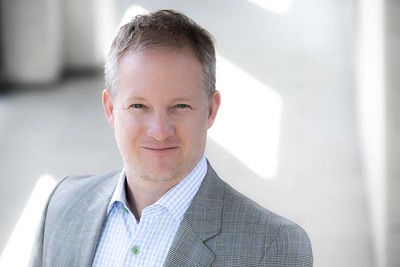
Watson’s background helps explain the range. Before Virgo, he worked at Eton Park, co-founded R6 Capital and worked at Silver Point. Those experiences included credit, distressed investments and special situations. The emphasis on finding an unusual financial problem has a professional lineage.
Virgo gives its operating capabilities astronomical names. Spica Alpha works on management, business processes and technology. Porrima handles brand building and marketing. In practice, the proposition includes help with the people who run a company and the way that company explains itself to customers. An investment committee may approve the money; a management team still has to make the business function.
The firm describes mutual respect and constructive disagreement as cultural principles. Its recruiting relationships are part of the machinery: Krauthamer & Associates is identified as a strategic sourcing partner. For an owner choosing an investor, that suggests a concrete diligence exercise: meet the people who would help, and ask what they would change first.
An insurer, assembled
Transverse Insurance Group makes Virgo’s company-building claim tangible. In 2018, Virgo helped establish the business with insurance executives Erik Matson and Dave Paulsson. Funding came through Virgo Societas Partnership IV and co-investment vehicles. The opportunity was the insurance fronting market, which connects specialist insurance programs with the carriers and capital that enable them.
“We take a flexible and collaborative approach at Virgo, launching businesses in attractive niches when the opportunity is right.”
Jesse Watson · August 2022
By the August 2022 sale announcement, Transverse had grown to more than 50 professionals. Mitsui Sumitomo’s parent, MS&AD, specified a $400 million base purchase price, with adjustments and an earn-out provision. The acquisition closed on January 3, 2023. That price describes the transaction; it does not reveal Virgo’s profit. The operational achievement is easier to see: a newly assembled specialist business found a larger insurance owner.
Announced base purchase price for Transverse in 2022.
Acquisition completed January 2023.
Then the farm ran out of runway
Another investment supplies a less comfortable test. Virgo backed indoor grower 80 Acres Farms in 2019. The proposition joined controlled growing conditions, automation and proximity to customers. In February 2025, the company disclosed $115 million in aggregate capital raises completed during 2024, naming Virgo among the investors. That was money from several investors, rather than a disclosed Virgo check.
On August 3, 2026, 80 Acres announced it was winding down. Its chief executive said it could not secure the capital required to continue. Reporting subsequently described a prospective sale that fell through. On August 25, the company filed for Chapter 7 liquidation in Delaware. The immediate constraint was funding. An appealing product and an established distribution network had not secured continued financing.
Put beside Transverse, the farm complicates any tidy theory of company building. A useful market opening does not settle the cost of serving it. Nor does a financing round establish that a business can support itself. The investor’s task keeps changing as the company grows.
The question worth borrowing
Virgo says it has raised over $2 billion since inception. Its March 2026 regulatory filing reports approximately $857 million in assets under management. These measure different things: cumulative fundraising and a reported asset base. Neither number, by itself, grades the investments.
A founder can borrow the underlying discipline: identify the constraint, name the operating change, and specify what the next dollar must accomplish. This approach depends on management cooperation, relevant expertise and enough liquidity to carry the work through. If the next round must arrive before the economics improve, timing becomes part of the product. Ask the question while there is still time to answer it.