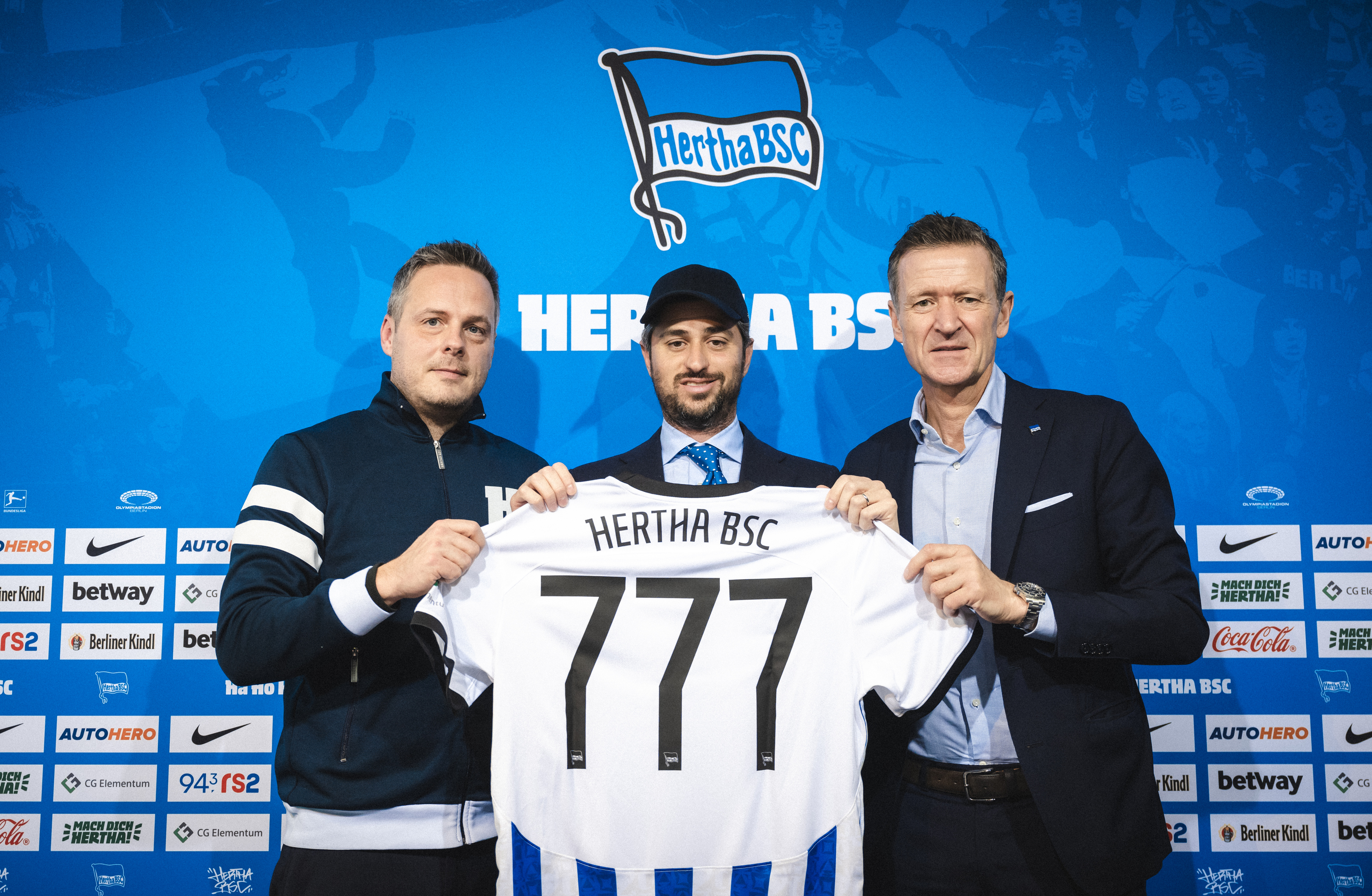
In March 2023, three men posed with a football shirt in Berlin. Across its back were three digits: 777. Hertha BSC had a new investor, and the photograph offered a wonderfully economical explanation of the arrangement. Here was a club with history. Here was a financier with money. Hold the shirt, smile, begin again.
- The business: a specialty-finance investor that expanded into insurance, airlines and football.
- The proposition: patient capital, backed by shared operating expertise.
- The outcome: Chapter 11 in August 2026; co-founder Josh Wander pleaded guilty to fraud that October.
The less photogenic part was the financing. Wander announced a €100 million investment commitment. Hertha’s managing director, Thomas Herrich, explained that money could reduce liabilities and help with licensing. “We are realists and won’t go chasing after daydreams,” he said. That was the appeal: an investor who could buy a struggling institution time.
The quiet business underneath
777 Partners began in Miami in 2015, founded by Joshua Wander and Steven Pasko following a management buyout of SuttonPark Capital. Its original expertise was in obscure financial assets, especially structured settlements. These turn a simple human preference into a business: someone entitled to future payments may prefer cash today.
A financing business evaluates those payments, prices the risk and arranges capital against them. The work rewards underwriting, servicing and an unusually close acquaintance with paperwork. It also demands discipline about ownership. A lender advancing money against a payment stream needs to know that the stream exists and that somebody else has not already claimed it.
Over time, 777 broadened into insurance, consumer and commercial finance, litigation funding and private credit. Its customers and counterparties included businesses originating financial assets, borrowers and portfolio managers. In litigation finance, capital helps fund legal claims. In aviation, the portfolio reached travellers through airlines and served other carriers through technology.
Buy the club. Share the back office.
The distinctive pitch was ownership with infrastructure attached. Portfolio businesses could draw on a central team for accounting, legal work, finance, human resources and technology. A founder could spend more time on customers while specialists handled the administrative machinery. The holding company sought recurring cash flows and efficiencies across businesses it owned.
Its permanent-capital positioning also offered an alternative to the timetable of a conventional private-equity fund. A club or young company might need years of investment. In principle, an owner investing from its own balance sheet could wait. That proposition helped explain 777’s interest in developing markets such as women’s football, where building an audience takes time.
businesses
cash flows
Shared services underneath. Long holding periods ahead.
Football made the strategy visible. Genoa, Standard Liège, Red Star, Vasco da Gama and Hertha appeared in its expanding network. These were investments in operating institutions with supporters, employees, sponsors and broadcasting relationships. The comparison set included other multi-club owners; 777’s wider financial-services portfolio gave its pitch a different foundation.
There were tangible products behind the acquisitions, too. GO7 launched in February 2023, combining Air Black Box, WorldTicket and AeroCRS. It reported 185 airline customers and offered technology for airline distribution and commercial operations. For a carrier, those tools addressed a practical problem: getting its inventory into more sales channels without surrendering control of its systems.
The numbers had different meanings
Scale arrived in impressive-looking units. In December 2021, Boeing announced an order for 30 additional MAX aircraft, valued at $3.7 billion at list prices. That was a published reference price, not a disclosed cash payment. By July 2022, another announcement took orders and commitments to as many as 134 aircraft, including a new firm order for 30.
March 2023
by April 2024
Hertha provides another useful distinction. The €100 million was a commitment. In April 2024, the club reported having received €75 million of equity investment and credited that support alongside tighter spending controls. Promised funding and money received belong in separate columns. So do aircraft orders and delivered aircraft.
The parent also raised capital. An adviser documented a $215 million recapitalization completed in June 2022, intended to refinance a credit facility and support insurance subsidiaries. Separately, the SEC later described an approximately $237 million preferred-equity offering across 777 and 600 Partners. Its complaint alleged investors were misled about earnings sufficient to support a 10% annual dividend.
The first crack was in the collateral
By March 2023, according to federal prosecutors, a lender was challenging double-pledged assets. Wander blamed an old computer system. The problem therefore preceded the most conspicuous public setbacks. In February 2024, AM Best cut reinsurer 777 Re’s financial-strength rating to C-, citing substantial exposure to less liquid affiliated investments and weak risk management.
Prosecutors described restricted settlement-business loans being diverted to acquisitions and expenses. Assets were pledged twice or had never been purchased; altered bank statements concealed missing cash. Those details identify a funding breach more serious than a disappointing investment return. The assets and the permission to spend the money were both in question.
A long holding period still comes with a very short cash calendar.THE FINANCING PROBLEM
Bonza entered administration in April 2024. Everton’s proposed sale to 777 expired on June 1. By August 2026, the investment group was in Chapter 11. A September bankruptcy filing described a wind-down and the loss of substantially all its operating sports and aviation assets. On October 15, Wander pleaded guilty to wire fraud and securities fraud, agreeing to forfeit at least $500 million. Sentencing was scheduled for March 2027.
- 2015Specialty-finance origins
- 2023Hertha deal; collateral challenged
- 2024Downgrade, grounding, expired takeover
- 2026Chapter 11; Wander’s guilty plea
What is worth borrowing from the idea
For an entrepreneur evaluating an investment partner, the useful lesson is specific. Shared accounting and legal support can remove duplicated work. Patient ownership can accommodate a slow turnaround. Both require funding that survives an interruption in new borrowing. Several businesses needing cash together can overwhelm the apparent comfort of owning assets in different industries.
The practical questions follow: who owns the collateral, who has first claim, and can restricted money legally reach the business that needs it? Those checks matter more than the number of countries on a portfolio map. The shirt in Berlin displayed the owner’s name. The decisive information was on the other side of the transaction.