The question came from inside his own company. At a Pomelo town hall, an employee asked Vincent Choi about its sustainability policies. He was the CEO. He should have had an answer. By his own account, he could not offer a satisfactory one, so he promised to come back with something better. For a founder whose business made payments easier, this was an awkward encounter with a problem that refused to be settled quickly.
Choi described that moment in October 2024, looking back over eighteen months of learning. He had spoken to more than a hundred people working in the field and completed two courses. An employee’s question had become an education. It also helps explain the chapter that followed his departure from Pomelo’s chief executive role: work on financing decarbonization, and a new company called Lana.
There is a familiar temptation in a founder’s biography to make every earlier decision point toward the eventual destination. Choi’s account offers something more interesting: an experienced executive being surprised. He knew finance. He knew payments. He had discovered a subject on which being the person in charge conferred remarkably little advantage.
A visitor’s phone, a merchant’s problem
Pomelo began with a modest mismatch. Chinese visitors were accustomed to paying through QR codes. Businesses serving them needed a way to accept those payments. Choi’s explanation of the original idea in 2020 was practical: help merchants meet customers where their payment habits already were. The opportunity lived in the gap between two familiar ways of buying something.
“Supporting the underdog has always been really important to me,” he said. It is an unusually useful sentence for understanding his choice of customer. The merchant was trying to make a sale, while the payment system could become another obstacle between doing the work and receiving the money.
His ambition included recovering something of the support once associated with a close relationship with a bank manager. There is a small irony here. A company using phones and software to reduce hardware wanted to bring back a decidedly human service. The technology was modern; the wish to have somebody on your side was older.
“Supporting the underdog has always been really important to me.”
Vincent Choi, 2020
The accountant learns to build
Choi trained as a chartered accountant and worked at Deloitte and Macquarie Bank. He studied for his MBA at Cranfield School of Management in 2010–2011. He later described that period as a turning point: he had no family-business or entrepreneurial background, and the course helped him imagine a career as a founder.
He and his future co-founders first supplied software to other fintech businesses. Pomelo followed in 2017. The sequence matters. They had worked on other people’s financial technology before deciding to build a business around their own capabilities.
When he returned to Cranfield in November 2021, his advice dwelt on teams, sensible shareholder arrangements and using boards well. He regretted having given an advisory board too little attention. He also warned against promising investors too much. These were lessons about the company around the product: who owns it, who challenges its decisions, and what happens when enthusiasm outruns delivery.
The accountant had acquired a founder’s appetite for opportunity without losing interest in the paperwork. Paperwork has an unfortunate reputation for spoiling a good story. In a growing company, it can prevent a much worse one.
Getting paid should travel with the work
By May 2021, Choi was describing a broader collection of tools: payment links, online shops, QR codes and contactless table ordering. His customers included construction, hospitality, retail, travel and transport. A single type of checkout would have been an odd answer to such a varied collection of businesses.
The underlying idea was portability. A phone could help a merchant accept money without buying additional equipment. A link could let a business request payment. A shop could sell online. Choi wanted low-cost tools that asked little of the people using them, including little in the way of new hardware.
His stated ambition was to give owners more time to grow their businesses and less financial administration. He said Pomelo regularly spoke to customers about what worked and what they needed. That puts the owner’s working day ahead of the payment provider’s favourite feature.
Consider the difference in emphasis. A payment company can talk about its technology for hours. A business owner still needs to finish a job and collect the money. Choi kept returning to the second conversation. The first only earns its place if it helps.
Led by Inference Partners, with plans to invest in products, hiring and expansion.
A bigger cheque, a different customer
In November 2021, Pomelo announced a US$10 million Series A led by Inference Partners. Force Over Mass, an earlier investor, also participated. The company planned to expand in Europe and Asia and strengthen its Singapore operation. Sonam Bhutia, whose previous experience included Alipay and FIS Worldpay, joined as chief commercial officer.
Choi’s explanation of the opportunity increasingly included banks and non-bank financial institutions. Helping them offer merchants affordable payment tools could extend Pomelo’s reach beyond the businesses it served directly. The customer buying the infrastructure and the merchant benefiting from it did not have to be the same organisation.
In September 2022, Pomelo set out plans to expand its Payment Platform as a Service business. Financial institutions and enterprises could use the platform under their own brands. Pomelo Pay continued serving UK businesses directly, with that experience feeding the wider platform.
This changed the shape of the work. Selling a merchant a tool means understanding that merchant’s needs. Supplying a financial institution means fitting into another organisation’s services and systems, too. Choi’s small-business mission now had an additional layer between the company and the person making the sale.
A change in distribution, with merchants still at the end of the chain.
The invoice is still waiting
In August 2022, Choi spoke about the distance between consumer payments and business payments. People accustomed to convenient checkout experiences were asking why transactions between companies remained less accommodating. Their expectations travelled with them from their personal lives into their working ones.
He also discussed working capital. An invoice could take months to be paid while the business carried costs in the meantime. Connecting companies to lenders was one part of the response he described. Accepting a payment and having enough money to keep operating were related problems.
His test for fashionable technology was refreshingly prosaic. Whatever new system arrived, businesses still needed to receive their money faster. The invoice did not acquire more patience because somebody had given the infrastructure an impressive name.
That is a revealing way to evaluate innovation. The vocabulary can change faster than the customer’s difficulty. Choi’s questions stayed close to the difficulty: when does the money arrive, how much does the process cost, and what can the owner get on with afterwards?
Leaving the chair, keeping a seat
In April 2024, Steve Vickers succeeded Choi as Pomelo’s CEO. Choi joined the strategic advisory board. Looking back, he recalled launching the company with Simon Verraest and Neil Cuthbert in a small London office and leading it to nearly US$2 billion in annualized processing volume.
That figure measures payments flowing through the business. It is not a statement of company revenue or personal wealth. Its relevance to his story is the distance between the initial idea and the infrastructure eventually handling those transactions.
Choi said he would remain involved in the company’s strategic direction. Later that year, Pomelo’s advisory board also included Joshua Kaplan, a Wilson Sonsini partner and former Checkout.com chief operating officer, and Sapan Shah of Mastercard. The founder who had once regretted giving advice structures too little attention now occupied an advisory seat himself.
The handover also creates a useful boundary in his biography. Pomelo’s subsequent work belongs to the company and its leadership. Choi’s own story continues beyond the chief executive title.
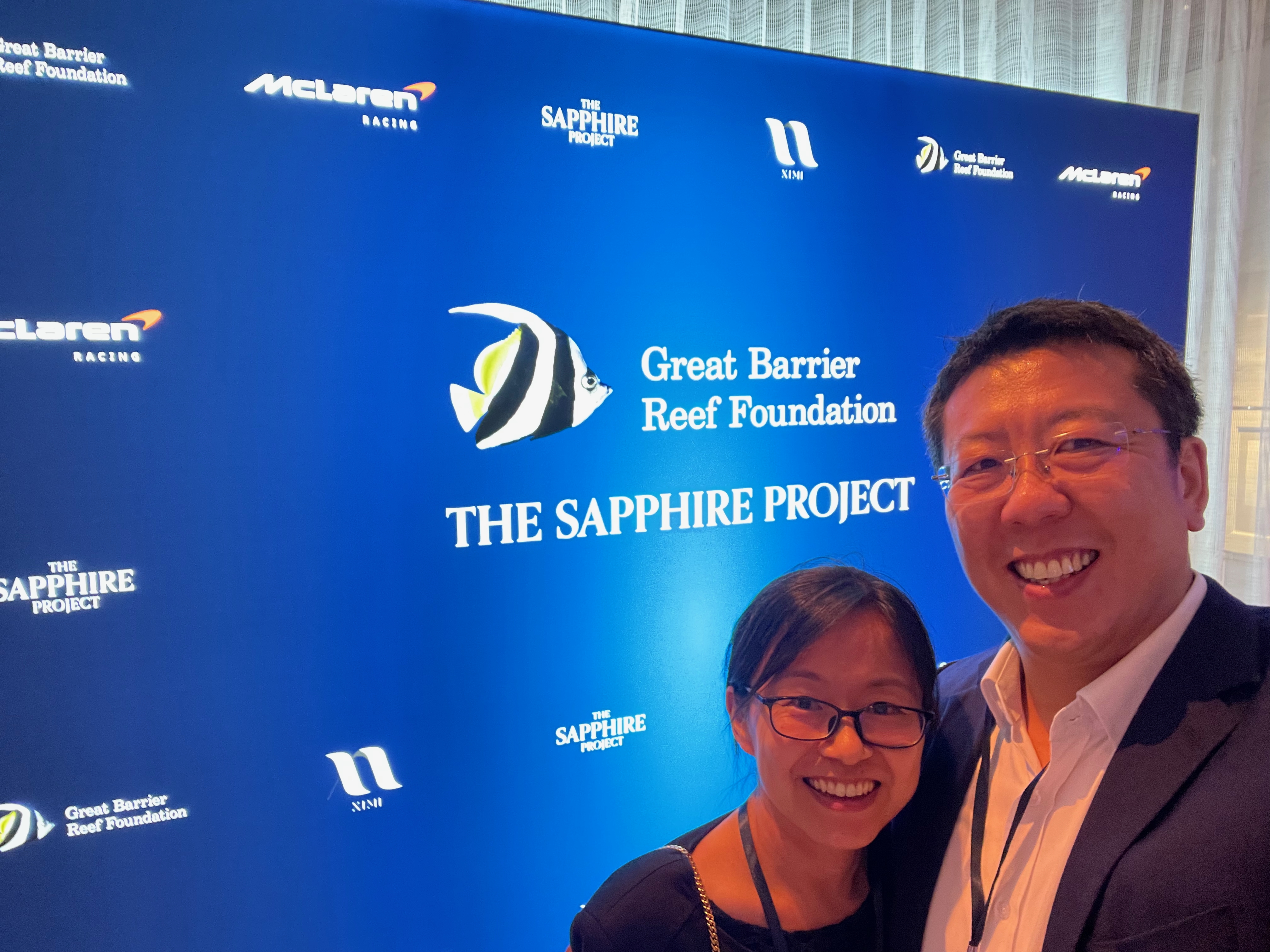
Another business owner, another complicated bill
Terra Verde, the advisory business Choi founded, approaches sustainability through the concerns of smaller companies. Its stated purpose is to help owners navigate changing requirements while protecting profitability. The language is recognisable from his payments career: let the owner concentrate on running the business.
His work also appears in Salamander Advisory’s team, where he is listed as a senior associate with experience in cross-border structuring, finance and payments across Europe and Asia-Pacific. Twynam currently lists him as an executive director. His career has acquired several settings, but finance remains the common tool.
In his climate writing, he has considered how environmental risks enter the subjects a finance team already handles: operating costs, asset values and financing. He writes as somebody learning to connect a new field to an existing profession. An accountant’s questions can be useful here precisely because they are specific.
Back to building, with Lana
By June 2025, that exploration had produced Lana. Choi described mid-market companies facing pressure to cut emissions while struggling to finance the work. A factory, fleet or supply chain could require investment with long or uneven returns. The available capital and the proposed project did not necessarily fit together.
Lana’s approach combines financial infrastructure with risk assessment and verification. Its team page names Choi and Gejia Ouyang as co-founders. On June 26, 2025, the company announced its first funding round, backed by Liminal, a venture creation group founded by Temasek, and Twynam Investments.
The aim is to help companies in Asia-Pacific finance changes that reduce energy and carbon costs. Those are ambitions for the platform, rather than proof that every difficult project has become financeable. Choi is building again, and the work has its own tests ahead.
His path now connects two quite different transactions: a merchant collecting a payment and a company funding a change to its operations. In each, the useful question is where the process gets stuck. The town-hall question had exposed a gap in his own knowledge. He took it seriously enough to go looking for the next gap.