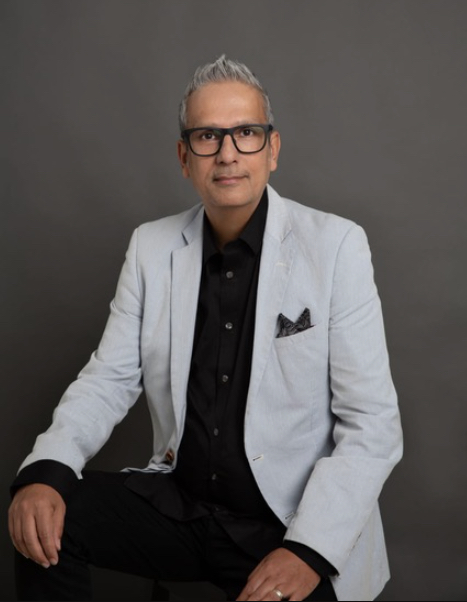
Vinay Samuel wrote his first lines of code at 14, on a Commodore 64, because he was pulled in by the sheer range of what the machine could be made to do. That curiosity never really switched off. It carried him through a two-decade career at some of the most influential names in enterprise data - Teradata, Greenplum, Vertica, GridMatics and Hewlett-Packard - where he held senior roles across Asia and the Pacific and became an early pioneer of event-based analytics and parallel database technology.
He was, by most measures, doing well. There was a million-dollar contract on the table. But somewhere along the way he had grown frustrated. The industry he had helped build kept solving the same problem the same expensive way: copy your data out of wherever it lives, move it into a giant central lake, then analyse it. It was slow, it was costly, and it rarely felt like innovation.
So in 2013 he turned the contract down and went into his garage in Melbourne. The idea was almost heretical for someone who had spent his career selling the old model: what if you left the data where it was and brought the question to it instead? What if disparate sources - databases, files, streams, cloud stores - could be queried together, in real time, without first hauling everything into one place?
The 30-second proof
That idea became Zetaris, and what the company describes as the world's first analytical data fabric for enterprise reporting, analytics and AI. The trouble with a genuinely new idea is that people don't believe it. Samuel tells the story of early customers who simply refused to accept the numbers. A query that took their existing systems eight hours ran on his technology in about thirty seconds. He had to prove it, live, before anyone would take it seriously.
Belief cost him. He bootstrapped with his own money, eventually putting in around three million dollars of personal funds, and at one point sold the family home to keep the product moving. He was a father of four when he made that bet. His wife, he has said, backed the risk. It is not a decision most people make lightly, and he does not pretend it was easy.
An immigrant's inheritance
Part of that appetite for risk is inherited. Samuel is a first-generation Australian. His father arrived from India in 1972 with about a hundred dollars, having left wealth behind because of government restrictions on what could be taken out. Watching that sacrifice shaped how Samuel thinks about work, significance, and the willingness to start again from very little. He has said he wants his own four children to see the same thing modeled - that meaningful work is worth taking a chance on.
The bet has paid off in the ways that get written up in business pages. Zetaris has raised roughly thirty million dollars from investors including In-Q-Tel, the venture arm backed by the US intelligence community, alongside Exto Partners, Vulpes Ventures and 72 Capital. It has been reported at a valuation north of $150 million. Its customer list reads like a directory of critical infrastructure: Telstra, NBN, Optus, Nokia, BUPA and Melbourne Water, with partnerships alongside IBM, Accenture and Ernst & Young. In 2019 the Australian Computer Society named him CXO Disruptor of the Year.
The AI turn
Samuel's timing looks better every year. As enterprises rush toward AI, they keep running into the same wall he identified a decade ago: the models are ready, but the data is scattered, messy and slow to prepare. He argues that data preparation - not the models themselves - is the real bottleneck and the major area of investment for anyone serious about AI. Zetaris has repositioned around exactly that, pitching a platform that readies data for AI projects far faster and at a fraction of the usual cost. The garage experiment has become a company built for the moment the rest of the market finally arrived at.
For all of it, he keeps a light touch. He runs a culture where people are encouraged to be, in his phrase, positively critical - to challenge each other hard and then let it go, holding strong opinions loosely so that disagreement never curdles into resentment. He credits his team and his board rather than himself. And when the week is done, he picks up a guitar. Samuel plays lead in a cover band called Rip It Up, going since 2000; one of his bandmates, a finalist on The Voice New Zealand, ended up working at Zetaris. "Never take yourself too seriously," he likes to say. "Make sure work is fun. Life is too short."