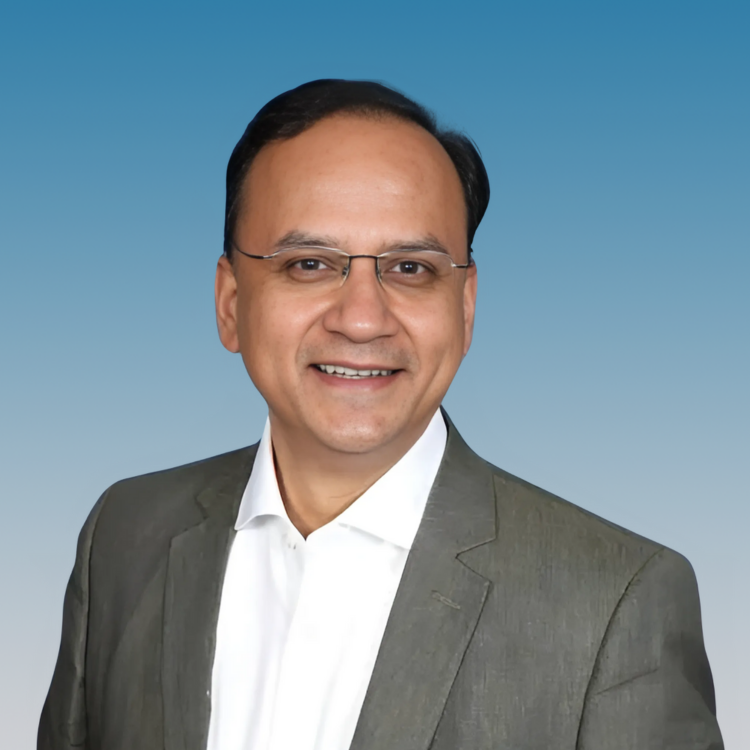
The Engineer Who Named the Problem
In 2018, Rohit Choudhary sat at a whiteboard with three colleagues from Hortonworks and asked a question that had been gnawing at him for years: why do companies spend millions building data platforms and still wake up to broken pipelines, bad reports, and angry stakeholders? The answer wasn't infrastructure. It was visibility.
They called it data observability. The term didn't exist before they said it. Now it shows up in every major enterprise tech vendor's pitch deck.
Acceldata, the company Rohit and his co-founders built around that insight, monitors the health, quality, and cost of data ecosystems at exabyte scale - the kind of scale where "a few bad records" means millions of corrupted decisions across an enterprise. Backed by Insight Partners, March Capital, Lightspeed, and Sorenson Ventures, it's become the platform that Fortune 500 data teams call when they need to trust what their pipelines are doing.
Not maintaining data quality today would mean garbage in, disasters out.
- Rohit Choudhary, CDO MagazineWhat makes Rohit a different kind of enterprise CEO is the career arc behind him. He didn't come from sales or strategy consulting. He spent a decade building the actual infrastructure - as an engineering leader at InMobi, where he scaled systems handling billions of events, and then at Hortonworks, where he ran Dataplane Services and watched enterprise clients pour resources into data analytics only to be undone by the basics: pipelines that silently failed, data that drifted without warning, quality issues that surfaced at board meetings instead of in dashboards.
That experience gave him a precision that most platform founders lack. He didn't build Acceldata to sell software. He built it to solve a problem he'd watched break companies from the inside.
Four Engineers From the Same Team
The founding story of Acceldata is almost too clean to be fictional. Rohit, Ashwin Rajeeva, Gaurav Nagar, and Raghu Mitra Kandikonda were all on the same engineering team at Hortonworks. Four people who had spent years with their hands inside the plumbing of enterprise data, watching the same failure patterns repeat across customers ranging from global banks to healthcare systems.
When Hortonworks merged with Cloudera in 2019, the team had already moved. Rohit had the company incorporated and the pitch sharpened. The problem they'd seen from the inside was now their market.
Data observability wasn't a buzzword Rohit borrowed. It was a term he needed to exist, so he created it - and then built the product to justify it.
The early days weren't a stealth build in a Palo Alto garage. They went directly at the hardest customers: large enterprises with complex, hybrid data environments running Hadoop, Spark, Kafka, and Hive simultaneously. The environments where data quality monitoring tools broke or couldn't see what was happening. Where a pipeline anomaly could go undetected for days before showing up as a wrong number in a quarterly report.
"The most valuable professionals in the age of AI won't be the best programmers, but those with the clearest thinking and deepest domain expertise."
- Rohit ChoudharyAcceldata's platform is built to be infrastructure-agnostic by design - it works across Snowflake, Databricks, Apache Kafka, Spark, Hadoop, Kubernetes, Airflow, and every major cloud. That breadth wasn't an accident. It was a direct response to what Rohit had seen at Hortonworks: enterprises don't run one stack. They run everything, often simultaneously, migrating piece by piece.
Watching Data While You Sleep
Describing what Acceldata does in one sentence: it tells you when your data is wrong before anyone else finds out. The more precise answer involves four interconnected capabilities - data quality monitoring, pipeline observability, compute performance optimization, and cost management - all running in real time across an enterprise's entire data ecosystem.
The problem Rohit identified is structural. As companies pushed data workloads into the cloud, they gained scale but lost visibility. A query that costs $50,000 to run on a misconfigured Snowflake cluster looks identical to one that costs $500 - until the bill arrives. A Kafka stream that starts dropping records 0.001% of the time is undetectable by most monitoring tools. Acceldata catches both.
Data Quality
Real-time monitoring with customizable rules, anomaly detection, and automated alerts before bad data reaches downstream systems.
Pipeline Observability
Full lineage tracking and health analytics across complex, multi-hop data pipelines in hybrid and multi-cloud environments.
Compute Performance
Optimization recommendations and monitoring for Spark, Hadoop, and cloud-native compute - reducing cost and improving efficiency.
The AI angle is where Rohit has been spending most of his recent intellectual energy. As enterprises rush to plug their data into large language models and agentic AI systems, the tolerance for data quality failures shrinks to near zero. A model trained on corrupted records doesn't just produce bad outputs - it produces confidently wrong outputs at scale.
Data observability serves as a precursor to implementing AI at scale.
- Rohit ChoudharyThe platform's latest direction, which Rohit calls "agentic data management," deploys AI-powered agents that don't just observe - they act. Enforcing data policies, flagging anomalies, triggering remediation workflows, and maintaining compliance across multi-cloud environments without waiting for a human to check a dashboard. The vision is a data estate that monitors and governs itself.
$105 Million and a Category to Show For It
The $50M Series C in February 2023, led by March Capital and joined by Sanabil Investments, Industry Ventures, and Insight Partners, was the moment the category bet paid out in formal venture terms. Eight months later, Prosperity7 Ventures added another $10M - alongside the announcement of 100% year-over-year revenue growth. Two data points that, together, describe a company that has found its stride.
Twenty Years Toward One Company
The Philosophy Behind the Platform
Rohit writes and speaks prolifically for someone running a 260-person company in hypergrowth. He contributes to DATAVERSITY, publishes on Medium, maintains a Substack newsletter on data observability, and shows up on podcasts arguing positions that occasionally make incumbent vendors uncomfortable.
His intellectual framework is consistent across venues: data governance has to be operational. Real-time. Not a compliance checkbox you run quarterly. The difference between a company that successfully deploys AI and one that generates expensive hallucinations is whether the data feeding those models has been watched, verified, and trusted - continuously.
"Governance needs to be operational and real-time rather than a one-time compliance exercise."
- Rohit ChoudharyOn the future of enterprise work, he's been direct in a way that cuts against a lot of AI hype: the most valuable professionals won't be those who write the best prompts or ship the most model API calls. They'll be the ones who understand their domains deeply enough to know when an AI is wrong. That framing - domain expertise as the competitive moat in an AI-saturated world - reflects both his own career trajectory and his read on where enterprise software is heading.
His piece of advice for enterprises rushing toward AI deployment is characteristically blunt: if your data isn't trustworthy, your AI isn't trustworthy. No amount of model sophistication corrects for what he calls "garbage in, disasters out."
What the Record Shows
- Coined the term "data observability" in 2018 - a phrase now standard across the enterprise tech industry
- Built the world's first enterprise data observability platform from scratch with co-founders from the same Hortonworks team
- Raised over $105.6 million across seed, Series A, B, C, and C extension rounds from top-tier institutional investors
- Delivered 100% year-over-year revenue growth, announced October 2023
- Successfully exited first startup Appsterix via acquisition by [24]7 iLabs - making him a serial founder before Acceldata
- Grew Acceldata to 260+ employees across global offices while maintaining category leadership
- Featured speaker at The Montgomery Summit and frequent voice across CDO Magazine, Unite.AI, DATAVERSITY, and major industry podcasts
- Built a platform supporting exabyte-scale data processing across every major cloud, data warehouse, and streaming infrastructure