The quick read
- Victorious is a search agency, not a buffet of paid media, social, branding, and SEO.
- Its work combines technical repair, content, authority building, implementation, and measurement.
- Public pricing starts around $5,999 a month; the preferred term is 12 months.
- The new bet is that SEO and AI-answer visibility belong in one operating system.
- Copy the sequence: commercial question, technical access, useful answer, outside validation, business result.
There is an old agency trick called saying yes. Yes, we can run the ads. Yes, we can post to Instagram. Yes, we can redesign the website, write the slogan, film the founder, and somehow fix the search rankings before Tuesday. The trick works because every client problem becomes billable. It fails because the agency gradually becomes a building full of people who are all excellent at different things and responsible for the same vague promise.
Victorious tried the opposite. Founded in San Francisco in 2013 by Michael Transon, it became an SEO-only agency in 2016. The decision is more radical than the acronym makes it sound. Search touches the website, the words, the code, the reputation of the domain, and the route from a question to a purchase. To specialize in search is to claim that all of those things can be coordinated around a single moment: someone types what they need into a box.
The refusal was the product
The company built a repeatable service around that moment. Audit the site. Find the technical obstacles. Map the phrases real buyers use. Decide which pages should exist. Improve the pages already there. Earn links and mentions elsewhere. Watch what happens to rankings, qualified traffic, conversions, and revenue. Report it clearly enough that a marketing leader can defend the spend.
This is what Victorious sells to SaaS businesses, ecommerce retailers, financial firms, healthcare providers, law firms, universities, private-equity portfolios, and enterprise teams. The recognizable customer list includes Salesforce, SoFi, GE Digital, and Delta Dental. The company says it has served more than 1,050 brands and managed 15.3 billion search impressions across client campaigns.
Make the site fast, crawlable, structured, and intelligible.
Match pages and language to the questions buyers actually ask.
Build links, mentions, and evidence beyond the company's own site.
Connect visibility to leads, sales, revenue, and strategic goals.
The difference from a conventional full-service shop is not a secret tactic. It is the coordination. Technical SEO does not sit in one corner while writers chase traffic in another. A content cluster should strengthen a commercial page; internal links should tell search systems what matters; schema should make the facts easier to parse; a dashboard should reveal whether any of it produced useful behavior.
What failed first was usually boring
Agency case studies like drama, but search problems are often plumbing. SF Office Spaces already appeared on page one when it hired Victorious. Visitors simply left before reaching the useful material. The agency ran a 200-plus-point technical audit, changed layout and content, then ran another audit. It took six months. The reported result was 592 newly ranked keywords and 91 percent more organic traffic.
CocuSocial offers the more cinematic version. Its campaign was built to help an in-person cooking-class company enter new markets. Then the pandemic made the product temporarily impossible. The old keyword plan failed because the old customer intent had disappeared. Victorious redirected the content toward virtual classes. CocuSocial later reported 116 percent more ranking keywords and a 1,176 percent increase in page-one keywords.
In other words, the first thing to fail was not always the ranking. It might be crawlability, a page that answered the wrong question, a site that leaked visitors, or a business model that had changed faster than its content. This is why the useful unit of work is not “publish a blog post.” It is diagnose, prioritize, implement, and check.
Exceptional Villas
Cunningham Legal
GE Digital
These are selected outcomes, not a promise that every chart goes up and to the right. Their value is diagnostic: each connects specific work to an observable business condition. Exceptional Villas had spent six years with other SEO agencies and still struggled to appear within the first ten pages. The Victorious campaign combined market positioning with organic search and reported a 780 percent return on the SEO investment. A reader can reasonably ask about time period, attribution, and survivorship. A buyer should.
“Good research doesn't just answer questions. It raises better ones.”Michael Transon, founder and CEO
Then the click began to disappear
The agency's clean little universe changed when the search box started composing answers. A brand could rank well and still be absent from the paragraph an AI system placed above the links. Or it could be mentioned without receiving a click. The old scoreboard - position, traffic, conversion - no longer described the whole game.
Victorious did not create a detached “AI department.” It folded answer engine optimization into the same system. Its AEO work audits how machines interpret a company, researches the questions buyers ask in conversational tools, restructures content for retrieval, adds schema, checks access for new crawlers, and looks for third-party sites that influence the answers. The company tracks share of voice across groups of prompts rather than celebrating one flattering ChatGPT response.
What changed its mind was evidence. In its Q2 2026 research, Victorious reported that AI systems could accurately recognize 96 percent of the brands tested, yet 89 percent of those brands never appeared in generated answers. Recognition was not recommendation. The stronger signals came from outside a brand's own website, and different AI platforms favored different sources. The neat old assumption - rank in Google and the rest follows - stopped holding.
The price of a long clock
Victorious is not priced like a tool subscription. Clutch lists SEO packages starting at $5,999 a month, a minimum project size of $50,000, and an average hourly rate above $300. Victorious describes its B2B engagements as monthly retainers with a preferred 12-month term; enterprise programs typically run from $20,000 to $45,000 a month. The scope moves with the size of the site, content needs, backlinks, and implementation burden.
Public package floor. Enterprise work is typically listed at $20,000 to $45,000 monthly, with final cost shaped by complexity and execution.
That makes the service a poor fit for a company seeking an inexpensive experiment, an instant traffic spike, or a vendor to work around an immovable website. Search compounds only when someone can approve changes, subject experts can correct the content, engineers can fix the site, and the business can wait long enough for the market to respond. It also struggles where customers do not search for the category at all. No audit can manufacture intent from silence.
There is another useful caveat in the public reviews. Clients praise Victorious for organization, communication, and technical depth, while some say agency-written content needs more customization to match the brand's voice. That is not an exotic failure. It is what happens when process meets personality. A repeatable system can find the question and structure the answer; the customer still has to supply the lived knowledge that makes the answer sound true.
The part worth copying
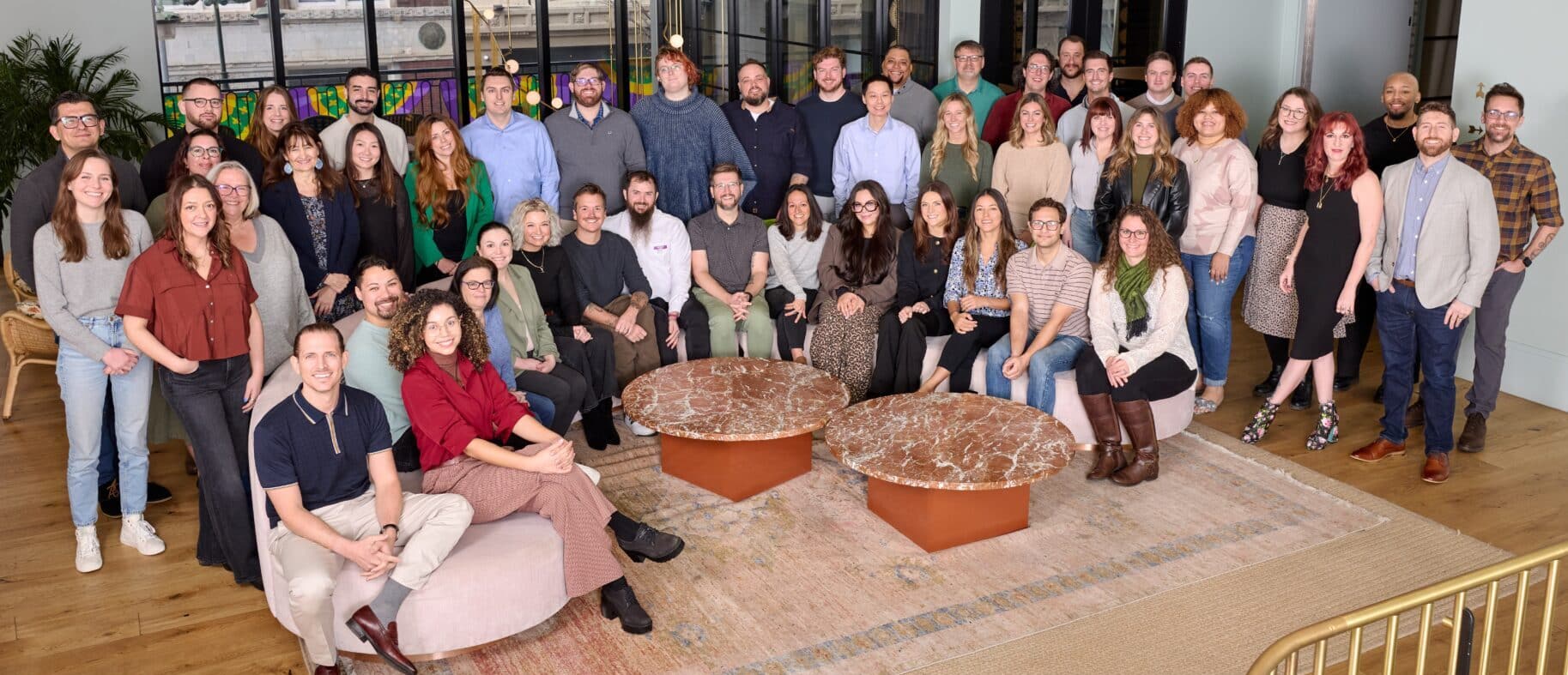
Most companies do not need 89 people or an award shelf to borrow the Victorious sequence. Start with five questions a buyer asks when comparing options. Check whether your site can be crawled and whether each question has one clear, authoritative home. Put the concise answer early. Connect it to a product or service page. Add evidence a skeptical editor would keep: named experience, original data, specific outcomes, and consistent facts about the company. Then look beyond your own domain. Which trade publications, review sites, communities, and reference pages do search and AI systems already trust for this question?
Measure a group of questions over time, not one lucky prompt. Watch mentions and citations alongside qualified visits and conversions. The principle is almost annoyingly plain: make it easy for a person to understand what you do, easy for a machine to retrieve the same facts, and easy for an outsider to verify them.
Victorious's original bet was that search deserved an agency of its own. Its new bet is subtler. Search is no longer a destination or even a tidy list of pages. It is the layer that forms an opinion before the customer arrives. The box learned to talk. Victorious is trying to make sure it gets the story right.
Michael Transon founds Victorious in San Francisco.
The firm chooses an SEO-only model and makes specialization the operating principle.
Five Agency of the Year wins and three Inc. 5000 appearances make the quiet discipline more visible.
AEO, original research, and The Search Signal podcast extend the system from rankings into AI answers.