The treadmill cost £40. Its new owners supplied the rubbish. In a garage, Victor Dewulf and Peter Hedley assembled an early version of a machine that would learn to recognise what other people had thrown away. The belt moved. The camera watched. The neighbours, whether they knew it or not, had become suppliers to a computer-vision experiment. A piece of exercise equipment had finally found a persuasive reason to stay indoors.
The operation later spread to Dewulf’s parents’ garden. This was the less photogenic end of starting a technology company: finding enough actual waste to test an idea. Rubbish was both the subject and the teaching material. Before there could be a business recovering value from discarded things, there had to be a system that could tell those things apart.
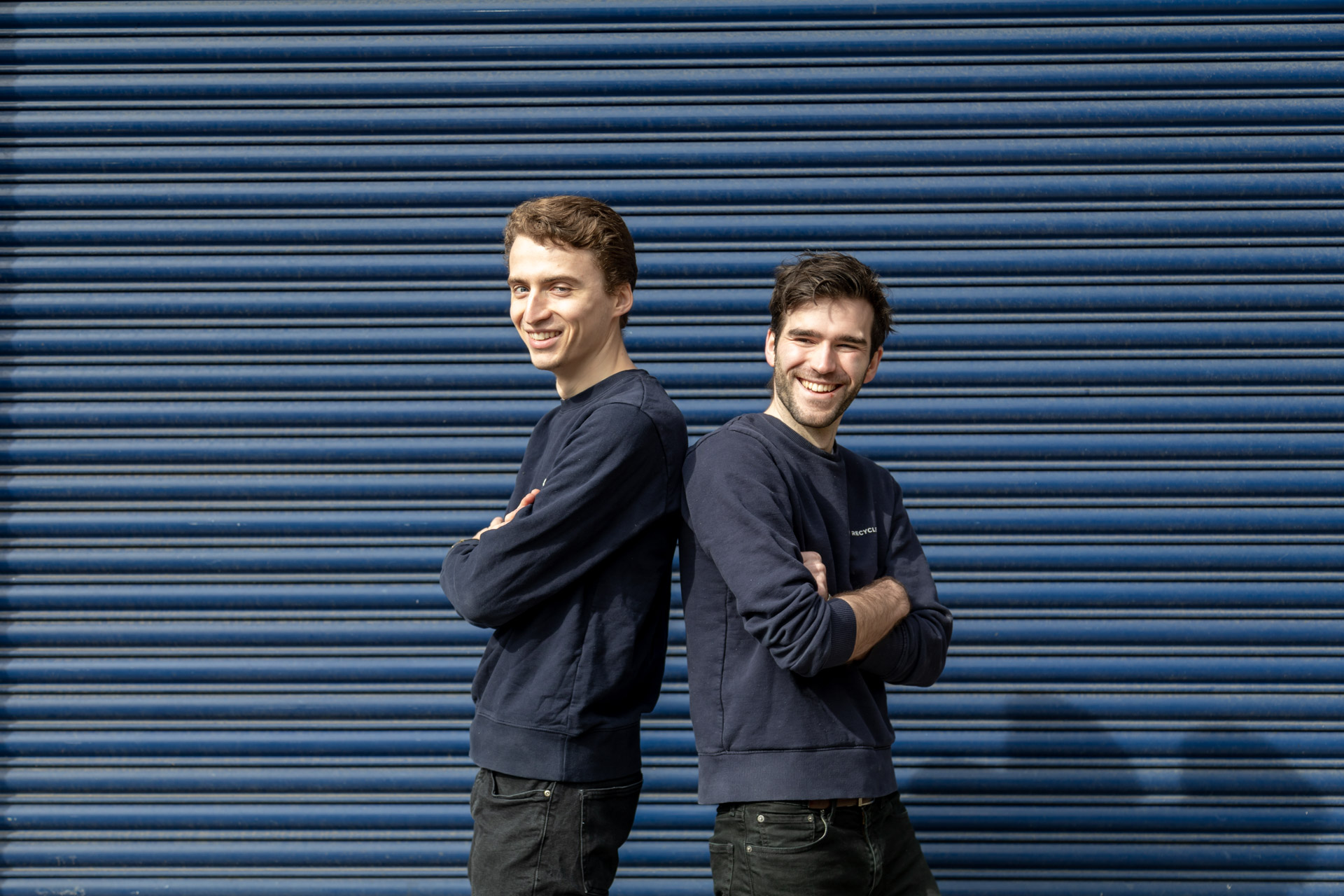
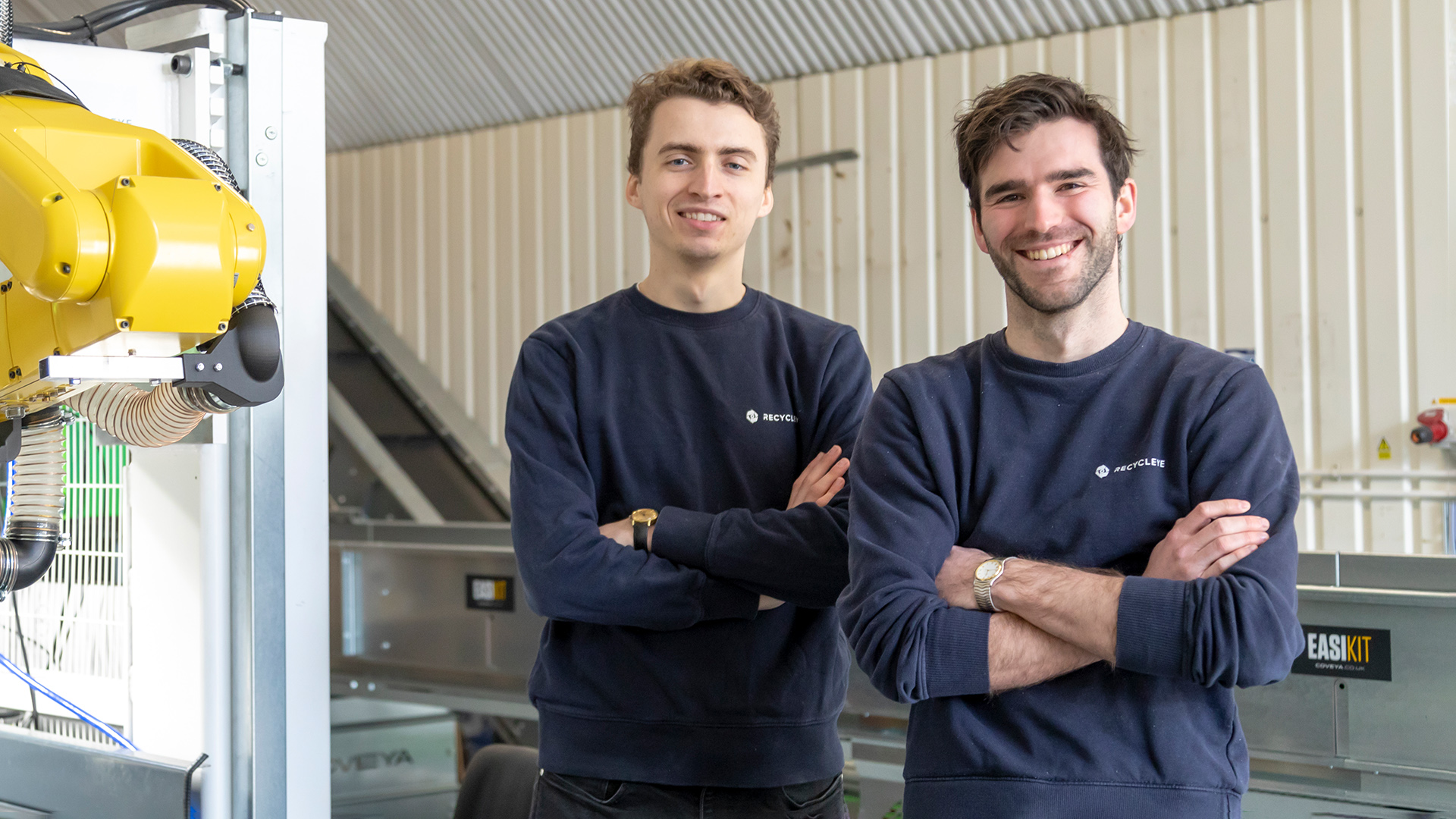
Dewulf had already worked at Goldman Sachs. He was returning to a question from environmental engineering, with a friend who understood computer vision and a prototype sufficiently inexpensive to invite further experiments. In 2019, the pair founded Recycleye. The company would give him a rather different relationship with the word asset.
A garden with an unusual crop
The origin matters because waste sorting resists the tidy conditions of a presentation. Material arrives in mixed streams. It moves. A system must identify useful items in time for equipment to separate them. A convincing picture on a laptop leaves quite a lot of engineering unfinished.
Dewulf’s first encounter with the problem came through his studies and a visit to a recycling facility. He saw how much sorting depended on manual work. That observation supplied a practical question for his research: could computer vision help recover more material at a cost that made commercial sense?
The garage equipment was an economical way to start answering it. A moving belt reproduced part of the setting in which the technology would have to work. Locally gathered waste supplied variety. The garden supplied space. One can admire the ingenuity while also appreciating the generosity of the people who owned the garden.
A Belgian abroad, with a taste for models
Dewulf grew up in Etterbeek, Brussels, and attended the International School of The Hague as a teenager. His working life has included experience in Abu Dhabi, Dubai, Houston and Brussels. London became the base for Recycleye. The international itinerary preceded the international company.
Entrepreneurship also had a familiar place in his family. Both parents ran businesses, and his brother started a company in Los Angeles. As an undergraduate, Dewulf tried selling electric lighters. He has described reaching 50 sales a day. A small online business offered a preview of the variety that later attracted him to running a larger one.
His academic choice was less predetermined than a polished founder biography might suggest. “Full disclosure: I was not certain what I wanted to do.” Environmental engineering appealed because it crossed subjects. He completed Imperial College London’s MSc in Environmental Engineering with Business Management in 2018, receiving two departmental prizes.
Banking followed. Dewulf has explained the connection through modelling: understanding variables, probabilities and consequences transfers between environmental systems and markets. That makes his departure from Goldman Sachs in 2019 easier to understand. He returned to Imperial to begin doctoral research on computer vision and waste, then left the PhD to concentrate on Recycleye.
“Full disclosure: I was not certain what I wanted to do.”
Victor Dewulf, on choosing environmental engineering
The second set of eyes
Hedley supplied the complementary discipline. The two had known each other at university; their collaboration brought Dewulf’s waste-management problem together with Hedley’s computer-vision experience. Dewulf’s account includes a small confession about struggling with Python and falling back on MATLAB. Even the early software had its diplomatic arrangements.
The eventual sorting process is straightforward to describe and demanding to execute. A camera observes material travelling along a conveyor. Software identifies objects and assigns categories. Sorting equipment receives instructions about what to recover. The timing must hold together while the contents of the belt keep changing.
That distinction between recognising and moving is useful. Recycleye’s vision technology can provide information, while a robotic arm supplies one means of physically sorting items. Optical sorting can use air jets instead. Dewulf and Hedley were building a way to make visual judgement useful inside a working industrial process.
- 01 / SeeA camera observes the belt.
- 02 / IdentifyAI classifies the material.
- 03 / SeparateA robot or air jet sorts it.
- 04 / LearnData describes the stream.
The physical outcome gives the software its purpose. Aluminium, paper and different plastics have different destinations. A buyer wants a usable concentration of a particular material. The more accurately a facility can separate its incoming stream, the more confidently it can offer the resulting output for another use.
An award cannot sort a bottle
Recognition arrived early. In 2021, Dewulf and Hedley appeared in Forbes’ Europe 30 Under 30 Social Impact list. The following year, they received joint first place in the inaugural European Patent Office Young Inventors prize. The project that began with an improvised conveyor had become an invention with customers and an audience beyond the recycling industry.
The awards make a convenient pause in the story. The operating company had to keep going. Recycleye needed installations that worked, customers who wanted to buy again and people capable of handling hardware, software, sales and support. An invention acquires a different set of obligations when somebody pays to put it into a plant.
By February 2023, Recycleye announced a $17 million Series A led by DCVC. It reported installations across several countries, including the UK, Germany, France, Australia and the United States. Its team then numbered 33. Funding was intended to improve the technology and expand the operation supporting it.
Dewulf’s practical lessons extended to choosing customers. He has urged founders to establish whether a prospective buyer has the budget, timing and operational need for a product. He also described repeatedly having to reinvent his own role as the business grew. The changing job was part of entrepreneurship’s appeal.
The carton has to pay its way
There is an unromantic calculation underneath this work. Recovering a material needs to be worthwhile for the organisation doing the recovering. Labour, equipment and processing cost money. The output has a sale value. A better sorting system can alter both sides of that calculation, by changing what a facility spends and what it can sell.
This helps explain Dewulf’s movement between engineering and business. His product has to make an environmental task commercially workable. A bottle recognised correctly is progress; a reliable installation that improves the plant’s economics gives an operator a reason to keep doing it.
Cartons provide a concrete example. In 2025, Tetra Pak backed the installation of Recycleye’s QuantiSort at Cumbria Waste Management in Carlisle. The system used cameras and AI to detect food and beverage cartons, then pneumatic valves to separate them. The announced output purity exceeded 98 percent.
That number belongs to the stated installation and application. It describes how much of the resulting carton stream is the intended material. It gives a useful glimpse of the task Dewulf’s business is trying to perform: recognise a specific object, recover it and produce an output suitable for the next processor.
Reported carton-output purity at Cumbria Waste Management’s QuantiSort installation.
The company’s reporting on 2024 offered another view of the detail available from these systems. Its carton observations differed between Dublin and English cities, reflecting the packaging passing through particular facilities. Once a machine can recognise individual items, it can also make the stream less anonymous to the people managing it.
Dewulf has also taken the argument beyond the factory floor. In a conversation with First Mile founder Bruce Bratley, he described higher recycling rates depending on several things working together: automation, consistent government policy and consumers understanding their part in the process. The machinery belongs inside a larger chain of decisions. For someone whose business sells sorting technology, it is a useful acknowledgement of how much happens before an object reaches the belt. Collection, consumer choices and plant operations all influence what the equipment encounters. His ambition requires people in different parts of that chain to make the recovered material useful again.
The plant becomes the problem
On 14 April 2026, CP Group announced that it had acquired a majority stake in Recycleye. The relationship had begun in 2023 through MSS, CP Group’s optical-sorting division. The transaction joined Recycleye’s AI expertise with a business that designs and integrates material recovery facilities.
At the announcement, Dewulf was identified as CEO and described a 45-person team. The companies said the leadership and team would remain in place. By October, CP Group identified him as Vice President of Recycleye. His work had entered a different organisational setting, with the scope expanding from individual sorting equipment toward the performance of the plant.
- 2019
- Leaves banking; co-founds Recycleye.
- 2022
- Shares first place in the Young Inventors prize.
- 2023
- Recycleye announces a $17m Series A.
- 2026
- CP Group buys a majority stake.
The new direction became more explicit on 14 October with the announcement of POINT Operator Intelligence. Still under development, the platform is intended to connect AI observations, optical sorting and plant controls, helping operators understand performance changes and decide what to adjust. Early adopter installations are planned for the first quarter of 2027.
There is a recognisable continuity in that ambition. Dewulf has long wanted waste-removal chains to connect more effectively with supply chains. Knowing what passes through a facility, what gets recovered and what escapes provides a more detailed basis for those decisions. The camera’s field of view has acquired a larger business context.
The treadmill is an appealing beginning because it makes the experiment easy to picture. The harder achievement is what followed: enough engineering, organisation and customer work to move beyond it. Dewulf began by asking a computer to look carefully at rubbish. He is now working on what an entire plant might do with the answer.