A yellow boot, a skate shoe and a mountain jacket make an unlikely family portrait. They belong to different tribes, solve different problems and suggest different weekends. Yet Timberland, Vans and The North Face share a parent: VF Corporation. The interesting question is how much a parent should ask its children to share.
For years, VF answered by buying more companies. Recently, it has been selling them. Supreme left in 2024. Dickies followed in 2025. Behind those departures sits a useful business puzzle: owning brands people recognize is easier than keeping all of them relevant.
- VF supplies the business machinery behind ten outdoor and active brands.
- Its reset combines portfolio sales, cost reductions and a different operating model.
- Debt has come down. The recovery at Vans remains unfinished.
The machinery behind the mountain jacket
VF designs and markets clothing, footwear, bags and equipment. Its customers include climbers, runners, skateboarders, students and people who simply like the clothes. The North Face supplies technical outdoor gear; Vans connects shoes with action sports, music and art; Timberland sells outdoor lifestyle products and work footwear. Altra, Smartwool, icebreaker, JanSport, Eastpak, Kipling and Napapijri fill out the wardrobe.
A shopper can buy through a specialist retailer, a brand website or a company-operated shop. For retailers, VF offers established brands and a global supply network. For wearers, the proposition is more immediate: shoes for a run, a backpack for school, a layer against the cold. Nobody needs to understand the corporate structure to zip up a jacket.

Behind the zip is VF’s expertise in sourcing and distribution. In fiscal 2026, it sourced approximately 231 million units from about 216 independent manufacturing facilities across roughly 24 countries. Direct sales accounted for 44% of revenue. E-commerce alone contributed 18%. A large part of the job is getting the right product into the right channel without drowning it in discounts.
The warning came from the shoe rack
That machinery has limits. In the quarter reported in October 2023, Vans revenue fell 21%, while The North Face grew 19%. The same parent was experiencing two different consumer verdicts. Group totals could obscure the problem; individual brands made it plain.
Bracken Darrell, who became CEO that July after leading Logitech, launched Reinvent. Its priorities were explicit: improve North America, turn around Vans, reduce costs and strengthen the balance sheet. VF created an Americas commercial platform, modeled on its regional operations elsewhere. Brand presidents were meant to spend more attention on products, innovation and brand-building.
Read as an organizational idea, the change is straightforward: concentrate commercial execution while giving each brand room to develop its own appeal. A sourcing network can serve both climbers and skaters. The reasons those people buy require separate attention.
The bill for changing direction
VF’s appetite for reinvention predates Darrell. John Barbey and investors started the business in 1899 as the Reading Glove and Mitten Manufacturing Company. Silk lingerie brought the Vanity Fair name in 1920. The Lee acquisition accompanied the switch to VF Corporation in 1969. The North Face joined in 2000, Vans in 2004 and Timberland in 2011.
Supreme looked like another logical addition. VF paid a $2.1 billion base price in 2020 for a streetwear company already collaborating with its brands. In 2024, it agreed to sell Supreme to EssilorLuxottica for a $1.5 billion base price. Darrell pointed to limited synergies with Supreme’s distinct business model. The $600 million price gap is striking, although it is not a calculation of the investment’s total return.
Prices before customary adjustments. Not a net investment-return calculation.
The broader reset carried other costs. By March 2026, cumulative Reinvent restructuring charges had reached $205 million, before additional project and consulting costs. Shareholders had already absorbed a 70% cut in the quarterly dividend in 2023. The Dickies sale brought a $600 million base price in November 2025. Simplifying the business involved real concessions.
Two clocks, one turnaround
The balance sheet and the customer run on different clocks. VF’s reported year-end leverage ratio fell from 5.1 times in fiscal 2024 to 3.1 times in fiscal 2026. Reported annual revenue reached $9.605 billion, up about 1%, including Dickies through its sale. The company had returned to full-year growth.
“For the first time in three years, we returned to a full year of growth”Bracken Darrell / May 2026
VF’s reported leverage measure; lower means less debt relative to adjusted earnings.
Then came the next quarter. In July 2026, VF reported revenue down 5%; excluding Dickies, it rose 1%, or was flat in constant currency. Vans fell 8%, despite growth in its Americas direct business. Those figures can coexist. Selling a business changes the comparison; better retail sales do not instantly repair wholesale demand.
Keep the machinery. Protect the personality.
VF competes across several aisles: Nike and Adidas in athletic lifestyle products, Columbia and Patagonia in outdoor clothing, and specialists in running and equipment. Its distinguishing feature is the collection itself, supported by shared operations. The danger is assuming that a common owner creates a common customer.
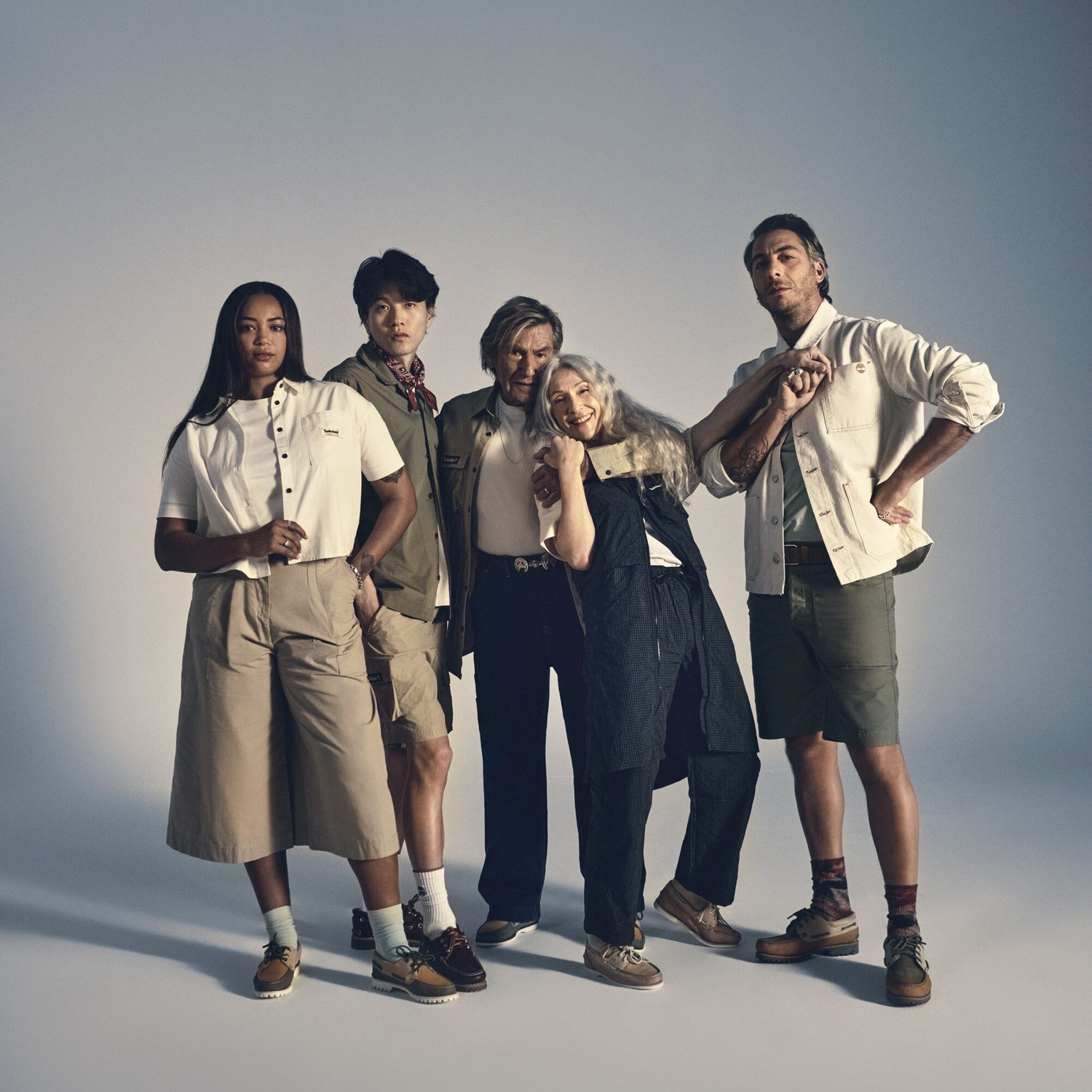
There are fresh attempts to earn attention. Timberland’s July 2026 Jacquemus collaboration turned its lug-soled boat shoe Lagoon Blue. JanSport opened a Seoul flagship with apparel and a bag-charm studio. In October, The North Face introduced updated Nuptse jackets, including a Summit version with an insulated hood. Familiar products still need new reasons to buy.
Size also creates obligations beyond sales. VF’s September 2026 responsibility report said it had met its renewable-electricity target for owned-or-leased facilities, partly through renewable energy credits. That claim has a defined boundary: it does not mean every supplier runs on renewable power. For a business sourcing hundreds of millions of products, the materials and factories outside its own walls remain central to its environmental footprint.
Other operators can copy the discipline: separate brand health from group averages, assign clear responsibility and release capital from businesses that no longer fit. The approach depends on preserving the design and marketing that make a brand desirable. Cut those too deeply, or offer products customers have stopped wanting, and efficient distribution merely delivers the wrong answer faster.
Follow the threads
SHOP THE BRANDS
THE COMPANY, IN ITS OWN WORDS
WATCH & LISTEN