The trouble with artificial intelligence is that it behaves beautifully at the party and rather differently after moving into the house. The demonstration is polished. The questions are expected. The data has combed its hair. Then the system meets an actual company, where information is scattered across decades of software, regulations have opinions, and one mislabeled object can turn confidence into comedy. Venkat Rangapuram built the defining chapter of his career around that uncomfortable morning after.
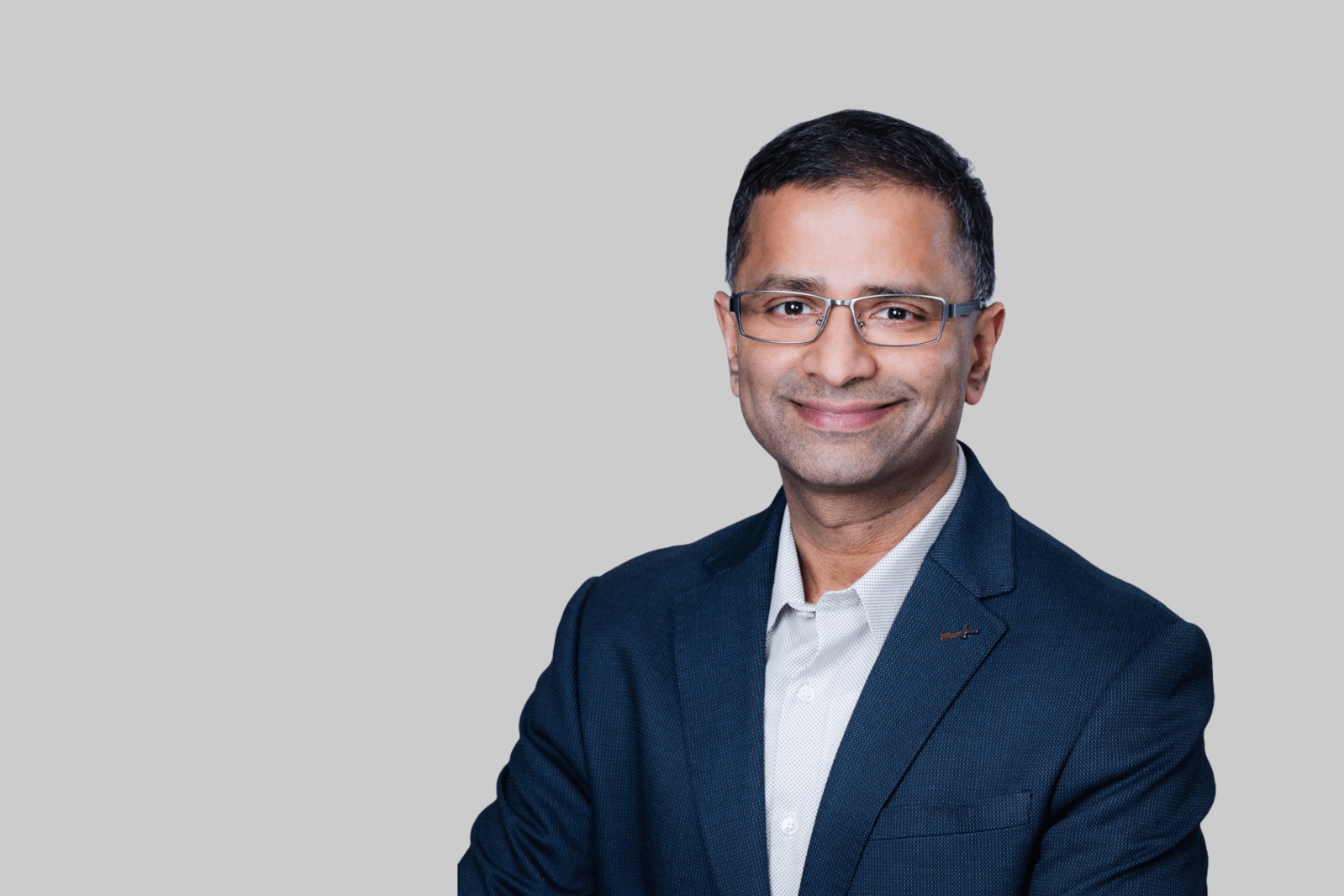
His subject was never merely the model. It was the distance between a model and useful work. Rangapuram spent six years leading the business now called Centific, first through independence, then through a new identity, a sharper AI thesis, a substantial funding round, and finally a planned change of chief executive. The chronology is brisk. The logic beneath it is patient.
In a 2025 conversation about enterprise deployment, he offered the sort of sentence that lacks fireworks but rewards keeping: “Unless the model is grounded in very specific scenarios and datasets, it can't really solve enterprise-related issues.” The remark is a small manifesto. General intelligence may be the industry's grand romance; particular data is the chaperone who decides whether the evening ends respectably.
A company detached from its parent finds a center
Rangapuram joined Pactera in 2015 and moved through several senior positions. By the time the American business separated from Pactera Technology International in 2020, he had most recently served as senior vice president and general manager. The new independent operation was called Pactera EDGE. Its board appointed him chief executive in March.
A carve-out has none of the romance of a garage. It arrives with clients, systems, habits, obligations, and the faint administrative perfume of a spreadsheet. Yet it offers a peculiar entrepreneurial test: can an inherited business discover a will of its own? Rangapuram's early program kept the company's existing focus on data, intelligence, and experiences while promising new digital capabilities and AI products. The task was transformation without amnesia.
One recollection from colleague Pamela Pei makes the corporate story pleasantly human. Around 2018, when Pactera's leadership was losing interest in the U.S. operation, she took an idea to Rangapuram: what if the business could support itself? She later recalled that he believed it could. The proposition eventually became more than an encouraging conversation. Independence followed in 2020.
Pei supplied another, smaller clue about the executive. She bought her first road bicycle in 2015 after hearing Rangapuram's cycling stories. She went on to ride from Seattle to Portland and from Seattle to Vancouver. Influence in an organization is usually described with arrows and boxes. Occasionally it looks like a colleague buying a bicycle.
The name changed. The difficult work did not.
In January 2023, Pactera EDGE became Centific. The new word was designed to hold two ideas at once: human-centered solutions and the rigor of execution. Rangapuram described the brand as the culmination of three years of milestones and, more importantly, a signal of where the company intended to go. It was not a legal restructuring. It was an argument about identity.
That argument placed people beside technology rather than politely behind it. Centific's work ranged across data, digital engineering, localization, customer experience, and increasingly the production infrastructure of AI. This is the unfashionably necessary layer: collecting and curating data, labeling it, finding bias, evaluating outputs, fine-tuning models, enforcing controls, and deciding when a human should intervene.
Rangapuram's production logic
and context
governance, people
enterprise use
The company's “AI Data Foundry” gathered those jobs under one industrial metaphor. A foundry is a telling choice. It suggests heat, repetition, tolerances, and material that must be worked before it can bear weight. Rangapuram's public language remained broad enough for strategy and concrete enough for an operator: cloud, core, edge, domain-specific training, low-latency inference, synthetic data, audit-ready workflows, and human validation.
“Unless the model is grounded in very specific scenarios and datasets, it can't really solve enterprise-related issues.”Venkat Rangapuram, 2025
This focus also explains his interest in physical AI. Software answering a question incorrectly is irritating. A system interpreting the physical world must contend with cameras, machinery, latency, privacy, changing light, regional context, and consequences that decline to remain inside a browser tab. Rangapuram saw “disruptive and exciting possibilities” in the field, especially across ASEAN and Singapore. It was another case of intelligence being asked to leave controlled conditions.
Ambition writes a cheque
On June 24, 2025, Centific announced a $60 million Series A led by Granite Asia. Rangapuram called the moment pivotal, but his most memorable phrase was cooler: “This funding round isn't about necessity, it's about ambition.” Founders often describe capital as oxygen. He made it sound more like a rail ticket purchased by someone who already had shoes.
The money had four stated destinations: more platform capability, further research and development, a stronger enterprise AI backbone, and deeper alliances with companies including NVIDIA, Microsoft, AWS, Dell, and Lenovo. Geography mattered too. Rangapuram wanted to diversify beyond North America, and Granite Asia brought networks in Asia and India. “The future is not just in North America, it's global,” he said.
The round turned a quiet infrastructure thesis into an expansion plan. Centific had spent years doing the jobs that occur before and after a model's glamorous moment. Now it intended to make those jobs available at greater scale. The distinction matters. Plenty of AI spending can produce an elegant pilot. The rarer achievement is a system that behaves on Monday morning, under cost constraints, connected to old software, watched by auditors, and used by people who never attended the launch event.
Six years, four turns
The discipline of leaving well
Leadership profiles prefer arrivals. The new title, the smiling photograph, the sentence about a bold next chapter: these are easy scenes. Departures reveal more. On August 3, 2026, Centific announced that Chuen Hong Lew would succeed Rangapuram as chief executive. Lew brought experience from Granite Asia, Singapore's Infocomm Media Development Authority, and national work around digital technology and AI adoption.
Rangapuram did not vanish into the ceremonial mist. He remained on the board and said he would work closely with Lew on the transition. His farewell statement placed the credit with Centific's management team and employees: “they're the ones who built this.” It is possible to hear standard executive courtesy in that line. It is also consistent with the business he had spent years describing, one where large systems depend on layers of often unseen human work.
The handoff gave his Centific chapter an unusually tidy shape. In 2020, he accepted responsibility for an operation finding independence. In 2023, he helped give it a name. In 2025, he secured capital for a wider map. In 2026, he made room for a successor chosen to travel it. The board seat preserved continuity without confusing continuity for ownership.
There is an older pattern here too. Rangapuram trained first in electronics and instrumentation at SASTRA, then studied marketing and information systems at Anna University. The combination looks almost prophetic: the instrument and the organization, the signal and the buyer, the machine and its setting. In 2023, SASTRA honored him with a Distinguished Alumni Award for Entrepreneurial Excellence. In thanking the university, he credited its values and the influence of mentors, family, friends, and community.
The useful intelligence test
Rangapuram's public persona is less oracle than translator. Centific's original board announcement praised his ability to turn complicated business and technology problems into strategic solutions and explain them to clients. His later record followed the same pattern. AI, in his telling, is not one miraculous object. It is a chain of data, models, infrastructure, orchestration, people, safeguards, and economics.
That chain has the useful property of being inspectable. If a model fails, one can ask whether the data represented the situation, whether domain experts reviewed it, whether the evaluation resembled production, whether governance appeared before the final week, and whether the infrastructure could afford to repeat the task. These questions are not glamorous. Neither is checking the brakes before a bicycle descent, but both habits improve the ending.
“Leading Centific through this stage of the AI industry has been the privilege of my career, but the credit belongs to our management team and everyone across this company.”Venkat Rangapuram, 2026
His aspiration now is expressed through position rather than prediction. From Centific's board, he can support the company without occupying its central office. The work continues under new leadership, with more than 3,000 employees and a OneForma expert network that the company says spans more than two million contributors across over 230 markets. Scale this large makes the human layer impossible to dismiss, even when the product is called artificial intelligence.
The lesson of Rangapuram's six years is not that every consultancy should become an AI foundry, nor that every rebrand deserves a funding round. It is narrower and more durable. Technology becomes valuable when somebody accepts responsibility for the passage from possibility to practice. Models may supply the astonishing sentence. Operators arrange for it to be the right one, delivered in the right place, at a cost the business can bear.
The laboratory is excellent at proving that something can work. Rangapuram made a career chapter out of the harder question: will it still work after it has met everybody else?