The first surprise in Sega Cheng's story is not that he left Google. Technology biographies are full of glamorous exits, usually polished afterward until risk resembles destiny. The surprise is what he left it for: a Taiwanese online-karaoke company whose growth had stalled. In 2012, iKala had roughly 300,000 members, about five percent of them paying, and a strategy built around the television. Cheng, then an engineer at Google Taiwan, liked to sing. He also liked the idea that a familiar Asian ritual could become a native internet business. The numbers were awkward. The cultural instinct was sound.
He had already taken the supposedly wrong turn once. After studying information management at National Taiwan University, Cheng went to Stanford for a master's in computer science, concentrating on artificial intelligence and machine learning. He interned at Google, joined the company, worked on machine learning in Search and helped build Google Transit. Back in Taiwan, he worked on Android's multimedia framework. He became the first engineering speaker from Taiwan to appear at Google I/O. It was an enviable route with the inconvenience of being comfortable.
Cheng has described himself as the first engineer to hand a resignation to Lee-Feng Chien, then the head of Google Taiwan. Chien's diagnosis was neat: Cheng was ambitious about software, and Google had become a comfort zone he feared he might never leave. The escape did not lead to a triumphant product launch. It led to an eight-month mobile rebuild. Membership doubled and revenue rose 47 percent, but profitability remained elsewhere. Reality, as it often does, declined to read the pitch deck.
The reason was closer to home than to code
Cheng's return to Taiwan predated his departure from Google. While studying in the United States, he noticed Chinese-American families in which younger and older generations looked alike but could not easily speak to one another. The distance troubled him. He began to wonder whether making a life in America would also mean losing fluency with his own children. When the chance came to transfer to Google's tiny Taiwan office, he took it. Asia's internet market was young. The office felt like a startup tucked inside a giant.
Family history supplied another nudge. Cheng was born in Taipei into three generations of entrepreneurs. His maternal grandfather founded the SPIL Group; his father had been a senior executive at CTBC before becoming an angel investor and co-founder of technology ventures. Cheng distilled their influence into a phrase: give the next generation choices. If he did not want children to believe they must leave Taiwan to do meaningful work, somebody had to create meaningful work in Taiwan.
“I am not working for money; I am working for conviction.”Sega Cheng, on the purpose behind founding in Taiwan
It is an earnest line, saved from becoming pious by one small detail Cheng volunteered about himself: his office contains, essentially, books and computers. He says luxury goods strike him as impractical. A founder who dislikes possessions is still capable of collecting obligations, of course, and iKala soon offered a magnificent assortment.
A company changes its tune
When the product changes, what is the company?
iKala moved from karaoke into livestreaming, then away from consumer subscriptions toward business customers. Around 2015, cloud services, data analysis and marketing technology became the center of gravity. Each pivot could be read as evidence that the previous idea was wrong. Cheng's more useful interpretation is that markets change too quickly for a product to serve as an institution's permanent identity.
Culture, in his account, does that job. iKala describes its compact as “freedom and responsibility,” a familiar phrase with teeth only when both words survive contact with a deadline. Cheng's version of founder success is stranger and more demanding: build a company that does not need him. The boast of the indispensable chief executive is, after all, a confession that the institution was never finished.
The company's turns did produce a coherent set of muscles. Consumer products taught it how people behave online. Livestreaming produced social data. Cloud work brought the company inside enterprise operations. Marketing software created a practical market for matching data to decisions. Kolr, its influencer and social-intelligence engine, now tracks more than 300 million creator profiles, according to iKala. The object changed; the appetite for large-scale analysis did not.
In 2024, a Series B+ round led by Chunghwa Telecom brought in more than $20 million. The logic was less theatrical than the startup's original premise: combine cloud deployment, company data and AI so customers can acquire buyers faster and make employees more productive. iKala says more than 1,000 enterprises now use its AI adoption services and more than 50,000 brands and advertisers use its marketing technology, with activity spanning over 190 countries. Those are company figures, but they describe the scale of the wager better than any adjective could.
iKala's reported footprint in 2026
Figures reported by iKala; creator count reflects public profiles monitored by its platform.
Deterministic code, probabilistic leadership
A former Google colleague once recommended Cheng with a scene that sounds engineered for legend. Faced with an algorithmic problem about finding intersecting lines, Cheng supplied the plane-sweep answer in three seconds. This is the pleasurable world of computer science: the problem has a shape, the answer has a complexity, and correctness can be demonstrated.
Leadership offered no such courtesy. Cheng has since spoken about moving from the deterministic habits of a technical founder to the probabilities of a CEO. People do not compile. Markets rarely return clean error messages. In Taiwan, he observed, pointing out a mistake directly can be read as a challenge to authority; in the United States, the same exchange may be routine. Management advice imported without its cultural dependencies is merely software missing a library.
His portfolio widened accordingly. Cheng chairs the Taiwan Internet and E-Commerce Association. He serves as an independent director at ADLINK and as a board director at game studio Rayark and enterprise software company Cresclab. He received the Pan Wen-Yuan Award in 2015 and the Global Views Young Entrepreneur Award in 2023. In 2024, he was among the authors of TMMLU+, a benchmark designed to evaluate large language models in Traditional Chinese. The coder never vanished; he simply acquired meetings.
“I want to build a company that does not need me.”Sega Cheng, on culture as corporate infrastructure
In 2026, Cheng became group chairman while continuing to be identified by iKala in executive leadership. He was also selected as an Eisenhower Global Fellow, representing Taiwan's technology sector in conversations across the United States. At Stanford that April, he framed Taiwan's next move as a passage from “silicon shield” to “AI brain.” The island already makes much of the world's computational machinery. Cheng wants it to export the integrated systems, models and operating knowledge that tell the machinery what to do.
The question after abundance
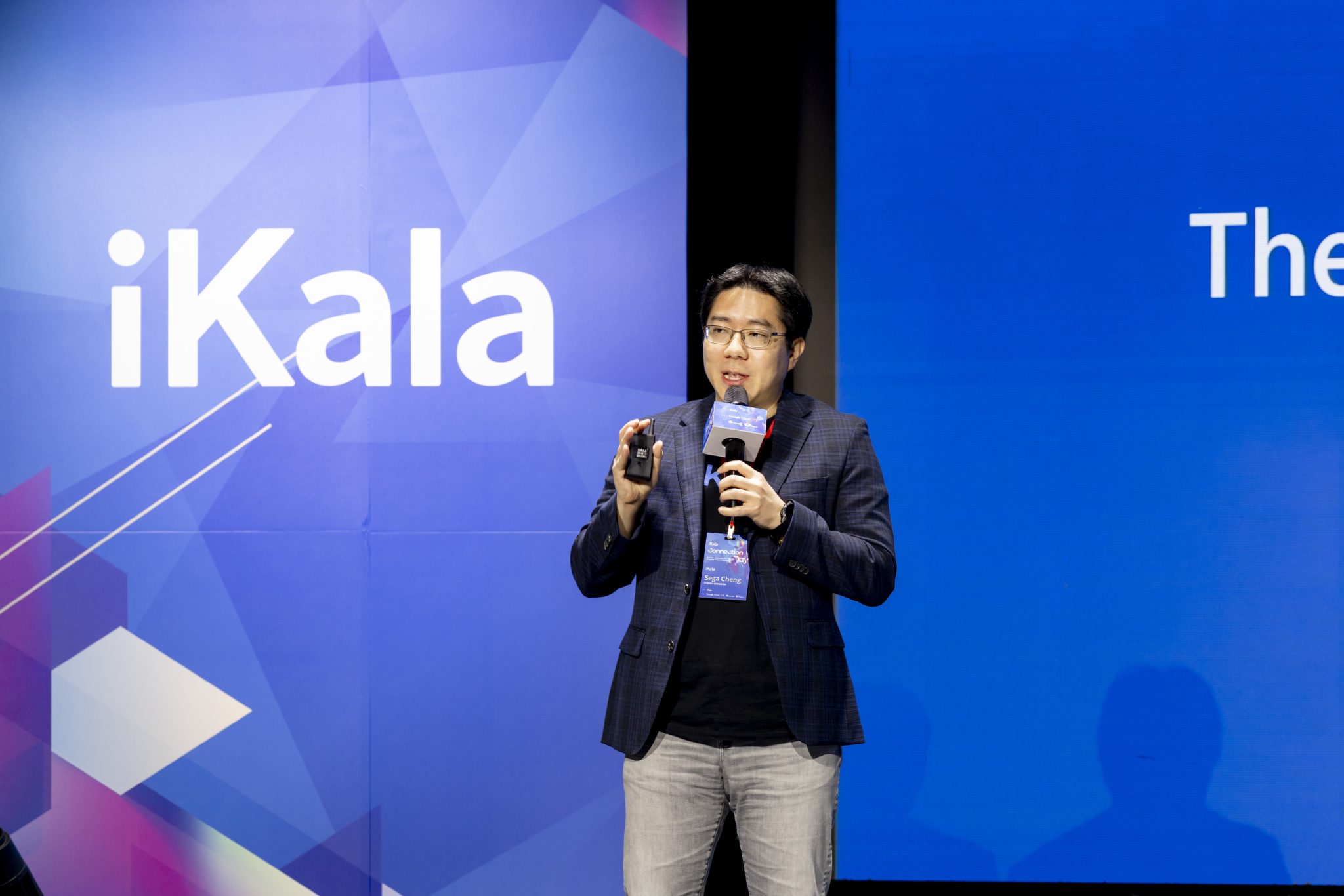
Cheng's latest public work is organized around a disquieting premise: intelligence is becoming infrastructure, cheap and abundant like water or electricity. At iKala Connection Day, he called 2026 the year of AI delegation, when software moves from answering questions to performing whole sequences of work. His second book, published in July, asks what businesses can still sell when intelligence itself becomes inexpensive.
He has not confined that question to conference halls. The biweekly Sega on AI podcast puts him in conversation with researchers and cultural figures, translating technical change for a general audience. His first AI book appeared in five languages. The public educator is a logical extension of the executive: both jobs involve explaining why yesterday's arrangement will not hold.
There is a neat danger in every account of repeated reinvention. Survival can make each prior decision look like a deliberate stepping stone. It was not. iKala's online-karaoke model genuinely stalled. Its consumer experiments carried costs. Enterprise transformation did not reveal itself in 2012 as a luminous destination. Cheng's achievement is more modest and more transferable: he kept enough of the company intact to learn from what failed, and enough of its identity loose to become something else.
The fixed point was not the product. It was the choice he wanted to create - for employees, for future founders, for children deciding whether ambition required a boarding pass. A company can change its tune many times if it remembers why it began singing. Cheng, who walked away from a comfortable software job for karaoke, has earned the right to enjoy that metaphor.