A technology company can put its software in the cloud. Its customers still live somewhere. In April 2022, Venkat Krishna Madipadaga was explaining why SID Global Solutions kept adding addresses. His phrase was plain: new locations closer to customers
. For a business selling digital transformation, it was a wonderfully physical answer. Geography, apparently, had survived the internet.
Two years later, that argument had reached the Philippines. Madipadaga, SID’s founder, was discussing a proposed $20 million investment in engineering and delivery hubs, with Manila as the main headquarters. Alongside the capital came an education proposal: help local people acquire the skills required to do the work. The ambition connected a company’s expansion with the development of its future workforce.
That pairing gives his public career its most interesting tension. Technology promises to reduce distance. Delivering it keeps bringing him back to people in particular places: an office in Hyderabad, a team in Bengaluru, prospective engineers in Manila. The route into his story follows those places, and the responsibilities that come with putting them on a business map.
The office on the other end of the call
SID Global Solutions is headquartered in Exton, Pennsylvania. Madipadaga’s own public professional profile places him in Greater Philadelphia. His company works on the connections and systems behind enterprise services: APIs, cloud platforms and the modernization of existing technology. These are the parts of a digital business that customers encounter indirectly, usually when something stops working.
An API is a defined way for software systems to communicate. The useful image is a doorway with rules about who may enter and what they may request. Building such connections inside an established company involves its existing systems, its operating requirements and the people responsible for both. A polished demonstration is one stage of that work. Keeping the service dependable is a continuing obligation.
Madipadaga’s 2022 comments placed collaboration inside that obligation. Hyderabad’s new APAC headquarters would support regional innovation and delivery pods. A Bengaluru branch had opened in March. Singapore, Dubai and the Philippines appeared in his plans for additional locations. His description joined the location of the team to the quality of the customer relationship.
There was a practical partner dimension, too. At the Bengaluru opening, he emphasized having a local team available to collaborate with Google. For an executive selling enterprise change, the value of an address lay partly in whom it allowed the engineers to work beside. The office was a piece of the delivery method.
SID Global Solutions’ position on the Inc. 5000. The company profile names Madipadaga and Sudi Navile in its leadership.
That year also brought a separate marker: SID’s appearance on the Inc. 5000. The recognition supplies a dated point in the company’s development, alongside the office announcements. It belongs to the business and its team. Madipadaga’s profile becomes more useful when those collective milestones remain collective.
- 2022Hyderabad headquarters and Bengaluru branch
Offices opened - 2024Philippines engineering and training proposal
Investment and skills plans announced - 2025India, Middle East and Africa leadership
Rajesh Lakhani appointment announced
Before the regional map, a room in Philadelphia
There is another kind of organizing in Madipadaga’s public record. On March 9, 2013, the American Telugu Association held a Women’s Day celebration in Philadelphia. Venkat Krishna Madipadaga and Govind Kondakindi were named as the regional coordinators who organized it. The program included speeches, music and a talk by Ujwala Dixit from SEWA.
It is a small, specific detail in a biography otherwise crowded with enterprise vocabulary. An event needs people to agree on a place, a program and a purpose. Someone has to make the arrangements. The record places Madipadaga among those organizers, working with others in his local community.
His professional profile lists Oklahoma City University and three languages: English, Hindi and Telugu. Those details add dimensions to a career conducted across regions. The Philadelphia event supplies something more tangible: a date on which his role was to help people gather. It gives the business biography a local address of its own.
Community organizing and running an international technology company carry different demands. Putting both in view keeps the person from disappearing behind the job title. Madipadaga’s public record contains a volunteer coordinator as well as a founder, and a shared program as well as a regional growth plan.
Manila, with a classroom attached
In June 2024, Madipadaga brought a larger proposal to the Philippines. The planned investment would establish engineering and delivery hubs, with Manila at the center of the expansion. In his ANC Business Outlook interview, he described the intended Manila operation as serving Southeast Asia. The customer market extended beyond the country hosting the engineers.
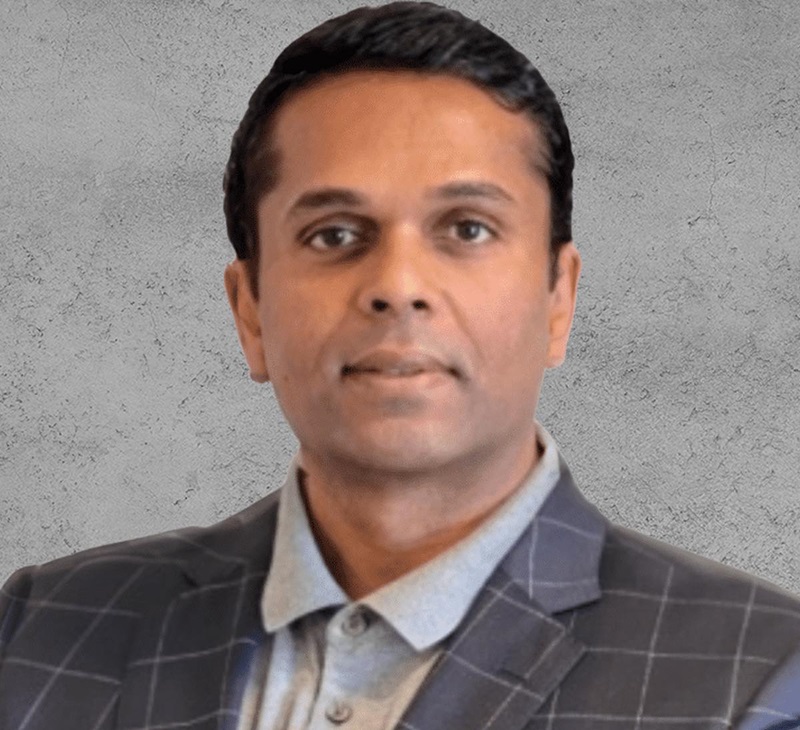
He connected the decision to the availability of local talent and the country’s experience in providing services internationally. In the same conversation, he discussed SID.U, a proposed digital engineering certification program. Training was presented as part of the company’s contribution to developing the skills needed for digital transformation.
This is the human hinge of the proposal. An engineering hub requires people who can build, adapt and maintain what clients buy. A company expanding into a region can recruit available skills, help develop additional skills, or combine the two. Madipadaga’s public plan included training alongside the creation of delivery capacity.
The name SID.U gives that intention a compact form. The difficult part comes after the name: defining useful learning, connecting it to actual engineering work and making the experience valuable to the learner. Those are the practical questions raised by his proposal. They are also why the education component deserves attention alongside the investment figure.
“part of our legacy”
Venkat Madipadaga, on the intended Philippines and APAC expansion, June 2024
The arithmetic of a promise
Expansion announcements bring numbers that are easy to remember and easy to misread. In June 2024, SID’s Philippines operation was described as employing 55 people. The company outlined an ambition to grow the local workforce to between 1,500 and 2,000 by 2026, within a broader aspiration to train 10,000 people across APAC.
Those figures refer to different things. One describes a reported workforce at the time. Another describes a hiring ambition. The regional training figure reaches beyond that intended local workforce. Keeping the categories separate gives each number a useful meaning. Putting them together as though they measured the same achievement would obscure the work involved.
Commitments announced in 2024. These figures describe the plan, rather than completed expenditure.
The announced three-year investment period adds a clock to the map. Recruitment, training, premises and customer work would all have to progress within a business that was already operating. A capital commitment can be stated in a sentence. Turning it into dependable engineering capacity requires many people to make many smaller decisions.
That is where the founder’s ambition becomes interesting to people outside the company. The proposal asks whether regional demand, local skill development and international delivery can reinforce one another. Its value will be expressed through the work people can do and the responsibilities they can take on.
A founder cannot occupy every chair
A regional strategy also needs regional leadership. In April 2025, SID announced Rajesh Lakhani as managing director for India, the Middle East and Africa, effective April 2. Lakhani had previously held a senior role in Wipro’s cloud and managed services business. Madipadaga welcomed the appointment as SID’s CEO and chairman.
His comments emphasized Lakhani’s experience with technology initiatives and client relationships. The appointment gives the expansion story an organizational shape: someone named to lead a set of markets, with experience relevant to the work being sold there. Responsibility needs an owner as much as an office needs an address.
SID’s current leadership page identifies Madipadaga as founder and separately lists Sudi Navile as CEO - Digital, Raja Pudi as CFO and Ajay Yeluri as CTO. The titles describe distinct jobs around the same enterprise. A founder’s plans acquire practical meaning through the people responsible for finance, technology and delivery.
Reading those roles alongside the regional appointments makes growth look less like a succession of dots on a map. It becomes a question of decisions: who understands a customer’s requirements, who can commit a team, and who has to answer when the work becomes difficult. Software may travel quickly. Accountability needs a clear destination.
What he wants to leave behind
Madipadaga has described the Philippines and broader APAC expansion as something he wants to make part of his legacy. It is a revealing choice of word for a business whose daily work concerns systems that will keep changing. His stated aspiration reaches toward the people and capabilities developed around those systems.
There is a thread connecting his public remarks across the years. In 2022, he argued for teams closer to customers. In 2024, he put local skills into the explanation for an engineering hub. In 2025, a regional leadership appointment added another person responsible for carrying the business forward. Proximity, capability and responsibility recur.
The story ends, for now, with a practical measure of that ambition. A new location can be announced; a working team has to be assembled. A course can be named; someone has to learn something useful. For Madipadaga, the distance between the plan and the delivery is where the next chapter will be written.
Follow the route
Explore Madipadaga’s public profiles, the interview and the company behind the expansion.