Mubashir Hanif began with calling cards. In 2009, working at a Canadian business process outsourcing company, he was learning how to persuade a customer to buy something useful. Alongside the sales work, he was studying accounting. One part of his education involved hearing what people wanted. The other involved checking whether the numbers made sense.
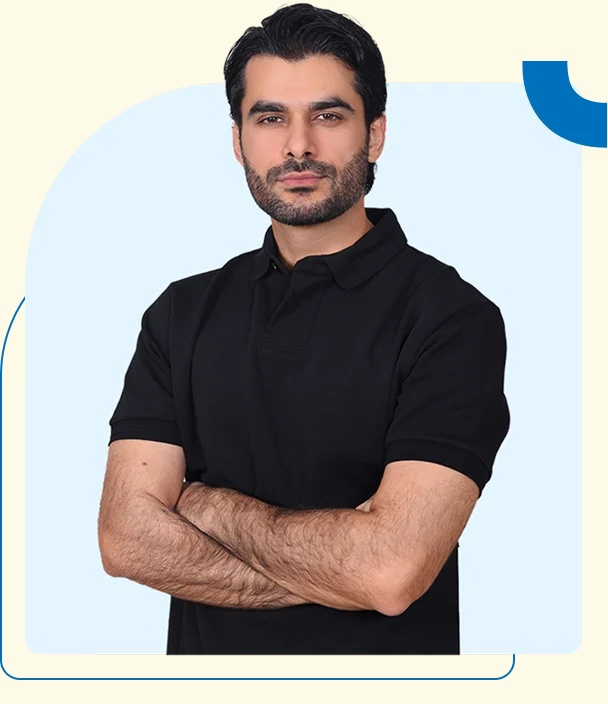
That pairing has stayed with him. Hanif founded TechMatter in 2017 and remains its chief executive. The company works in digital product development, managed IT and enterprise technology, with operations spanning the United States, United Kingdom, United Arab Emirates and South Asia. Yet his account of building it keeps returning to questions that would be familiar to a salesperson or an accountant: who needs this, what does it cost, and will the arrangement hold?
There is something pleasantly unfashionable about that starting point. The founder story often arrives with a flash of revelation. Hanif’s arrives with a customer conversation and an accounting qualification. A ledger is an unlikely romantic lead, but it does have the advantage of noticing when the romance becomes expensive.
The sale and the spreadsheet
Hanif’s early work took him through sales, marketing and accounting roles. He describes the variety as an education in how businesses behave. Different workplaces exposed him to different commercial problems; selling required him to adapt to the person on the other side of the conversation. His ACCA qualification gave that experience a financial framework.
The appeal of independence grew. He wanted to build his own company, and TechMatter became the vehicle. The ambition was to address operational inefficiencies through technology, drawing on the commercial and financial experience he had already accumulated. He was approaching technology through the work a business needed to complete.
Sales and accounting make an interesting professional partnership. A sale looks forward to a relationship and its possibilities. Accounting asks what has actually happened. Read together, they offer a useful way to understand Hanif’s later emphasis on both customer relationships and internal discipline. His career brought those two habits into the same room before he had a company to run.
When ambition met the bank balance
The early years brought financial pressure. Hanif recalls stakeholders withdrawing at difficult moments and a company whose future sometimes felt uncertain. His telling gives little room to the idea that founding a business automatically provides freedom. Independence also meant responsibility for keeping the operation standing.
He says the team concentrated on internal systems rather than pursuing expansion at any cost. That choice supplies a less theatrical explanation of growth: build the machinery inside the business, then ask it to carry more weight. His emphasis falls on accountability, consistency and structure.
The distinction matters because a company can grow larger while becoming harder to run. More customers create more promises to keep. More employees create more decisions that cannot reasonably wait for the founder. In Hanif’s account, the internal work was part of the growth story itself. It was the work that made the next stage possible.
His experience also makes the desire for independence more complicated. Starting a company places your name on the decisions. Building one that lasts requires other people to make good decisions too. The entrepreneur’s wish to be in charge eventually meets the operator’s need to distribute responsibility.
A decision to build, and a reason to wait
One consequential choice concerned ownership of the technology itself. Hanif has described weighing continued reliance on outside platforms against the cost of developing proprietary software. External tools offered quicker deployment and lower initial expense. Building internally meant greater control, alongside capital demands and longer development schedules.
He chose to build. The decision slowed some expansion plans while resources went into development. Before moving ahead, he says, the company used feasibility work, pilots and financial modeling to examine the proposal. People inside the business questioned whether the diversion was justified. His response involved evidence and prototypes.
That episode gives substance to an otherwise easy phrase: thinking long term. In practice, it meant accepting a near-term constraint. Money and attention devoted to development could not simultaneously fund every other opportunity. The choice had an opportunity cost, which is precisely why it was a choice.
It also reveals a sales lesson returning in another form. A founder may be convinced by an idea long before colleagues are. The work then includes making the case to people who have their own responsibilities and reasons for caution. An internal skeptic can be a useful customer: difficult to impress, expensive to ignore.
Fairness has an operating cost
Ask Hanif about culture and he identifies three principles: empowerment, fairness and consistency. These are ordinary words with demanding implications. Giving someone ownership of an idea means allowing that person room to exercise judgment. Consistency means the rules cannot depend entirely on the executive’s mood.
His advice to aspiring entrepreneurs emphasizes finding a problem worth solving and assembling a team able to work on it. The company’s leadership material similarly places transparency and team development alongside commercial growth. His stated aim is a workplace where people can take responsibility and continue learning.
“Empowerment, fairness, and consistency.”
Hanif’s three principles for company culture
These commitments become more consequential across borders. A business operating in several regions needs people to act while the chief executive is elsewhere. Fairness and clarity serve a practical purpose here. They give colleagues a basis for making decisions without asking for a fresh interpretation every time.
For Hanif, the people question sits beside the systems question. The technology can organize a workflow; employees still have to understand the work and accept responsibility for it. His approach places those responsibilities inside the company rather than treating culture as something to discuss once the real business is finished.
The hardware beneath the ambition
In November 2025, TechMatter announced its acquisition of StateDrives, an IT hardware and networking retailer, from Spacexsystem LLC. The purchase price was undisclosed. The announcement described plans to strengthen storage and infrastructure capabilities, with StateDrives continuing under its existing leadership.
For a founder talking about software and operational systems, hardware is a revealing addition. Every application eventually depends on equipment and infrastructure somewhere. The polished interface is what the customer sees; storage, reliability and capacity determine whether the promises behind that interface can be kept.
Hanif presented the acquisition as a way to strengthen TechMatter’s managed IT offering as data demands increased. The transaction extends the story from designing the workflow to supporting the infrastructure beneath it. It is a concrete example of his preference for connecting capabilities within one organization.
The company also announced a broader rebrand that November. Its description of the business emphasized enterprise technology, cloud infrastructure and custom software development across industries. Hanif framed the refreshed identity around the company’s expanded scope. The visual change followed a business whose activities had become wider.
Three connected capabilities in TechMatter’s stated business scope. A conceptual map, not a revenue breakdown.
The operator’s test
By March 2026, Hanif was describing his role in explicitly operational terms. He spoke about financial visibility, predictable performance and systems whose decisions people could examine. His position on automation included reviewable recommendations, transparent decision logic and human oversight.
Those requirements bring the accountant back into view. An automated result has to be intelligible to the people responsible for it. A system may produce an answer quickly, but speed does little for accountability if the organization cannot understand how it arrived.
He has also argued that technology changes how expertise is used. Routine corrections can give way to analysis and oversight. In that picture, employees need to understand patterns and improve the underlying process. Leadership has to recognize the value of problems avoided, even when prevention produces less visible activity than repair.
This is a demanding measure of progress. A busy team is easy to see. A well-designed process may make less noise. Hanif’s ambition asks the organization to notice that difference and reward people for making the work more dependable. The absence of a crisis rarely books its own meeting.
A company that can leave him out of the room
There are smaller details around the operating philosophy. Hanif has described dividing his day into focused segments, using Salesforce to coordinate work, and working backward from an imagined goal. His reading interests include Too Big to Fail. He has also named a World Cup souvenir as a satisfying $100 purchase.
That last detail is a welcome interruption to the language of performance. An object can earn its place without improving a pipeline. Even an accountant is permitted a souvenir.
His stated definition of success, however, returns to the organization: building something able to create value when he is absent. He wants independent teams and systems that endure changes in leadership and market conditions. It is an ambition that gives the founder a curious assignment. To succeed on his own terms, he has to make the business progressively less dependent on his presence.
The calling-card seller learned to win a customer’s attention. The chief executive now talks about what keeps working after his attention moves elsewhere. Between those two responsibilities sits Hanif’s central project: a company with enough structure to carry its own weight.