The paint store had a problem that no paint could cover. Dunn-Edwards Paints wanted its staff to show customers online videos and product information, but a T1 connection made even the ordinary internet feel ambitious. The company’s private WAN had done its old job: connect stores to corporate systems. The new job was different. Applications had moved outward, customers expected more, and a branch office had become a place where a slow connection could spoil a sale.
At a glance
- VeloCloud sells SD-WAN: software and appliances that manage several network links as one enterprise connection.
- Its system has three central parts: an Edge at the site, distributed Gateways and an Orchestrator for policy and monitoring.
- VMware acquired the company in 2017; Arista acquired the portfolio from Broadcom in 2025.
- The useful lesson: test a few branches, tune application priorities, then make the rollout repeatable.
In 2017, Dunn-Edwards volunteered for a pilot of EarthLink’s managed SD-WAN service, powered by VeloCloud. Its network team mapped which traffic mattered most. At the first store, both teams stood watch. That installation exposed changes they needed for the next one. By the third store, EarthLink could deploy alone. The reported cutover took roughly two to three minutes. The interesting result was not a magical box; it was a process that could travel from store to store without dragging the whole IT department behind it.
A map with more than one road
VeloCloud’s founding insight, in 2012, was that the wide-area network had been organized around a vanishing assumption: most important applications lived in a central data center. The familiar answer was a private circuit, usually MPLS, carrying branch traffic back to headquarters. Once software moved to SaaS and public clouds, that journey could turn into a detour. Broadband was cheaper and often plentiful, but its quality varied. Cellular could rescue a site, though nobody wanted to manage three paths by hand for every application.
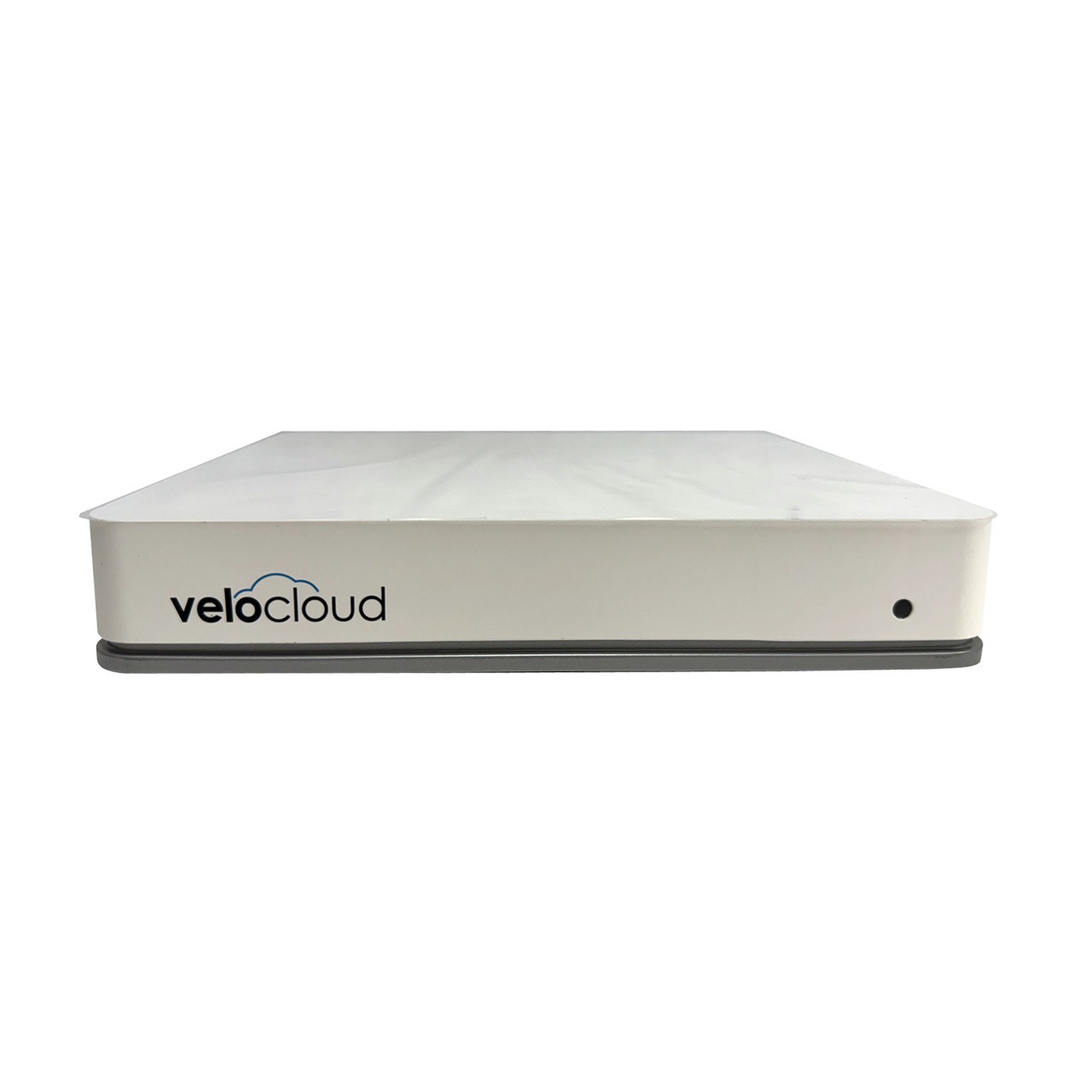
The company’s answer was an overlay. An Edge appliance or virtual instance sits at the branch. It recognizes applications, measures the available links and steers traffic according to policy and link quality. Cloud Gateways offer a distributed way toward other sites and applications. The Orchestrator gives the network team one place to provision sites, set rules and see what is happening. Arista still describes this Edge-Gateway-Orchestrator trio in its current technical documentation.
Orchestrator sets the policy and shows the operator what each site is doing.
That is what makes VeloCloud different from a conventional spare circuit. A backup line waits for catastrophe. VeloCloud’s Dynamic Multipath Optimization can use multiple links and react to degraded performance before a link goes completely dark. It is also more than a single branch router: the cloud Gateway network and central control plane are part of the service. Competitors including Cisco, Fortinet, HPE Aruba and Palo Alto Networks address the same SD-WAN market with their own combinations of routing, security and management. VeloCloud’s pitch has long centered on cloud delivery, multipath traffic steering and a wide service-provider channel.
The cost of a better detour
There is no honest universal price for an enterprise WAN. A deployment pays for circuits, Edge hardware, software licenses and, often, a provider to run it. Arista’s partner paperwork describes separate hardware and Edge-license orders; public pricing depends on a quote. What is visible is the money put behind VeloCloud’s proposition. The company announced $21 million of early funding in 2014, $27 million in a 2016 Series C, and $35 million in a 2017 Series D. The last round was led by Hermes Growth Partners and included strategic and carrier investors. They were buying into a business that could grow as branches multiplied.
For customers, the economic question is plainer: can cheaper or more flexible links replace some expensive private capacity without making the application experience worse? Ciena offers one published answer. After combining VMware SD-WAN by VeloCloud with Zscaler security for local internet access, the networking company reported 20% lower latency and costs cut by 50%. Those are Ciena’s results, not a promise for every branch. They do show why a WAN decision and a security decision often arrive together: sending traffic directly to the internet changes where it must be protected.
“Optimize, in a secure way, the new class of SaaS enterprise applications over any network.”Sanjay Uppal, co-founder, reflecting in 2025
A company that kept changing owners
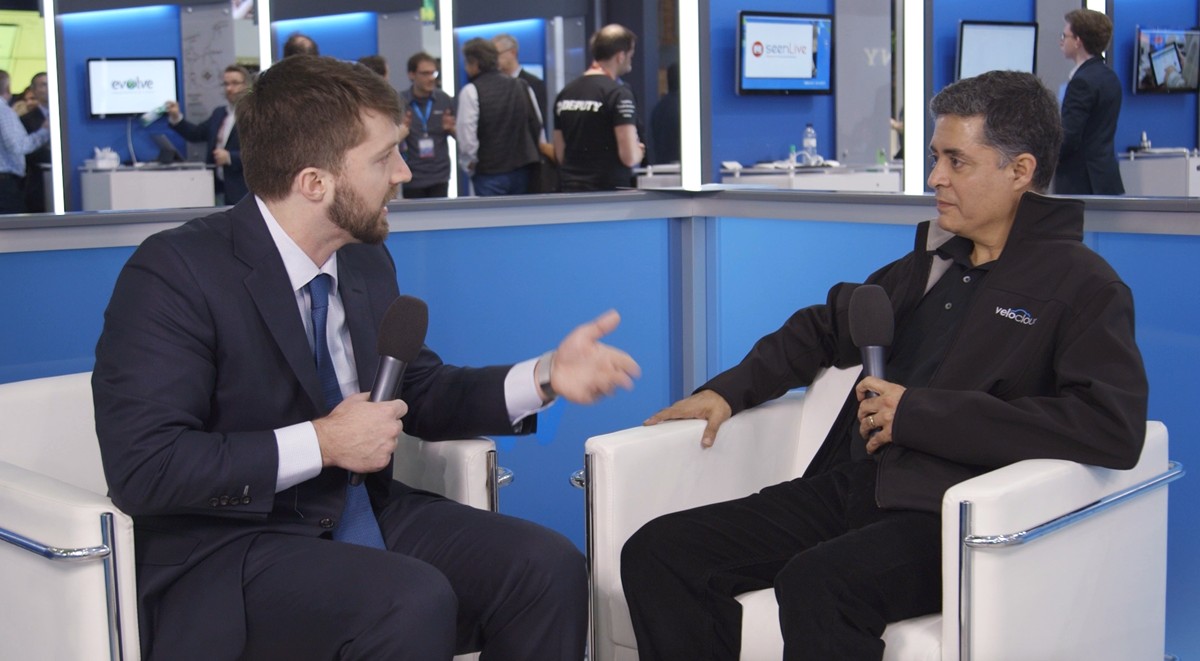
Sanjay Uppal, Ajit Mayya and Steve Woo founded VeloCloud Networks in 2012. Uppal later remembered the beginning as three people in a cottage. The culture he described was irreverent and quick to learn. That suited a market whose boundaries were still being drawn. By VMware’s account, VeloCloud had more than 1,000 enterprise and service-provider customers when it announced the acquisition in November 2017. The deal closed that December, one month after the company’s fifth birthday.
VMware had a clear reason to buy: it already virtualized networking inside the data center, while VeloCloud reached out to offices and cloud applications. Later, after Broadcom acquired VMware, VeloCloud sat in Broadcom’s software portfolio. In June 2025 Arista bought the VeloCloud business from Broadcom. Arista’s networking portfolio was strong in data centers and campus environments; VeloCloud supplied the wide-area branch piece. The purchase moved the product again, but the customer problem stayed put.
The service-provider channel helped make that scale plausible. VMware reported more than 100 provider partners in 2019 and deployments in over 130 countries. A carrier or managed-service provider can sell the connectivity, install the Edge, run the service desk and make SD-WAN useful to companies that would rather open stores than become network operators. Large enterprises can manage the platform themselves. The same architecture supports both routes to market.
What a network team can borrow
The Dunn-Edwards sequence remains the most portable part of the story. First, identify which applications fail when a link is slow, not merely when it is down. Then test a small set of sites and write the traffic priorities before deployment. Use the second installation to fix what the first exposed. Only after that should a provider or remote team repeat the pattern at scale. VeloCloud’s zero-touch provisioning helps with the last step; it cannot decide what a business cares about.
The method has limits. Two poor circuits do not become one good circuit by joining a clever overlay. A local internet breakout also needs security policy, and regulated or remote sites may keep private links. VeloCloud itself has long described hybrid MPLS and SD-WAN deployments, with different choices for core and smaller branches. Arista’s July 2026 announcement of Edge Threat Management, planned for general availability in the fourth quarter, addresses the growing pressure to put more security at the branch edge. It is an announced direction, not yet a universal fix.
The useful test: If a branch suffers from backhaul, variable broadband and slow provisioning, VeloCloud’s design is relevant. If every available path is equally bad, start with the circuits.
The old WAN offered a reassuring diagram: office, line, headquarters. VeloCloud’s diagram has more arrows, more choices and more demands on judgment. In return, a paint-store employee can call up the video while the customer is still standing there. For a networking company, that is a modest scene. For the person trying to sell the paint, it is the whole point.