The unglamorous miracle of modern retail is not the self-checkout or the loyalty app. It is the connection that stays alive while somebody in a parking lot buys a bag of horse feed. At more than 2,000 Tractor Supply stores, Inseego outdoor receivers help keep point-of-sale and inventory systems online. They sit outside in dust, snow and heat, looking rather like discreet white shoeboxes. Their job is to make sure nobody inside has to think about them.
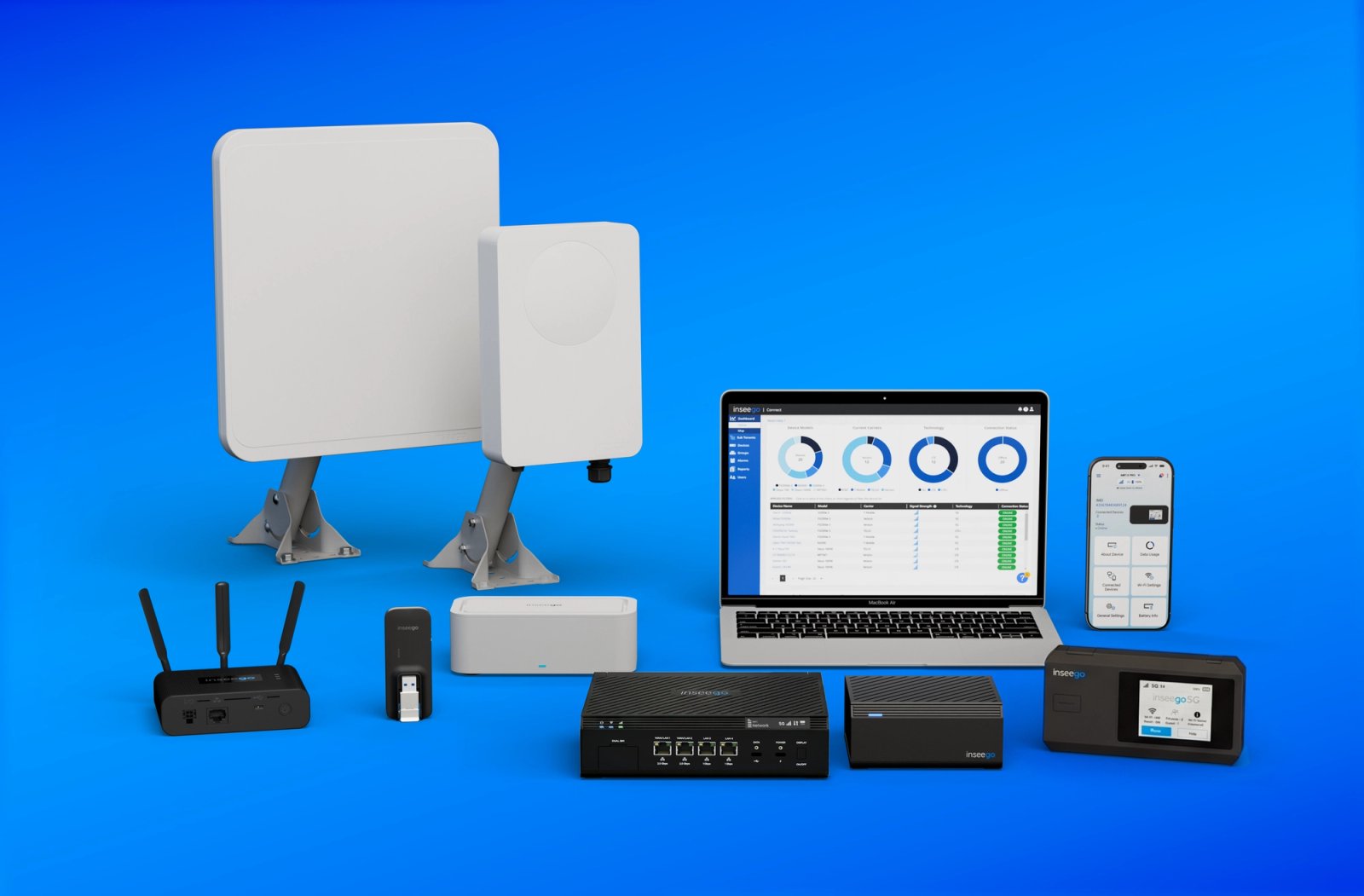
That is Inseego in one scene: a San Diego company selling the last few feet of the internet, where a carrier's cellular network meets a shop, a vehicle, a vending machine or a laptop. Its Wavemaker routers turn 4G or 5G into primary broadband or backup connectivity. Its MiFi hotspots put a private Wi-Fi network in a pocket. Skyus gateways connect machines. Then Inseego Connect lets an IT team configure, monitor and update those devices from a dashboard, while Inseego Subscribe helps service providers manage the customer and subscription lifecycle.
The little box that became a category
The story begins before the current name. Novatel Wireless was founded in 1996 and spent years making wireless modems. In 2009, Verizon launched the first nationwide commercial deployment of its MiFi hotspots. “MiFi” became so familiar that people started using the trademark as a generic description, the linguistic equivalent of having your product swallowed by its own success.
The product solved a wonderfully legible problem: turn a cellular signal into Wi-Fi and carry it around. Today that idea has grown enterprise teeth. A field crew can bring a managed network into a truck. A new branch can open before a fiber crew arrives. A hospital or police unit can keep a controlled connection separate from public Wi-Fi. A remote store can switch to cellular when its wired line fails.
Inseego differentiates itself less through a single radio specification than through the full package: antennas tuned in-house, carrier certifications, rugged outdoor equipment, US-based design and development, government-oriented security credentials, and one management layer across the portfolio. Rivals such as Cradlepoint, Sierra Wireless, Digi, Peplink, Netgear and Teltonika cover parts of the same ground. Inseego's pitch is that the box and the cloud console were built to travel together.
What failed first: the balance sheet
Inseego did not arrive at this cleaner pitch by following an immaculate strategic plan. For years the company also owned Ctrack telematics operations, a different business involving fleet tracking and vehicle data. The combination promised more ways to participate in the internet of things. It also added complexity while the company carried convertible debt.
By 2024, company filings disclosed substantial doubt about its ability to continue as a going concern, largely because of notes coming due in 2025. This was the first thing to fail: not demand for mobile connectivity, but the financial structure surrounding it. Inseego's response was blunt. It sold its remaining telematics operations for total cash consideration of $52.7 million, following an earlier sale of the South African Ctrack operations, and used the room to restructure its obligations.
The expensive lesson was simple: owning more adjacent businesses is not the same as having more strategic options.The pivot, in plain English
What changed management's mind was pressure that could be measured in maturity dates, cash needs and a portfolio that no longer fit on one clean slide. The divestiture narrowed Inseego around mobile broadband, fixed wireless and cloud software. In early 2025, former Qualcomm North America president Juho Sarvikas became chief executive after what the company called an overhaul of its capital structure. By January 2026, Inseego had also eliminated preferred stock carrying a $42 million liquidation preference for $26 million in cash, notes and shares.
That reset did not make the business risk-free. It made the risks easier to see.
The new product is fewer truck rolls
Hardware remains the door opener. The FX line serves indoor fixed wireless; the weatherproof FW line reaches farther outdoors; MiFi serves people in motion; Skyus handles quiet machines. But the most useful part for an enterprise may be the screen an administrator opens after every device has been shipped.
Inseego Connect can apply configuration templates, push firmware, set alerts, inspect signal quality and reboot devices remotely. Zero-touch provisioning means a box can arrive at a branch and configure itself rather than wait for a specialist. At Tractor Supply scale, avoiding even a modest share of service visits has real value. For a supplier with more than 20,000 connected vending machines, low-throughput reliability matters more than a dramatic speed test.
Inseego Subscribe approaches the problem from the carrier side. The white-label software helps communications providers quote, onboard, bill and manage complex enterprise or government accounts without replacing their core systems. This is the business-model upgrade: sell devices for upfront revenue, then earn software and service revenue by helping customers operate the installed base.
The customer map is broader than the usual office-network diagram. Mobile operators put Inseego products in their catalogs. Managed service providers and resellers assemble them into larger connectivity packages. Enterprise IT teams buy them for branches, vehicles and temporary sites. Public agencies use hotspots for emergency response and digital-access programs. Inseego says its equipment is trusted by organizations including Delta Air Lines, Kroger, Siemens, ESPN and the USDA, but the more revealing examples are deployments with an awkward physical constraint: a rural storefront, a port terminal or a machine nobody wants to visit.
The buyer is paying for deployment speed and avoided labor as much as radio performance. A wired circuit can require permits, construction and weeks of waiting; a provisioned cellular router needs power and usable signal. The hardware cost is only one line in that comparison. Field visits, outage minutes and delayed store openings are the expensive part. Inseego does not publish one universal enterprise price because devices and service plans travel through different carriers and channel partners. That makes the correct calculation site-specific: device, data plan and cloud-management subscription on one side; installation delay, truck rolls and downtime on the other.
Distribution is the moat and the dependency
By the second quarter of 2026, Inseego's refreshed mobile family had launched through AT&T, T-Mobile and Verizon. AT&T and Verizon also selected the FX4200 for business fixed-wireless offerings. Reseller agreements with CDW, Insight and SHI opened another route into enterprise purchasing departments. This matters because connectivity hardware is not bought like a fashionable gadget. Certification, support and placement inside a carrier's catalog can matter as much as a feature list.
The same arrangement creates the obvious weakness. Two customers - Verizon and T-Mobile - accounted for a significant share of 2025 revenue. Carrier orders can be large and lumpy, and bargaining power tends to sit with the party owning the network and the customer relationship. In Q2 2026, revenue rose to $44 million, but GAAP gross margin fell to 33.8 percent and the company reported an $8.4 million net loss. Management guided to roughly $155 million in full-year revenue and said the next tasks were margin improvement, product delivery and cost alignment.
Where it works
Sites with slow fiber installation, weak wired options, expensive downtime, dispersed devices or a workforce that moves.
Where it does not
Places with poor cellular capacity, costly data, strict deterministic-latency needs or cheap, dependable fiber already in the wall.
A global bet, immediately after learning focus
The next chapter tests whether Inseego can preserve that focus while getting much larger. In April 2026, it agreed to acquire Nokia's fixed-wireless access customer-premises-equipment business. The companies said the transaction could roughly double Inseego's revenue, broaden its consumer and enterprise reach, and make Nokia a significant shareholder. They also outlined cooperation around future wireless-edge technology. As of the August results, closing was still anticipated for the fourth quarter and remained subject to conditions.
The logic is plain: combine Inseego's North American carrier and enterprise position with Nokia's global FWA reach. The tension is just as plain. Inseego only recently escaped a sprawling portfolio and strained balance sheet. Integration consumes cash and management attention. A larger revenue number is not automatically a better company if the acquired operation brings lower margins or recreates complexity.
Still, there is something copyable here for smaller operators. Start with a costly operational nuisance, not a broad technology slogan. Bundle the physical tool with the remote-control layer. Earn certifications that matter to the buyer. Use channel partners when direct sales would be too slow. And when the capital structure starts dictating product strategy, fix it before launching another adjacent business.
Inseego's best work disappears into the routine: the transaction clears, the firmware updates, the remote kiosk checks in, the library patron gets online. The company is trying to turn those invisible moments into a durable platform. The radio is only the first half of the product. The second half is not having to visit it.