A mobile operator’s next customer may be sitting on the sofa. Ooredoo Tunisie has spent more than two decades selling Tunisians a connection they carry in their pockets. Now, fibre and 5G fixed wireless are making the home a bigger part of its business. The proposition is pleasingly ordinary: connect the household, keep the video call going, and let everybody stop negotiating over the internet.
There is a business story behind that domestic scene. In the first half of 2026, Ooredoo reported that its Tunisian fixed business grew 75.6% year on year. Overall revenue rose 14.4%, reaching QAR 907 million, while the customer base increased 3.8% to 7.3 million. Those different growth rates suggest a company doing more with its customer relationships, rather than relying entirely on adding another SIM.
Year-on-year growth in the fixed business.
Fibre and 5G home broadband are doing more of the work.
The operator still sells mobile calls, data bundles and roaming. It also sells internet to households and offices, rents computing resources and distributes software subscriptions. Its place in the market is consequently broader than its familiar red mobile brand suggests. For customers, the appeal is a provider that can handle several everyday needs. For Ooredoo, each additional service offers another reason for a customer to stay.
A familiar name, with a previous life
Before Ooredoo, there was Tunisiana. Commercial operations began on December 27, 2002, with Orascom Telecom and Wataniya Telecom behind the venture. This was a corporate telecom undertaking, complete with a licensed network and heavyweight shareholders. The origin matters: building national communications infrastructure starts with permissions, capital and engineering long before it becomes a catchy consumer offer.
The name changed on April 24, 2014. By then, Tunisiana had already launched 3G, in July 2012. Its own history records population coverage of 48% for that service at launch, rising to nearly 90% in 2014. Read those numbers as a reminder that a new generation of service expands over time. The first commercial day and widespread availability are separate milestones.
That distinction would return with 5G. Tunisia’s three main mobile operators - Ooredoo, Tunisie Telecom and Orange Tunisie - entered the new generation in the same national launch period. A 5G label alone could hardly settle the competitive argument. Customers still had to compare the offer, their location and the experience they could actually get.
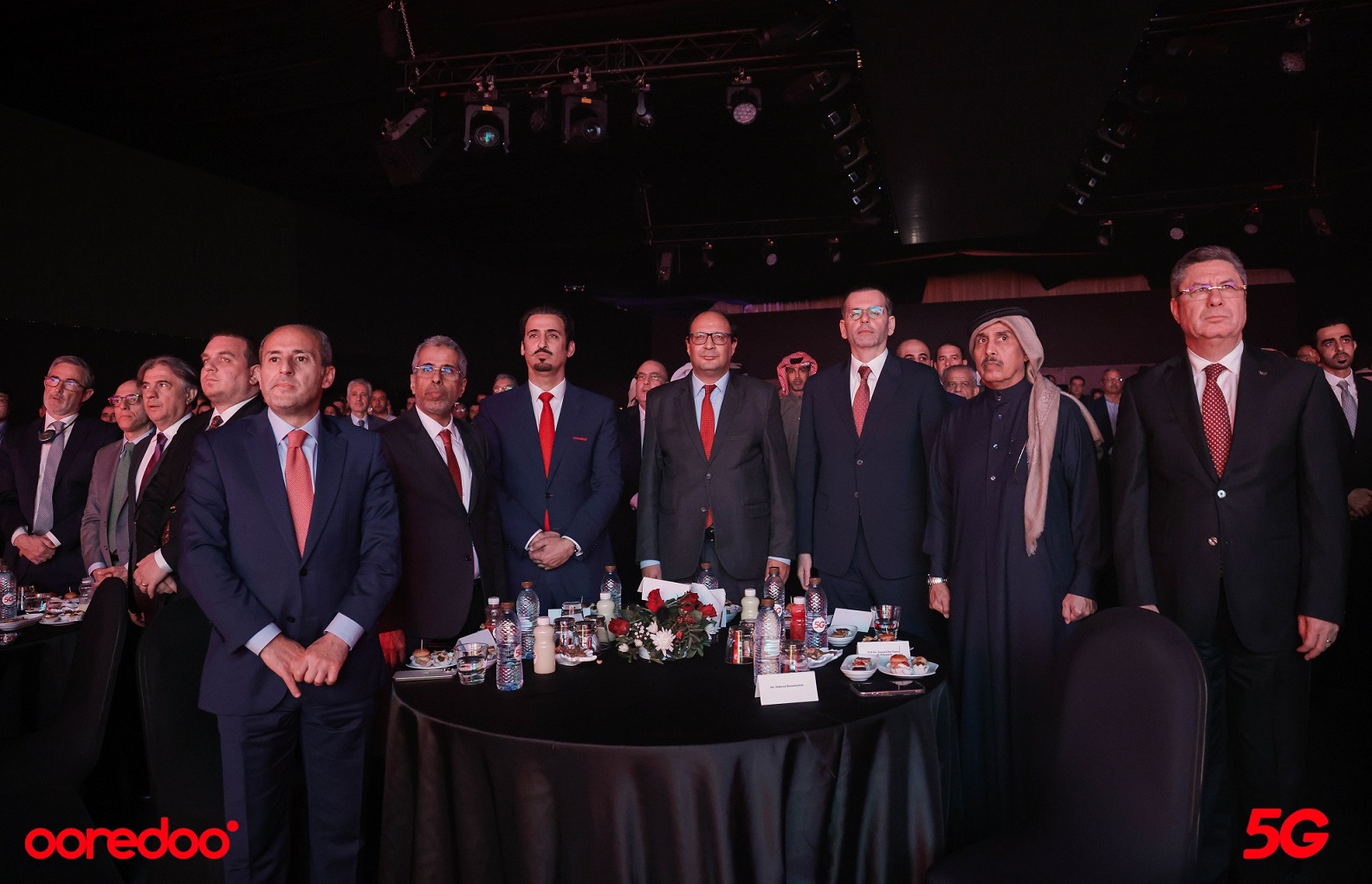
The preparation started before the party
One revealing date is October 30, 2019. Nokia announced that Ooredoo Tunisie would deploy a cloud-native mobile core to support its existing networks and prepare for 5G. The agreement covered core-network software, virtualised infrastructure and network management. Much of the work sat out of sight of the customer holding the handset.
The demand behind it was already visible. Nokia’s announcement said data consumption, excluding voice-only subscribers, had more than doubled over the previous four years. More smartphones and more video were changing what the network needed to carry. The engineering response was to make capacity more adaptable and services easier to introduce.
“nous préparons Ooredoo à répondre aux demandes futures des clients”
Hatem Mestiri, CTO, 2019
“We are preparing Ooredoo to meet customers’ future demands.” Translation.
The sequence offers a useful lesson for businesses selling technology: improve the machinery that will support the service before asking customers to depend on it. Ooredoo’s commercial 5G launch followed on February 14, 2025. Valentine’s Day supplied the calendar coincidence; several years of preparation supplied the less photogenic backstory.
A household buys a connection, not a generation
Fixe Jdid 5G turns that network into home internet through a dedicated box. The published offer has 30, 50 and 100 Mbps download tiers, with different monthly prices for 12- and 24-month commitments. Availability depends on the address. The indoor version plugs into a power socket; an outdoor modem requires installation assistance.
At the entry tier, the listed price is 59.9 Tunisian dinars a month for 12 months, or 55.9 dinars for 24 months. The lower monthly number buys a longer obligation. Multiplying the advertised fees gives 718.8 dinars over the first contract or 1,341.6 over the second, before any additional charges. These are subscription arithmetic, not all-inclusive purchase quotations.
718.8 DT in subscription fees
1,341.6 DT in subscription fees
Published tariffs checked September 9, 2026. Additional charges may apply; eligibility and contract terms govern.
Included entertainment gives the offer a second household use. Eligible tiers list services such as Shahid, TOD and Anghami. Activation runs through My Ooredoo or a shop, and the content benefit lasts a month without automatic renewal. Even a streaming bonus has a small administrative life of its own.
Ooredoo also advertises an internet-and-TV package combining fibre or Fixe Jdid with a television and bank instalments. It brings the connection and the screen into one shopping decision. The process includes a credit application and bank approval. The operator is moving closer to how a family furnishes its digital life, with the paperwork that accompanies a bigger purchase.
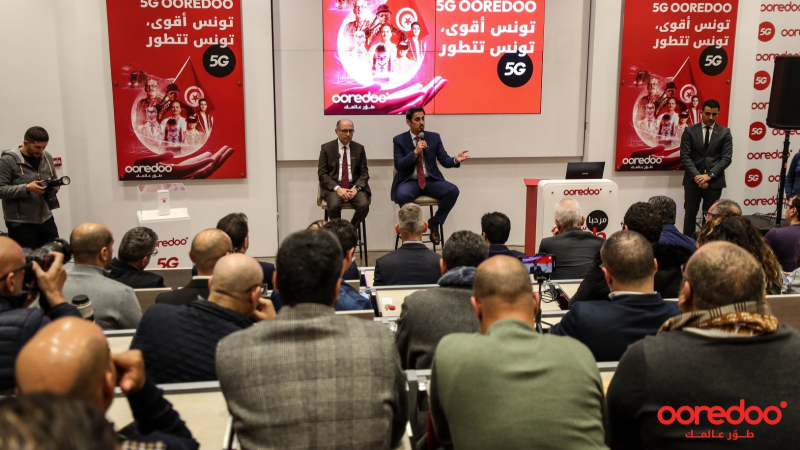
The first awkward question was about an address
Just thirteen days after the commercial launch, a customer near Mornag posted a telling question on Ooredoo’s assistance site. His phone connected to 5G, he wrote, but his home sat outside the fixed-service eligibility boundary. Would the home offer work? The company’s reply directed him to enter his GPS coordinates in the eligibility tool and consult a shop about available speeds.
This is a documented early snag in the buying journey. It does not establish the first technical failure of the network. What it shows is a gap between two perfectly understandable ideas: seeing 5G on a phone and being able to order a particular fixed broadband service. A national launch announcement cannot answer an address-level question.
Another customer reported interrupted IPTV viewing in March 2025; support moved the conversation to email. That account is a complaint, not a diagnosis or a measurement of the whole network. It still identifies the standard customers apply. The connection must work with the activity they bought it for. A successful speed demonstration at launch cannot substitute for that experience.
- 01 Exact address
- 02 Eligible offer
- 03 Suitable equipment
- 04 Everyday use
The office gets a different shopping basket
The same network can solve a different problem for a small business. Fixe Jdid 5G Pro offers internet without a copper or fibre installation in the office, alongside professional extras including a fixed IP address, domain, mail and security services. For an owner setting up premises, getting connected and getting the basic digital administration organised are closely related jobs.
The catalogue extends to virtual machines. Ooredoo lists server packages with allocated processing power, memory and storage, plus configurable capacity. Businesses can rent resources for applications instead of buying the physical server themselves. Its hosting portal also sells domains, web hosting and professional email. These are concrete services behind the broad phrase “digital transformation.”
Microsoft productivity subscriptions add document sharing and collaboration to the mix. A business can therefore buy connectivity, computing and office tools through the telecom relationship. Ooredoo’s expertise here is in operating infrastructure and packaging services around it. The practical attraction is coordination: fewer separate purchases to organise when a company wants to get to work.
A SIM card with a route to the post office
Mobiflouss shows another use for an existing customer relationship. Built with La Poste Tunisienne, it lets eligible customers top up, transfer money, collect money orders and pay bills. Access requires an Ooredoo line and the relevant postal e-DINAR SMART card. The phone becomes a way to use a financial service without arranging every transaction around a physical visit.
The partnership is the distinctive part. Ooredoo supplies the mobile relationship; the postal system supplies a familiar financial connection. It is an example other service companies can study: identify a recurring inconvenience and work with the institution already handling the underlying task. In July 2026, the group also reported public Google Play availability for walletii in Tunisia as part of a phased rollout.
My Ooredoo serves the more routine side of the relationship. Customers can inspect balances and bills, buy data and recharge a line from an Android or iOS device. These small interactions matter because customers repeat them. An app that helps someone finish a top-up has a clearer purpose than a vague promise to change their digital future.
The investment has to earn its keep
For 2025, Ooredoo reported QAR 411 million in Tunisia capital expenditure. That is the operation’s overall capital spending, not a separately disclosed bill for the 5G launch. Against revenue of QAR 1.726 billion, it represents roughly 24%. Building and renewing the network consumes a substantial part of what the business brings in.
The year produced QAR 724 million in EBITDA, a 42% margin. That measure excludes interest, taxes, depreciation and amortisation; it is not money left over after replacing equipment. Reported revenue growth was 12% in Qatari riyals and 7% in local currency. The distinction matters when assessing a Tunisian operation through its parent’s financial reporting.
Eyas Naif Assaf took over as CEO on January 10, 2026. He inherited a business whose next test reaches beyond customer acquisition. The fixed offer must remain useful after installation, the contract must make sense to the household, and support must handle the awkward exceptions. Ooredoo has already won a place in millions of pockets. Earning a lasting place beside the television is a different, very practical assignment.