A cell tower is an excellent place to hide a business model. You see the antennas. You do not see the purchasing decisions, software dependencies and maintenance routines underneath them. Altiostar built its business around changing those less photogenic parts. Its proposition was that the computing behind a mobile radio network could become software running on cloud infrastructure, with open interfaces between suppliers.
- The product: 4G and 5G software for the radio access network, the part connecting phones to an operator.
- The proof: a commercial deployment with Rakuten Mobile in Japan.
- The deal: a $114 million Series C in 2019, followed by Rakuten’s 2021 acquisition at a valuation above $1 billion.
- The catch: buying components separately makes integration and operational accountability essential.
That last point is the interesting one. An operator gains choices when hardware and software come apart. It also acquires decisions that a traditional equipment supplier would once have made on its behalf. Altiostar’s story is about making that exchange credible enough for a customer to build a network around it.
01 / The test before the commitment
In founder Ashraf Dahod’s account, Rakuten and Altiostar met at Mobile World Congress in February 2018. Rakuten subsequently tested the software at Altiostar’s Bengaluru facilities. Those results persuaded Mickey Mikitani to commit to a fully virtualized RAN rather than a mixture of virtualized and conventional equipment.
Approval brought a substantial engineering assignment. “There were 150 features that Rakuten wanted us to develop,” Dahod recalled in a 2020 interview. A customer willing to adopt a new architecture still expected it to do the work of a mobile network. The team had to deliver those requirements while developing 5G and automation.
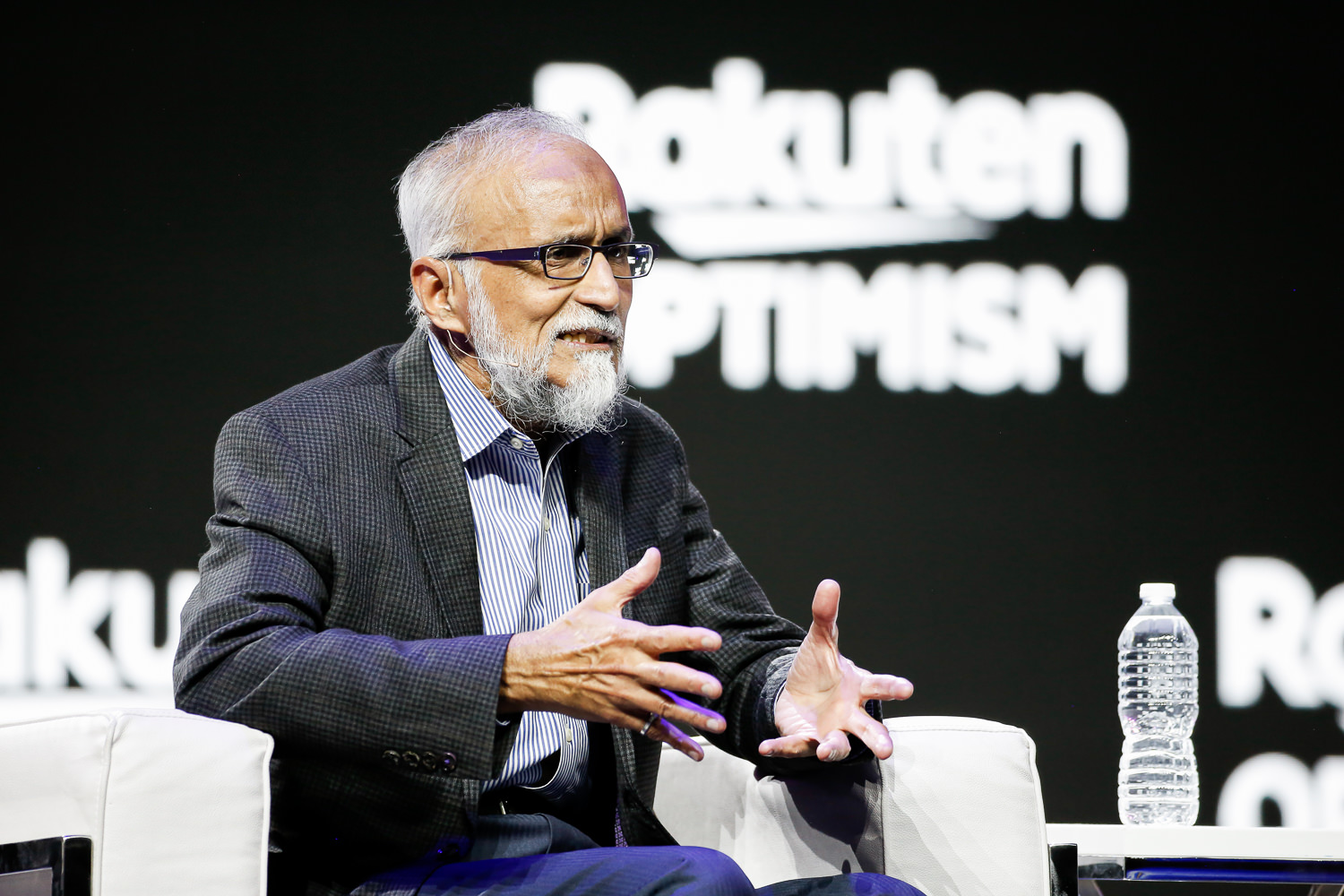
Founded in 2011, Altiostar had been pursuing this problem years before Rakuten Symphony existed. In 2017, its vRAN solution won two GSMA GLOMO technology awards. Recognition helped establish the proposition. A live operator network would give it a much more demanding examination.
02 / What comes out of the cabinet
The radio access network, or RAN, connects your handset over the air. A radio transmits and receives signals; baseband processing performs the computational work behind that connection. Altiostar virtualizes baseband functions and supports open interfaces, allowing an operator to combine its software with equipment from other suppliers.
There are two ideas here. Virtualization changes where and how functions run. Open interfaces change how components communicate. Together they let an operator assemble a network with different suppliers for radios, computing and software. Antennas, spectrum and physical sites remain necessary. The opportunity lies in the architecture behind them.
Simplified architecture. The hardware, software and integration can come from different suppliers.
The products span 4G LTE and 5G. Small cells serve more confined spaces; macro deployments cover larger areas. Software can coordinate these deployments and automate tasks across them. For buyers, the attraction is a way to change services, capacity and operations through software while retaining more say over the equipment underneath.
03 / Four minutes, with an asterisk
Rakuten Mobile launched its full commercial 4G service in April 2020 and introduced 5G that September. In March 2021, Altiostar and Rakuten reported more than 11,000 base stations as of the end of January, covering 74.9% of Japan’s population. These were dated deployment results, substantial enough to move the discussion beyond a laboratory demonstration.
The same announcement contained a more portable number: Rakuten said it could provision a new 5G cell site in four minutes, and a 4G site in eight. That means provisioning a prepared site. It does not include finding a rooftop, negotiating access, installing antennas or supplying power and connectivity.
Rakuten-reported software provisioning times. Physical construction is outside this measure.
For an operator repeating the same task across thousands of sites, a shorter provisioning process can matter greatly. Automation also covered fault detection and recovery. The business argument was that operating the network could become less dependent on repeated manual interventions.
The rollout’s first conspicuous compromise was its timetable. Rakuten initially targeted October 2019; that month brought a free supporter program for 5,000 users, with the full commercial launch arriving the following April. That sequence establishes a delayed broad launch, without assigning the delay to Altiostar’s software. Even a software-led network must be built in the physical world.
04 / A billion-dollar vote of confidence
Altiostar closed a $114 million Series C in May 2019. Rakuten joined the round; Qualcomm Ventures and Tech Mahindra had also participated. The stated use of the financing was to expand the company’s virtual RAN offering across 4G and 5G. That is the round’s total, rather than a cheque of that size from Rakuten alone.
Series C total
May 2019
Whole-company valuation
Acquisition announcement, August 2021
In August 2021, Rakuten announced the acquisition at a valuation above $1 billion. It already held an investment in Altiostar. The headline valuation described the company as a whole; it should not be read as the standalone cash price for the remaining shares, or the cost of building Rakuten’s network.
Rakuten launched Symphony that same month to take its telecom platform to other customers. Owning Altiostar brought a supplier of an essential network function inside that effort. The operating network could serve as a reference, and the software could become part of a broader commercial offering.
05 / The customer becomes the showroom
Altiostar’s buyers are mobile network operators. Rakuten Mobile is its clearest public reference. The 2021 acquisition announcement also named Airtel, DISH and Telefónica among operators that had selected the company. Selection, a trial and nationwide commercial use represent different stages; the Japanese deployment supplies the most concrete evidence in this story.
The value comes from telecom engineering: radio processing, network software, multi-vendor integration and automation. Operators buy this work because reliability and operating costs matter after the launch ceremony. Enterprises can reach the technology through private-network offerings and partners rather than purchasing a consumer mobile plan from Altiostar.
The alternatives have evolved too. Ericsson offers Cloud RAN with open interfaces. Nokia’s anyRAN combines options for purpose-built and cloud deployments. Mavenir and Parallel Wireless offer Open RAN software. Altiostar’s distinctive claim rests on its role in Rakuten’s commercial deployment and the subsequent link between operating experience and the Symphony portfolio.
Distribution is now part of the argument. Symphony launched its Real Open RAN Licensing Program in February 2024, offering commercial access to central-unit and distributed-unit software. “Open” describes interfaces and access arrangements; it does not make the software free. The launch also specified binary delivery for Layer 1 software on Intel products.
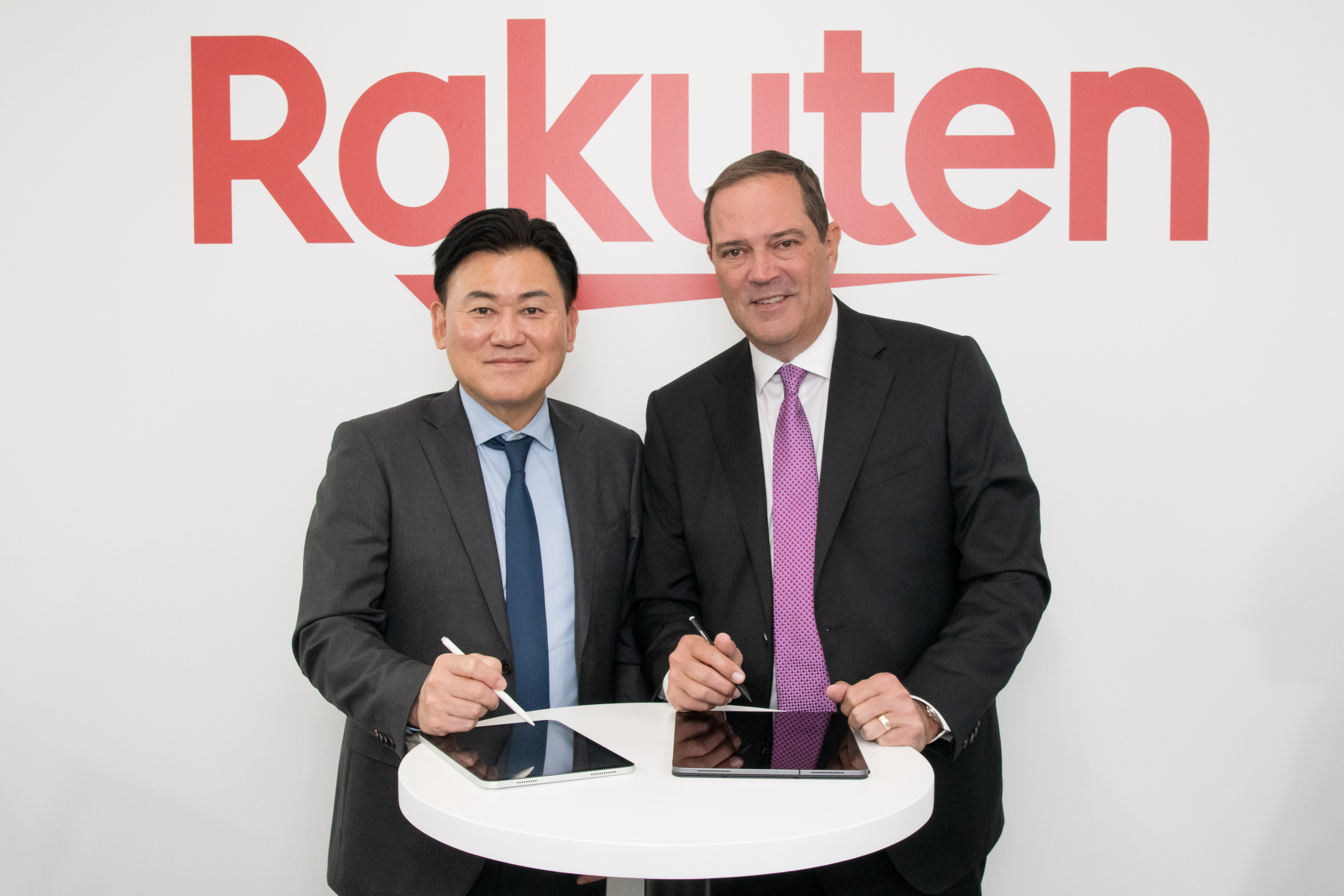
In February 2025, Symphony signed licensing-program memorandums with Cisco, Airspan and Tech Mahindra. Airspan and Tech Mahindra would resell software licences; Tech Mahindra would also act as a preferred systems integrator. Cisco’s proposed collaboration concerned a combined private 5G offering. The business model gives software more routes to customers while making room for partners to deliver the surrounding work.
06 / Freedom needs someone on call
The useful question for a prospective buyer is who takes responsibility when the components disagree. An open interface provides a specification. An operator still needs a tested combination of radio, software, computing and transport, plus support arrangements that work during an outage. Supplier freedom is valuable when the buyer can manage the resulting system.
Symphony’s own discussion of adoption acknowledges the difficulty of changing technology after decades of investment in existing networks. A new operator has more room to choose its architecture. An established one has functioning equipment, operational habits and migration costs. Its decision depends on whether the expected benefits justify replacing or integrating what it already owns.
Supplier choice becomes useful when someone owns the integration.
The practical lesson of Altiostar’s deployment
Cost claims deserve the same discipline. A 2021 LightCounting paper produced in association with Altiostar reported 40% lower network-build capital expenditure and 30% lower operating expenditure for Rakuten’s approach against a traditional RAN. Those are case-specific claims from an associated study. The savings depend on the comparison, deployment and operating model; they are not a price promise for another network.
A buyer can copy the testing discipline: choose a bounded deployment, define performance and recovery requirements, test the actual supplier combination, and measure the cost of running it. Include integration, transport, power and migration in the calculation. A faster provisioning script offers little comfort if the support process takes days to resolve a fault.
07 / The interfaces face another examination
By 2026, the public milestones arrived under the Symphony name. In January, Japan OTIC certifications covered conformance and interoperability, including Symphony’s distributed unit connected to NEC’s radio unit. That is evidence for a tested pairing, rather than a blanket guarantee for every possible supplier combination.
In February, Rakuten Mobile and Symphony announced nationwide deployment of RAN Intelligent Controller applications in Japan and expanded third-party rApp integrations. In September, Symphony and TAWAL announced a live shared indoor Cloud RAN network at KAUST in Saudi Arabia. These developments belong to the broader platform that absorbed Altiostar.
The company’s lasting contribution is easy to overlook from street level. The antenna still looks like an antenna. Behind it, an operator has a different set of purchasing and engineering choices. Altiostar helped show those choices could support a commercial network. The next buyer’s job is to make them support its own.