A completed form has an excellent publicist. It looks like progress. The boxes are filled, the attachment is attached, and somebody has pressed submit. Somewhere beyond the screen, however, another form may be waiting. Varun Krishnamurthy has built a company around the distance between those two events: finishing your part and actually being finished.
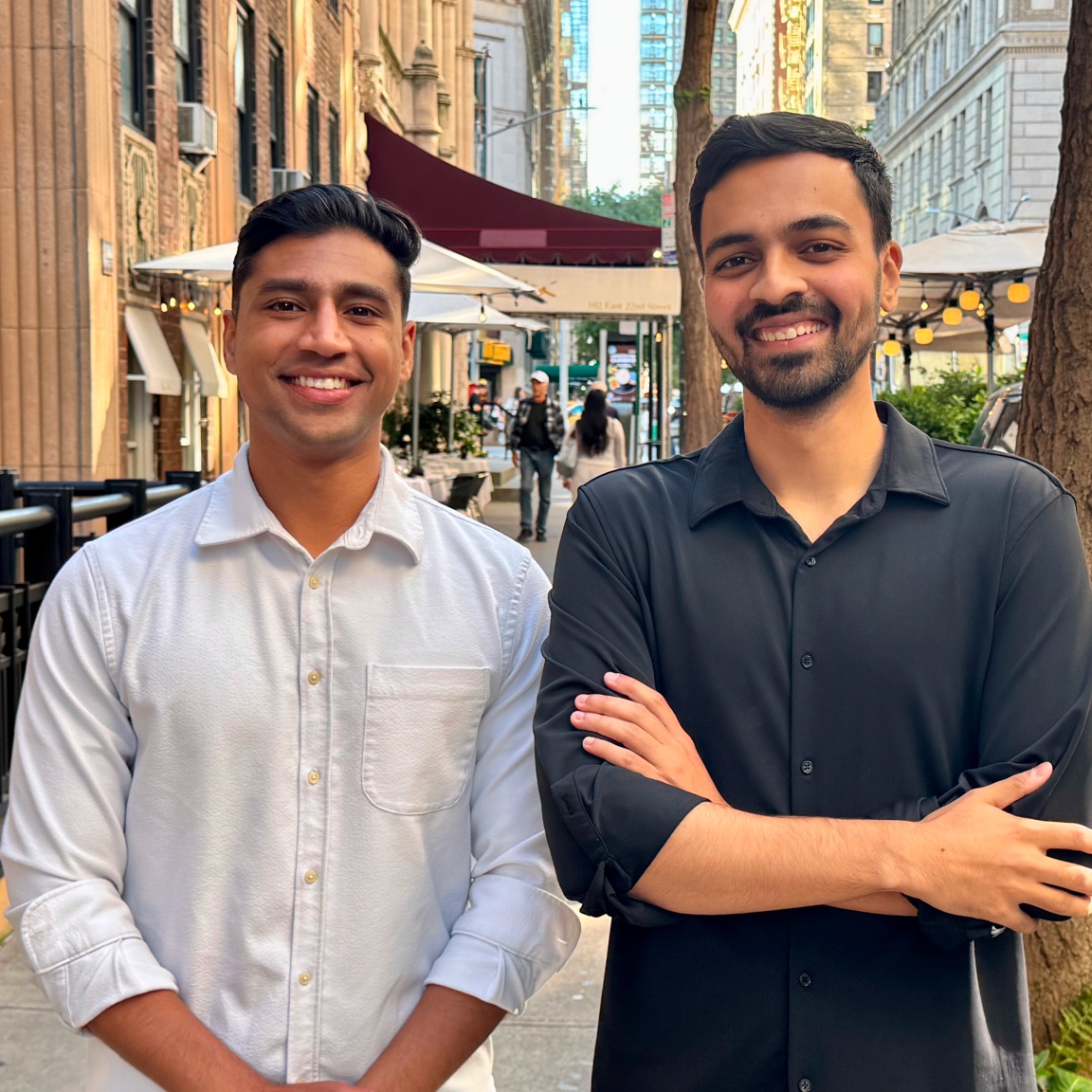
He is the CEO and co-founder of Assured, which builds software for provider operations. His route into that business began on the customer’s side of the desk. While building an earlier company with Rahul Shivkumar, he encountered the administrative delays that would eventually supply their next idea. The paperwork outlived the first venture’s independence. Their partnership did, too.
There is something pleasingly unsentimental about this origin. The second company came from a problem the founders had already paid to experience. Assured would take on the verification, applications, and follow-ups that had slowed their own operation. An unwelcome line item had become a business plan.
A sports fan with a spreadsheet
Long before Assured, Krishnamurthy was a student from Northern California studying computer science and economics at Washington University in St. Louis. His university-era fellowship biography described an avid sports fan interested in big data analytics. He was part of the university’s spring 2015 University Innovation Fellows cohort, a program concerned with building innovation and entrepreneurship on campus.
It is a modest beginning for a founder profile: subjects studied, interests declared, a program joined. Yet those details offer more texture than the usual retrospectively inevitable entrepreneurial destiny. Computer science concerned the machinery. Economics concerned the choices and costs around it. Sports supplied something rather more enjoyable to count.
His student projects wandered accordingly. In 2015, he studied the relationship between NBA player salaries and on-court performance using econometric analysis. Another project used R to predict wine quality. In 2016, he worked with four classmates on a service that recommended roommates from questionnaires about lifestyles and hobbies.
Basketball, wine, and domestic compatibility make an unusual syllabus. They also provide an early glimpse of somebody willing to put everyday questions into a model. A recommendation service can suggest a roommate; whether that roommate washes a saucepan remains a matter for subsequent fieldwork. The distance between a useful model and a usable result was already available for study.
Krishnamurthy graduated in 2016. His engineering career included Yahoo, where he worked as a software engineer. The sequence would eventually take him from writing software inside an established company to helping build a business of his own.
The second company was inside the first
Krishnamurthy and Shivkumar co-founded Dawn Health. Their university’s account dates its beginning to June 2020. The company expanded across 15 states before its acquisition. That expansion supplied an education in the less photogenic side of running an operation: records, separate requirements, and work that needed to move between organizations.
Growth multiplies the occasions for a process to fail. A manual check that seems manageable once becomes a different proposition when repeated across a growing network. Each application carries its own dependencies. A missing item can keep the next step waiting, even when everyone involved wants the process to move.
Dawn Health was acquired by Health Care Originals in late 2023. Krishnamurthy and Shivkumar founded Assured in 2024. They carried forward a working partnership and a specific complaint about the way administrative work got done. They had experienced the problem while trying to grow something else; now it would receive their full attention.
A form has a long memory
Assured’s subject is the connected administrative process. Its software combines verified provider data with agents that work across credentialing, payer enrollment, roster management, and monitoring. The company describes a division of responsibility in which teams retain decisions, signatures, and exceptions while software moves the work forward.
The ongoing part is easy to overlook. A record can be correct when collected and need attention later. Assured includes monitoring and roster management because the work continues after an initial application. For the customer, that means the product has to support a relationship over time. A file is less like a finished essay than a calendar: useful partly because somebody keeps it current.
That distinction matters to the founder’s ambition. A task can be completed while its larger process remains stuck. Information still has to arrive in the right place, in the right format, with the right supporting material. The person receiving it may be operating under a different set of requirements. A tidy dashboard cannot persuade an incomplete application to become complete.
Krishnamurthy’s broader argument is that software should carry responsibility across those handoffs. His descriptions of Assured keep returning to entire workflows. The interesting unit is the chain of work, including the dependencies between its steps. That gives the product a more demanding finish line than a notification announcing that somebody else has something to do.
- Gather
Bring records and supporting documents together. - Verify
Check information against primary records. - Prepare & submit
Match the application to its destination’s requirements. - Maintain
Keep records current and route exceptions to the team.
Illustrative sequence based on Assured’s described capabilities. Decisions and exceptions remain with people.
In March 2026, he joined Zack Kanter for a 45-minute podcast conversation about this administrative territory. The episode moved through the distinctions between credentialing, provider enrollment, and transaction enrollment. It also addressed keeping information current and the question of standardization. These are the details that a broad promise about automation can easily skip.
The conversation makes a useful companion to the founder’s story. A company begins with an idea; operating it requires a vocabulary for all the ways the idea can get caught. For Krishnamurthy, those distinctions have become material worth explaining at length.
The people who came back
A second company also has a history of relationships. Kindred Ventures had backed Dawn Health and returned to back Assured. In September 2025, it announced its participation in a $6 million seed round alongside First Round Capital, Bragiel Brothers, and the founders of Atria and Grow Therapy. The founders were working together again, and an investor who knew them was joining them again.
By the seed announcement, Assured had also achieved certification as a Credentials Verification Organization from the National Committee for Quality Assurance. That milestone concerns the company’s capacity to perform verification work. It adds another dimension to the founder’s job: building a software product alongside an operation that has to meet an external standard. The work cannot be assessed solely by how persuasive the demonstration looks.
There is practical value in that continuity. An investor can assess a new pitch against experience of the team’s earlier work. Founders can begin a conversation with people who already know something about how they operate. A previous partnership does not settle the next company’s prospects, but it gives the relationship a past tense.
ANNOUNCED IN 2025
JULY 2026
In July 2026, Assured announced a $19 million Series A led by Insight Partners, with First Round and Kindred participating again. Krishnamurthy’s announcement described an expansion into additional back-office work and hiring across engineering, product, and go-to-market. Funding gave the next set of plans a budget.
The financing milestone brings a wider set of responsibilities. More resources permit more building, while a broader product scope brings more processes whose details the team must understand. The priorities in his announcement give that expansion a direction: additional workflows, a larger team, and more of the work that follows an initial verification.
A faster queue still needs a lock
Speed gives software an easy demonstration. Accuracy and protection tend to make quieter demands. Krishnamurthy’s public writing has addressed those demands, too. In a 2025 article about operational security, he described encryption, access controls, audit trails, and security training as parts of Assured’s approach to protecting data.
These subjects belong inside the product discussion. An application contains information entrusted to the people processing it. Moving that information more efficiently increases the importance of knowing who can access it and what happened along the way. A quick process should still leave a legible history.
“It’s reliability as well.”
VARUN KRISHNAMURTHY / ON WHAT MATTERS ALONGSIDE SPEED
The security discussion also makes room for the people operating the system. His article describes role-based access and quarterly security awareness training for internal teams. Those are organizational habits as much as technical features. The practical question runs through both: who needs this information to do their job, and how does the company keep that access appropriate? Automation still lives inside an organization with responsibilities.
His emphasis on reliability complicates the simple picture of an automated back office. The promise has to survive an exception, a changed requirement, or an imperfect record. Customers encounter a system through such moments. Ordinary successful transactions are welcome; unusual ones reveal how much of the job the software understands.
The ambition is to disappear
Krishnamurthy’s stated direction extends beyond Assured’s initial workflows. He wants a platform that can take on more of a customer’s back-office work. It is an expansive aim rooted in a rather particular frustration: the work between an intention and its completion.
His career has supplied several ways of looking at that gap. A student can model a choice. An engineer can build a tool. An operator discovers the unfinished steps that remain after the tool has done its part. A founder can decide those steps deserve a company.
The path from university projects to Assured need not be treated as a master plan. Its more interesting continuity is a willingness to work through details. There were salaries and statistics, questionnaires and recommendations, then applications and records. The subject changed. The questions became more operational.
For a business built around administration, success has an odd quality: the better the machinery works, the less occasion anyone has to think about it. The customer gets on with the next thing. For Krishnamurthy, that would be a fitting result. The form is submitted, the next step happens, and nobody has to organize a meeting about the form.
Continue the conversation