The Story
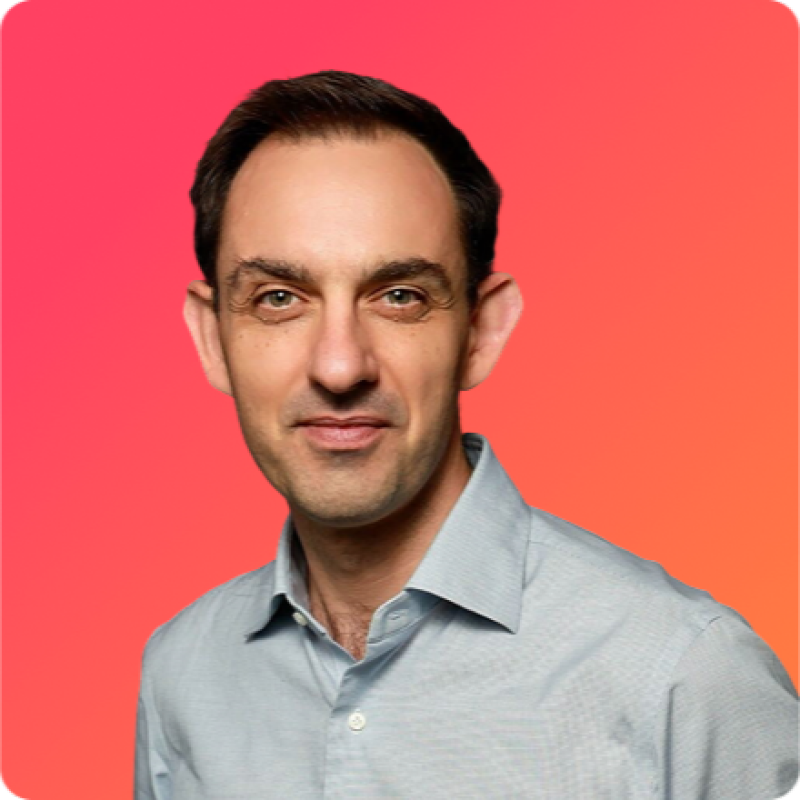
Elad Ferber spends his days on the least glamorous problem in modern medicine: the paperwork. As CEO and co-founder of Synthpop, a healthcare AI company he started in 2023 with CTO Jan Jannink, Ferber is trying to automate the administrative machinery that sits between a patient and their care - the referrals, the prior authorizations, the eligibility checks, the documentation, the claims. It is unglamorous work, and that is exactly the point. In February 2026 Synthpop closed a $15 million Series A led by Ansa Capital, bringing its total funding to $23 million and putting real money behind a simple thesis: healthcare providers do not need another dashboard. They need the work done.
Synthpop's pitch reframes what an AI company sells. Ferber describes the product not as software but as labor - a system that verifies insurance, handles phone calls with payers, reads and files documents, and moves a case forward without a human clicking through screens. The company says tasks that historically took around 40 minutes now run in under a minute, at a fraction of the cost of the manual labor they replace, while staying inside HIPAA and SOC 2 compliance. That framing, labor rather than SaaS, changes how the whole thing is priced, sold, and measured.
"Point solutions can't fix operational bottlenecks," Ferber has said. "Providers need a unified system that understands insurance requirements, handles phone calls naturally, and works seamlessly with their existing software." It is a critique of an entire category of healthcare tools that solve one narrow step and leave the seams for someone else to stitch.
Most vendors are either AI companies learning healthcare or healthcare companies experimenting with AI. Synthpop was built with both from the ground up.
Elad Ferber - on Synthpop's founding thesis
A systems engineer before a founder
To understand how Ferber ended up here, it helps to know where he trained. He is a graduate of Talpiot, the Israeli military's elite excellence program, which selects a small cohort each year for intensive study in physics, mathematics, and engineering before placing them in demanding technical roles. From there his career ran through the harder edges of applied science: an algorithm developer at the defense firm Rafael, senior project management at the Israeli Ministry of Defense, and work connected to SpaceIL and the Israeli Air Force. Rockets and defense systems are a long way from medical billing, but the through-line is systems thinking - breaking a messy, high-stakes process into parts that can be modeled, measured, and improved.
He then went to Stanford's Graduate School of Business, earning an MBA between 2012 and 2014. Business school is often where technical operators either drift into finance or double down on building. Ferber chose building, and he chose healthcare - a sector notorious for swallowing ambitious founders whole.
The exit that came first
Synthpop is not Ferber's first company. Before it, he co-founded Spry Health, a remote patient monitoring startup that was acquired by ZOLL Itamar in 2021. The acquisition gave him something many second-time founders lack: a full lap around the track, including the parts that do not make the highlight reel - selling into hospital systems, navigating regulation, and learning where hardware-heavy healthcare businesses get stuck. When he started Synthpop, he did it as a software-first company built around AI from day one, a deliberate contrast to the device business he had just exited.
That sequencing matters. A first-time founder pitches a vision. A second-time founder who has already sold a company pitches a corrected one. Synthpop's insistence on pairing native AI expertise with deep healthcare operations knowledge reads like a lesson learned rather than a slogan.
A significant milestone in AI is the ability to perform more complex tasks by composing multiple related queries.
Elad Ferber - on why chained AI models unlock healthcare
Why now, and why the back office
Ferber's technical bet is that recent progress in AI - specifically the ability to chain models together into agents that can carry out multi-step processes - has finally made the back office automatable. Healthcare admin is not a single task. It is a long chain of small decisions, phone calls, form fields, and lookups, each dependent on the last. Earlier automation broke on that complexity. Ferber argues that composing multiple AI queries into a coherent workflow lets software capture and replicate the intricate human processes that healthcare runs on.
The market is enormous and unglamorous, which is a founder's favorite combination. Administrative overhead is one of the largest and most persistent costs in American healthcare, and much of it is repetitive work that burns out staff and delays care. By early 2024 Synthpop reported it had processed more than a million administrative tasks in 17 months. By the time of the Series A, the company said it was serving over two million patients and integrating with eight major electronic health record systems, and it had acquired the airt AI team to deepen its workflow capabilities.
The worldview
Synthpop frames its values around what it calls techno-optimism - a belief that technology and automation should replace analog, manual processes - balanced against empathetic care, the idea that the point of all this efficiency is to give people better, more consistent treatment. Ferber's version of the future is not AI replacing doctors. It is AI answering the phone, filling the form, and chasing the approval, so the humans can do the parts only humans should. The team he is building to do it is globally distributed, with hubs in San Francisco and Boston and engineers across the US, Croatia, and India.
Whether Synthpop becomes the unified system Ferber describes or one more player in a crowded automation market is still an open question. But the shape of the bet is clear, and it is a coherent one: find the expensive, invisible, deeply human problem that everyone tolerates, and quietly hand it to a machine.