Company Profile / SaaS & Developer Tools
The feedback tool that ships the console log with the complaint
One place for your product team to capture, understand, and act on what users are telling you.
Anyone who has shipped software knows the shape of a bad bug report. A customer writes "it's broken." A support agent asks which page. The customer sends a screenshot from their phone, cropped at the wrong spot. A developer asks what browser they were using. Two days later, nobody has reproduced anything, and the ticket is still open. Userback was built to collapse that whole exchange into a single click.
The company, founded in 2014 in Brisbane, Australia by Jon Tobin and Lee Le, makes a feedback widget that sits inside a website or app. A user clicks it, draws an arrow on the thing that is wrong, maybe records a short video, and hits send. What lands on the other end is not just a picture. It arrives with the browser, the operating system, the screen size, the console logs, and a replay of the session that led up to the moment. The complaint and the evidence travel together.
That is the quiet idea at the center of the product: a screenshot with context attached is worth more than a paragraph of description. Userback has ridden it to more than 20,000 product teams and, by its own count, over 8 million pieces of feedback collected.
01 / What it doesCapture, understand, act
Userback organizes itself around three verbs, and the product is easier to understand if you follow them in order. Capture is the widget - the arrow, the video, the survey prompt that appears at the right moment. Understand is the context that rides along: session replay so a team can watch what happened, screen annotation so they can see what the user meant, and the technical metadata that answers the browser question before anyone asks it. Act is where the feedback stops being a message and becomes work: a single queue, two-way integrations into Jira, Trello, Slack and GitHub, and a public roadmap where users can watch their request move toward "shipped."
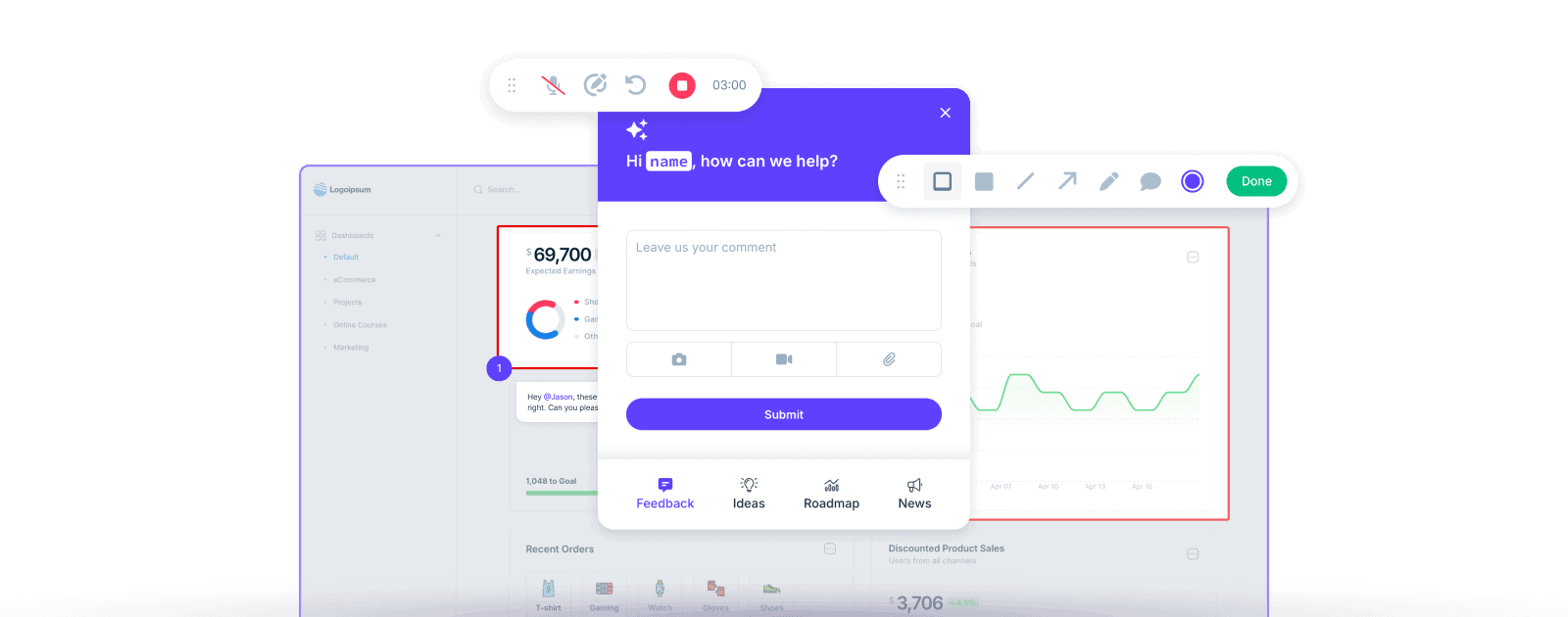
The design choice worth dwelling on is who the widget is for. The person submitting feedback is not a Userback customer. They do not have a login. They are a website visitor, a beta tester, an agency's client signing off on a homepage. They never see a paywall. That decision shapes everything downstream, including how the company charges for the product.
02 / The problems it solvesTurning "it's broken" into a ticket
Most of a product team's day is spent translating. A vague complaint has to become a specific, reproducible ticket before an engineer can touch it. That translation work is slow, it is boring, and it is where feedback quietly dies - in a Slack thread, an unanswered survey, a support inbox nobody triages.
Userback attacks the translation step. Because the report arrives with its context, the "can you reproduce it?" round trip mostly disappears. A designer can see the annotation. A developer can watch the session replay. A product manager can read the survey responses next to the bug reports and the feature requests, all in one place, instead of stitching them together from four tools.
For agencies, the problem is a little different and Userback fits it well. When a web studio hands a site to a client, the client wants to mark things up. Traditionally that means a marked-up PDF or a long email of "move this left." With Userback, the client draws directly on the live page, and the studio gets a tidy list of changes tied to the exact elements. It turns sign-off from a negotiation into a checklist.
03 / Products and servicesMore than a bug tracker
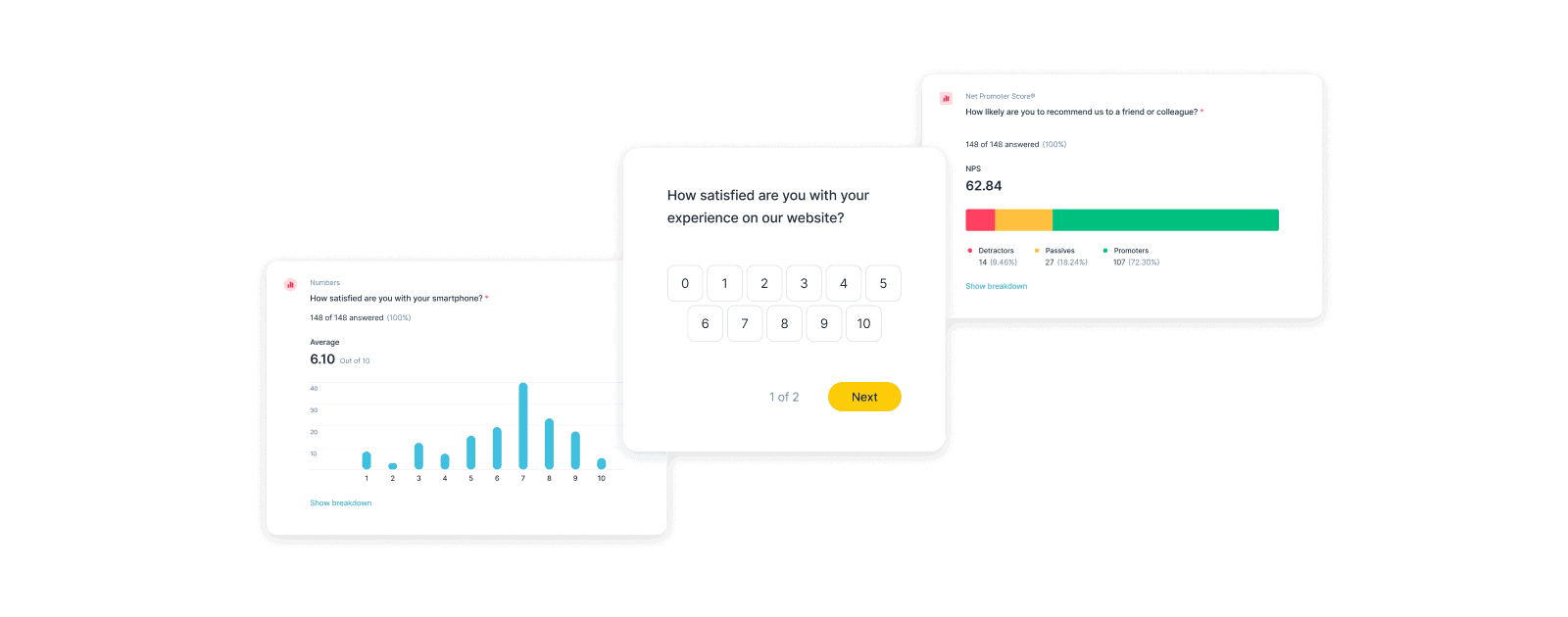
Userback started as visual bug reporting, but the current product is broader. Alongside the core widget there are in-app user surveys with behavioral targeting, so a team can ask a question at the moment it matters. There is session replay for watching how a problem happened. There is an ideas portal and public roadmap where users vote on features and see what is coming. And there is a browser extension for reporting on any site, not just your own.

The newest additions point at where software is heading. Userback added AI Assist to summarize and triage incoming feedback, and in 2025 it shipped an MCP server - a Model Context Protocol endpoint that lets AI tools like Claude, ChatGPT and Cursor connect directly to the feedback queue. In practice, that means a developer's AI assistant can read what users reported without anyone copying and pasting. Feedback stops being a destination you visit and becomes a source other software can read.
04 / Business modelPay for the actors, not the audience
Userback sells a seat-based subscription with a free tier on the bottom. Paid plans run roughly from $7 to $29 per seat per month across the Team, Business, Business Plus and Enterprise levels. The higher tiers layer in session replay, surveys, single sign-on, a REST API, webhooks and advanced privacy controls.
The clever part is what counts as a seat. Only internal team members - the people who log in to read, manage and act on feedback - need one. The users submitting feedback never do. So the bill tracks the number of people doing the work, not the number of people sending complaints. A company can invite its entire customer base to submit feedback for free and only pay for the handful of teammates in the queue.
There is a bootstrapper's discipline behind the numbers. By 2024 Userback was reported to be at roughly $1.3 million in annual recurring revenue, and it reached its scale largely on its own income before Craft Ventures led a US$2 million seed round in 2022. The order matters: the company found its customers first and took outside money second.
05 / How it is differentThe crowded corner of visual feedback
Userback lives in a busy neighborhood. BugHerd, Marker.io, Usersnap, Ybug and newer entrants like UserJot all let users point at a screen and file a report. Within that group, the tools have drifted toward different edges. Marker.io leans hard into developer bug reports and issue-tracker workflows. BugHerd is a mature fit for agencies running client QA. Userback's bet is on the full loop - not just capturing a bug, but running surveys, collecting feature requests, publishing a roadmap and, lately, wiring all of it into AI tools.
Whether that breadth is a strength or a distraction depends on the buyer. A team that only wants clean bug tickets may find a narrower tool sharper. A product team that wants its bug reports, its surveys and its roadmap under one roof is exactly who Userback is built for.
06 / Where it fitsThe feedback layer
Zoom out and Userback sits in a category that barely had a name a decade ago: the feedback layer of a software company. Analytics tells you what users did. Support tells you what they complained about. Userback's claim is the connective piece - the structured, contextual record of what users saw, wanted and found broken, captured at the moment it happened and routed to the people who can fix it.
The founders' background shows in the product's restraint. It is a lean, product-led team - Jon Tobin on growth and the business, Lee Le on the engineering - serving customers across Australia, the United States and the United Kingdom. The company carries SOC 2 Type II certification and GDPR and CCPA compliance, the unglamorous credentials that let larger customers like Danfoss, Vision6 and Tomorrow.io put it in front of their users.
The through-line, from the 2014 widget to the 2025 MCP server, is consistent. Make it trivial to capture what a user is trying to tell you. Attach enough context that the message is actionable. Put it somewhere a team can do something about it. Everything else Userback has built is a variation on that one theme, and it is a theme with no obvious ceiling - as long as people use software, they will have something to say about it.