Company Profile • Telecommunications
The Carrier That Sold Itself and Kept the Towers
For 40 years UScellular chased signal into the parts of America the big carriers ignored. Then it did the math, sold the customers to T-Mobile, and turned itself into a tower company.
There is a version of the American wireless story where UScellular is a footnote - the regional carrier that never went national, forever fourth or fifth behind Verizon, AT&T and T-Mobile. That version misses the interesting part. In August 2025, UScellular sold its wireless business, its stores and more than four million customers to T-Mobile for roughly $4.3 billion, split the rest of its spectrum between Verizon and AT&T, and then did something a struggling company almost never does cleanly: it figured out which asset was actually worth keeping, kept it, and renamed the company around it.
That asset was the towers. The leftover business - roughly four thousand owned cell sites plus a stack of retained spectrum licenses - became Array Digital Infrastructure. The phone company sold the phones and became a landlord. To understand why that was the smart move, you have to understand what UScellular spent four decades building.
01The company that covered the map's blank spots
UScellular's whole reason for existing was geographic. Where the national carriers optimized for dense, profitable metros, UScellular built for the places in between: small towns, farm country, the two-lane highways where a dropped call is less an annoyance than a safety problem. At its peak it served customers across 21 states with somewhere between four and 4.7 million retail connections. Its pitch was never "cheapest" or "flashiest." It was "we actually have bars out here."
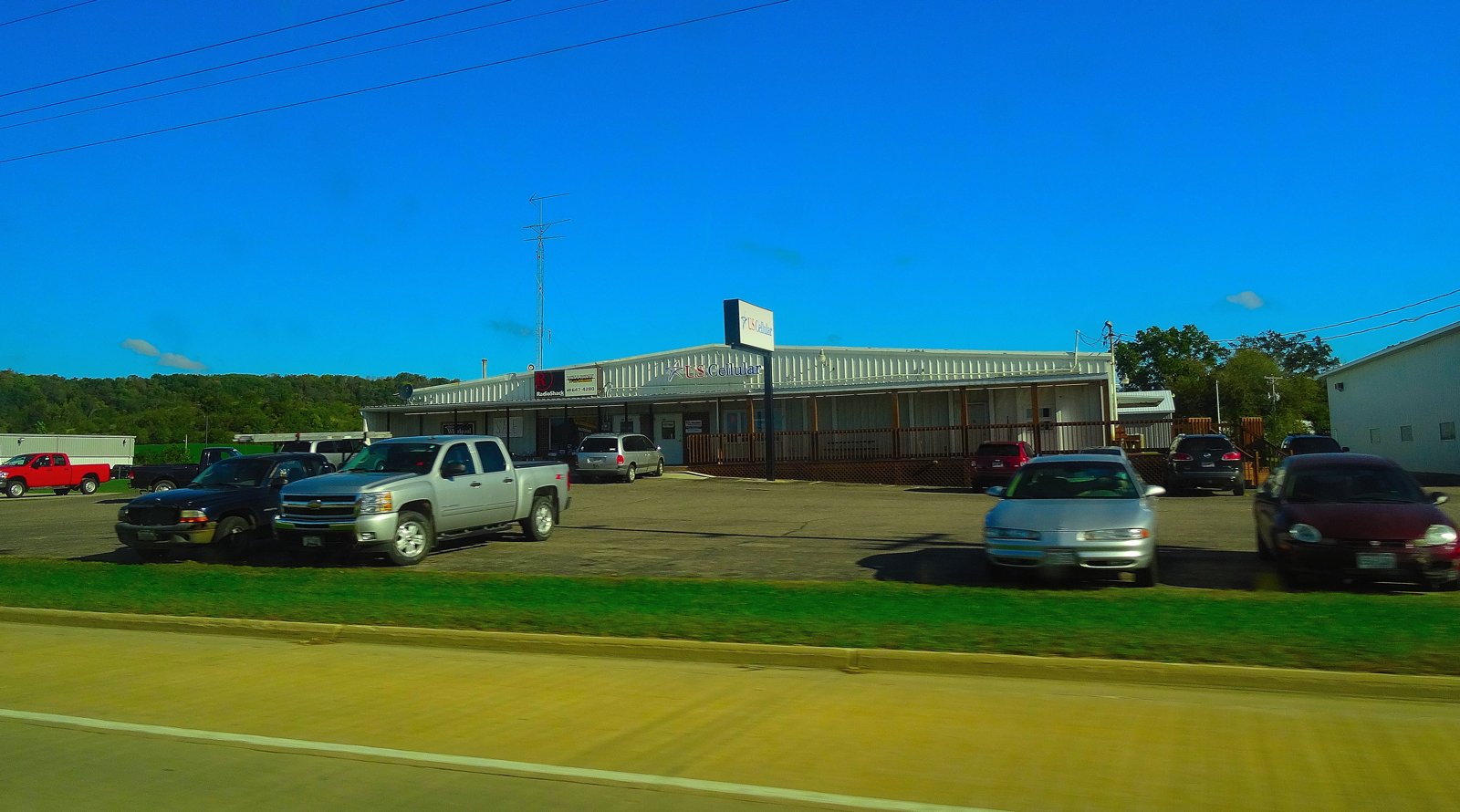
That focus shaped everything - the retail footprint of neighborhood stores, the marketing that leaned on reliability and local service, the recurring recognition as a Top Workplace. It also shaped the customer base: consumers and families on postpaid and prepaid plans, small businesses, and a growing book of IoT and connectivity accounts. When rural broadband became a national talking point, UScellular leaned into fixed wireless home internet, delivering service over its cellular network to homes that wired providers had skipped.
The product menu, by the end, looked like a national carrier's in miniature: unlimited data plans, multi-line and auto-pay discounts, 5G and LTE service, smartphones from Apple and Samsung with trade-in offers, mobile hotspots, device protection, and a business division selling connectivity, mobile device management and IoT solutions to companies. The difference was never the catalog. It was the map - and the willingness to run a store in a town of a few thousand people because someone there still needed a working phone.
02A family, 50 phone companies, and a 1983 bet
The roots run deeper than the brand. The parent company, Telephone and Data Systems (TDS), was assembled starting in 1969 when Chicago entrepreneur LeRoy T. Carlson stitched together roughly 50 small independent rural telephone companies into one operator. In 1983, TDS created United States Cellular Corporation as its dedicated cellular arm, and by June 1985 the first markets went live in Knoxville, Tennessee, followed quickly by Tulsa, Oklahoma.
TDS kept majority control the whole way - about 83% before the sale. That ownership structure mattered at the end: this was not a scrappy startup answering to venture investors, but a decades-old, family-influenced telecom deciding how to exit a business that had run out of runway.
The brand you remember from a ballpark sign was quietly the fourth-largest wireless carrier in the country. UScellular, at its peak
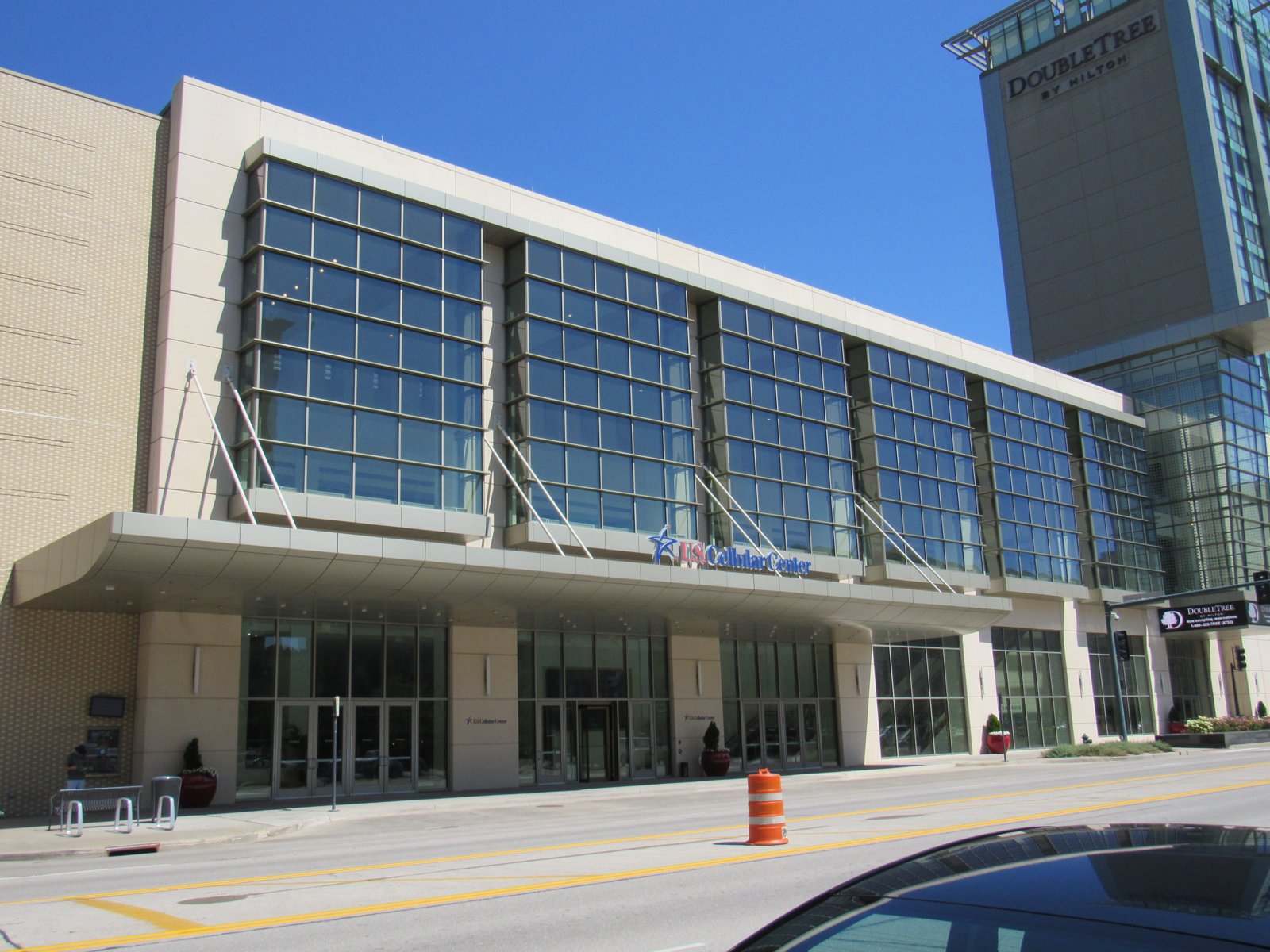
For a stretch the name was hard to miss. From 2003 to 2016 the Chicago White Sox played at U.S. Cellular Field. In 2020 the company refreshed its identity to the lowercase "UScellular," dropping the periods from "U.S." partly to lean into the word "us" - as much a pronoun as an abbreviation - and redrawing its star mark as a cluster of converging lines.
03Why the math stopped working
Rural wireless was always a narrow business - necessary, defensible, but never rich. It worked for decades because the cost of maintaining coverage in low-density markets could be recovered from loyal, sticky customers. Then 5G arrived, and with it a capital-spending arms race. Building and upgrading a nationwide-quality network costs the same billions whether you have 100 million customers or four million to spread it across. The national carriers could absorb that. A regional operator, increasingly, could not.
The clearest verdict came from an unlikely source. When the U.S. Department of Justice cleared T-Mobile's acquisition despite consolidation concerns, it did so by citing UScellular's inability to compete at scale. That is a blunt thing for regulators to put on paper, and it is essentially the entire strategic story of independent wireless in the 5G era compressed into one sentence.
The DOJ approved the deal despite consolidation concerns, citing UScellular's inability to compete at scale. On the antitrust review
04The exit, structured
Here is where the story gets instructive. Faced with a business it could not win, UScellular did not simply sell the whole thing to the highest bidder. It disassembled itself along the lines of what each buyer actually valued. T-Mobile, announced in May 2024 and closed in August 2025, bought the wireless operations, the retail stores, the customers, and about 30% of the spectrum - roughly $4.3 to $4.4 billion, structured as about $2.6 billion in cash plus roughly $1.7 billion of assumed debt. Verizon agreed to buy a slice of spectrum for about $1 billion. AT&T bought roughly $1 billion more, a deal announced in November 2024 and closed in 2025.
Where UScellular's spectrum went
Approximate value of announced transactions, 2024-2025
The wireless customers and stores went to T-Mobile; the remaining licenses were split across all three national carriers. Figures are approximate and drawn from public announcements.
The through-line: every piece someone else valued more got sold, and the one asset that was hard for anyone to replicate - the physical towers - stayed home. In July 2025 the company announced it would rename itself Array Digital Infrastructure and operate as a towers-and-spectrum business, leasing capacity rather than selling monthly phone plans. Doug Chambers, previously the chief financial officer, was named interim CEO while the board searched for a permanent leader.
05What's left, and why it's a real business
A tower company is a different animal from a carrier. Instead of chasing subscribers with promotions and device trade-ins, it earns lease revenue from the carriers that need to hang antennas somewhere. Those 4,000-plus sites do not stop being useful just because the customers moved to T-Mobile - if anything, national carriers densifying their own 5G networks are exactly the tenants a tower landlord wants. The retained spectrum adds a second monetizable asset on top.
It is a quieter business, and a smaller one, but it is built on the part of UScellular that always had durable value: real estate and licenses in places where building new is slow and expensive. Permitting a new tower can take years; buying access to one that already stands takes a lease. That scarcity is the whole pitch of a tower company, and it is why the pivot is more than a face-saving rebrand. The brand is retiring; the steel is staying up.
06The takeaway you can borrow
For anyone running a business that is losing a scale fight, UScellular's exit is worth studying. The instinct in decline is to hang on to the whole and sell it as one unloved package. UScellular did the opposite: it separated the company into the parts different buyers wanted most, sold the customers to the operator who could serve them best, distributed the spectrum to the carriers who needed it, and reinvented itself around the asset with the longest shelf life. Retreat, structured this carefully, reads less like surrender and more like a plan.
Where it would not work: this only pays off if you actually own something scarce. UScellular could keep the towers because it built and owned them; a business whose only asset is its customer relationships has nothing to hold back once those relationships are sold. The move also depended on three deep-pocketed buyers wanting different pieces at the same time - a competitive setup that will not exist in every industry. But the core lesson travels: know which part of your business is the moat, and do not sell that part just because it is bundled with the parts you are ready to let go.