In 2017, Simon McLoughlin picked up a book about Bitcoin at the Barnes & Noble in New York’s Union Square. He had spent two decades in traditional finance. Yet the idea that somebody with a phone could move value around the world caught him by surprise. He wrote to crypto companies looking for work. Later that year, he joined Uphold.
It is an appropriate origin story for a future chief executive of this particular business. Uphold has spent years trying to make complicated financial machinery feel like something you can pick up and use. Its more interesting ambition is to let you look inside.
- Trade supported cryptoassets, currencies and metals through one interface.
- Inspect published assets and obligations on a public reserve page.
- Choose custody tools and additional services according to your location.
- Read the quote carefully: convenience carries a spread.
01 / Before the app, the reserve
The company’s roots go back to 2013. Its predecessor, Halsey Minor’s Bitreserve, launched publicly in 2014 with a practical problem: Bitcoin could move money, but its price could also move against you. A wallet holding next month’s expenses should not require enthusiasm for next month’s Bitcoin chart.
Bitreserve let customers hold value in familiar currencies while using Bitcoin’s network. Alongside that mechanism came public records of reserves and transactions. The 2015 change to Uphold signaled a broader business spanning currencies, commodities and payments. Bitcoin became part of the machinery rather than the whole identity.

Today the transparency page puts company-reported assets beside obligations. Uphold says ordinary customer balances are fully reserved and are not lent out; voluntarily selected staking and DeFi lending are exceptions. That qualification matters. A reserve ratio addresses backing. It cannot prevent a token’s price from falling, guarantee uninterrupted access or turn crypto into an insured bank deposit.
“We publish our assets and liabilities in real-time”Uphold’s transparency page
to customers
claimed by Uphold
02 / The screen does the connecting
Uphold’s signature interface is called Anything-to-Anything. Pick what you hold, pick what you want, inspect the quote. Supported cryptoassets and precious metals can sit within that experience, subject to local availability. The customer avoids assembling a sequence of separate trades by hand.
Underneath that screen is a routing business. Uphold’s enterprise materials describe sourcing execution across 32 trading venues. That helps explain the breadth of the offering: the app connects customers to liquidity beyond a single marketplace. The relevant expertise is making those connections work together, including the less glamorous business of getting money into and out of bank accounts.
The same instinct appears in its U.S. equities service: access to more than 4,000 stocks and ETFs, with fractional purchases starting at $5. An eligible customer can fund a stock purchase with crypto. Behind the screen, Uphold HQ converts that crypto into dollars; affiliated Uphold Securities handles the securities trade, with Apex Clearing carrying the brokerage account.

These are traditional securities, not tokenized stocks. The distinctions become useful when asking who holds an asset and which protections apply. A tidy interface does not erase the boundaries between the companies doing the work.
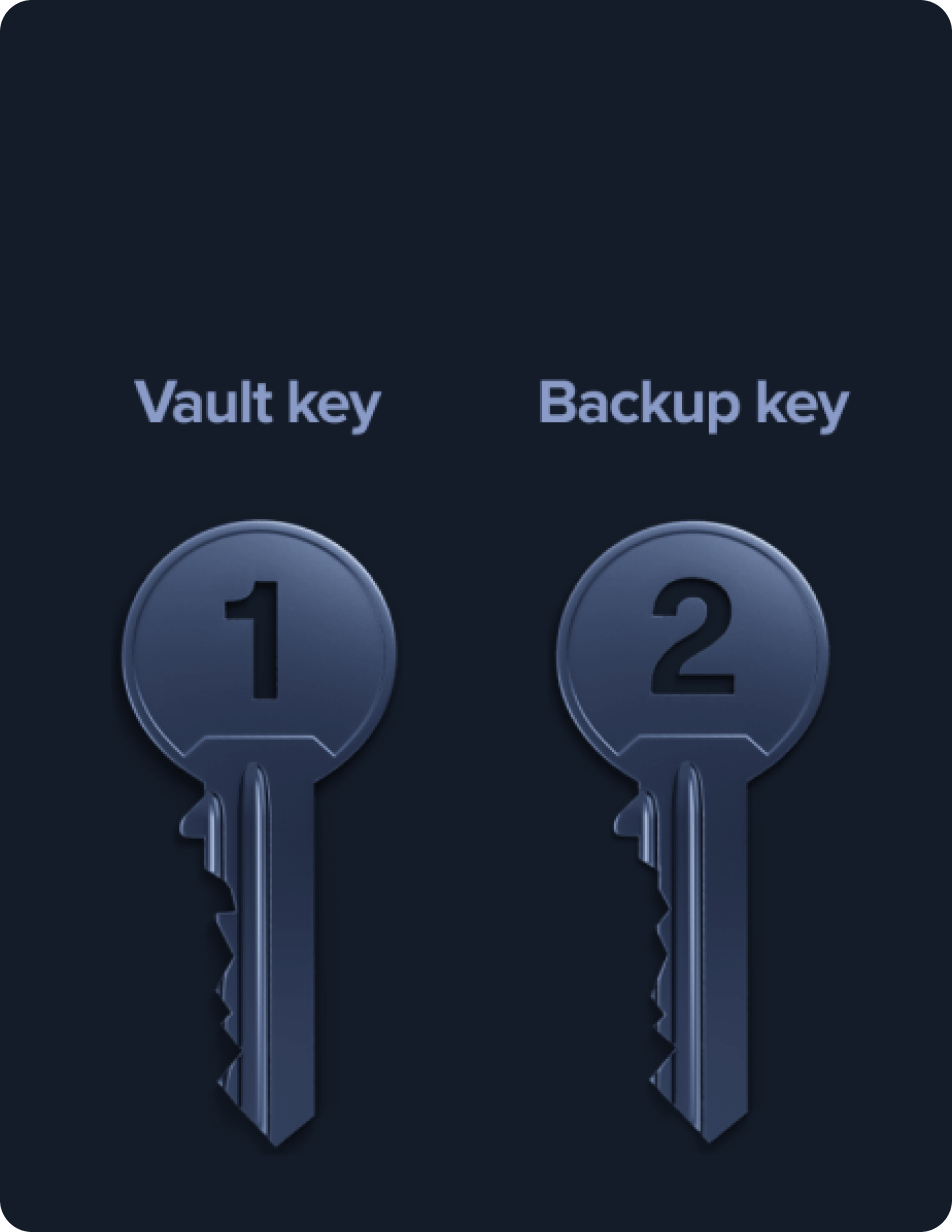
Vault tackles another awkward boundary: custody. It uses three keys, with two required to move funds. The customer controls two; Uphold holds the third to assist with transactions and replacement of a lost key. Lose both customer keys without backups, however, and access can be lost permanently.
03 / What the easy button costs
Uphold earns money through trading spreads, certain transaction fees, staking commissions and subscriptions such as Vault. The spread is built into the quote. Its September 2026 schedule lists typical Bitcoin and Ether spreads of 2.05%-2.2%, and altcoin spreads of 2.85%-3.8%, in the U.S., U.K. and Europe. Quotes can widen with volatility or thin liquidity.
For scale, 2.2% of $1,000 is $22. That arithmetic is an illustration, not a live trading quote. The useful comparison with alternatives such as Coinbase or Kraken is the amount received for the same funding method and trade, alongside withdrawal costs. Repeated conversions make small percentage differences harder to ignore.
04 / The risk outside the reserve
The uncomfortable chapter is CredEarn, a third-party investment product promoted through Uphold. Cred collapsed into bankruptcy in 2020. In April 2026, New York’s attorney general announced a settlement requiring Uphold to pay $5 million to harmed customers, pass on certain bankruptcy recoveries and strengthen due diligence. The regulator said marketing had presented risky investments as reliable savings.
Uphold disputed that characterization, said Cred deceived it too, and stated it settled without admitting liability. It said it cut off Cred’s access after discovering liquidity problems. The episode shows why checking a platform’s reserves and investigating a partner’s investment product are separate tasks. Money committed to an outside strategy needs its own explanation.
05 / Selling the machinery
For businesses, Uphold packages trading, custody and payment capabilities into APIs. A fintech can add digital assets without constructing every connection itself. Ripple’s 2023 partnership selected Uphold to supply crypto liquidity for cross-border payments. Brave provides another route into the platform: eligible Rewards users can connect an Uphold account to manage BAT.
Its retail audience includes people buying crypto, diversifying into supported assets or managing browser rewards. Topper extends the reach to self-custodial wallet users buying and selling crypto. The enterprise customer has a different problem: keeping a financial product simple while someone else handles the connections underneath.
The company reports more than 10 million retail customers and hundreds of enterprise clients. In 2018, a $57.5 million financing and strategic partnership with Greg Kidd and Hard Yaka backed its development. Those relationships explain its market position: a consumer app with infrastructure other companies can use.
06 / A global button still has borders
In July 2026, an Uphold support notice announced European deposit restrictions while its MiCAR licensing process continued; holding and withdrawals remained available. Availability belongs near the beginning of a customer’s decision. The lesson other companies can copy is equally concrete: make an important promise inspectable, simplify the steps around it, and explain where that promise stops.
Keep looking under the hood
Video: Every Bit Helps, April 2024. An independent walkthrough; screens and supported assets may have changed.