A trade can look finished long before the money has arrived. The screen changes. The buyer becomes a buyer. Somewhere behind the agreeable little confirmation message, institutions still have to deliver the cash and the asset. Charles Cascarilla has spent much of his working life thinking about that interval. It is an unglamorous place to establish a career, rather like choosing the space behind the kitchen sink. Then the pipes burst, and everyone wants your number.
For Cascarilla, the rupture was the financial crisis. He had already built a career studying financial businesses and co-founded an asset manager. In 2008, he watched the machinery underneath those businesses become part of the emergency. Years later, as chief executive and co-founder of Paxos, he would keep returning to the same problem: who owns what, where it sits, and whether it can move when somebody needs it.
The question has taken him from Wall Street research to Bitcoin, from a New York trust charter to congressional testimony. It has also put him in the peculiar business of making products that carry somebody else's name. You may recognize PayPal USD before you recognize the company that issues it. Cascarilla appears comfortable with that arrangement. Plumbing seldom receives a standing ovation. It does, however, have customers.
A Cleveland investment, with a lesson attached
Cascarilla, also known as Chad, was born in Lansing, Michigan, and grew up in Cleveland. His family is Lebanese and Italian. His grandmother introduced him to stocks; an early purchase was LTV Steel, a local company emerging from bankruptcy. He remembers the investment going badly. Civic loyalty, it turned out, was an imperfect valuation method. He also remembers mowing lawns, shoveling snow and painting houses. Money was something to earn, then put to work.
He studied finance at the University of Notre Dame, earning a bachelor of business administration, and became a CFA charterholder. His early employers included Bank of America Securities and Goldman Sachs. Later came a portfolio-management role at Claiborne Capital. The sequence matters because it gave him several ways to look at the same institution: as a business to research, an investment to own and, eventually, a system whose design could be changed.
In 2005, he co-founded Cedar Hill Capital Partners. It was an institutional asset-management business, and financial services were familiar territory. His later venture, Liberty City Ventures, followed in 2012. Before Paxos became a company associated with digital dollars, its founder was already occupied with the firms that made finance function. The leap into blockchain came with a considerable amount of conventional finance attached.
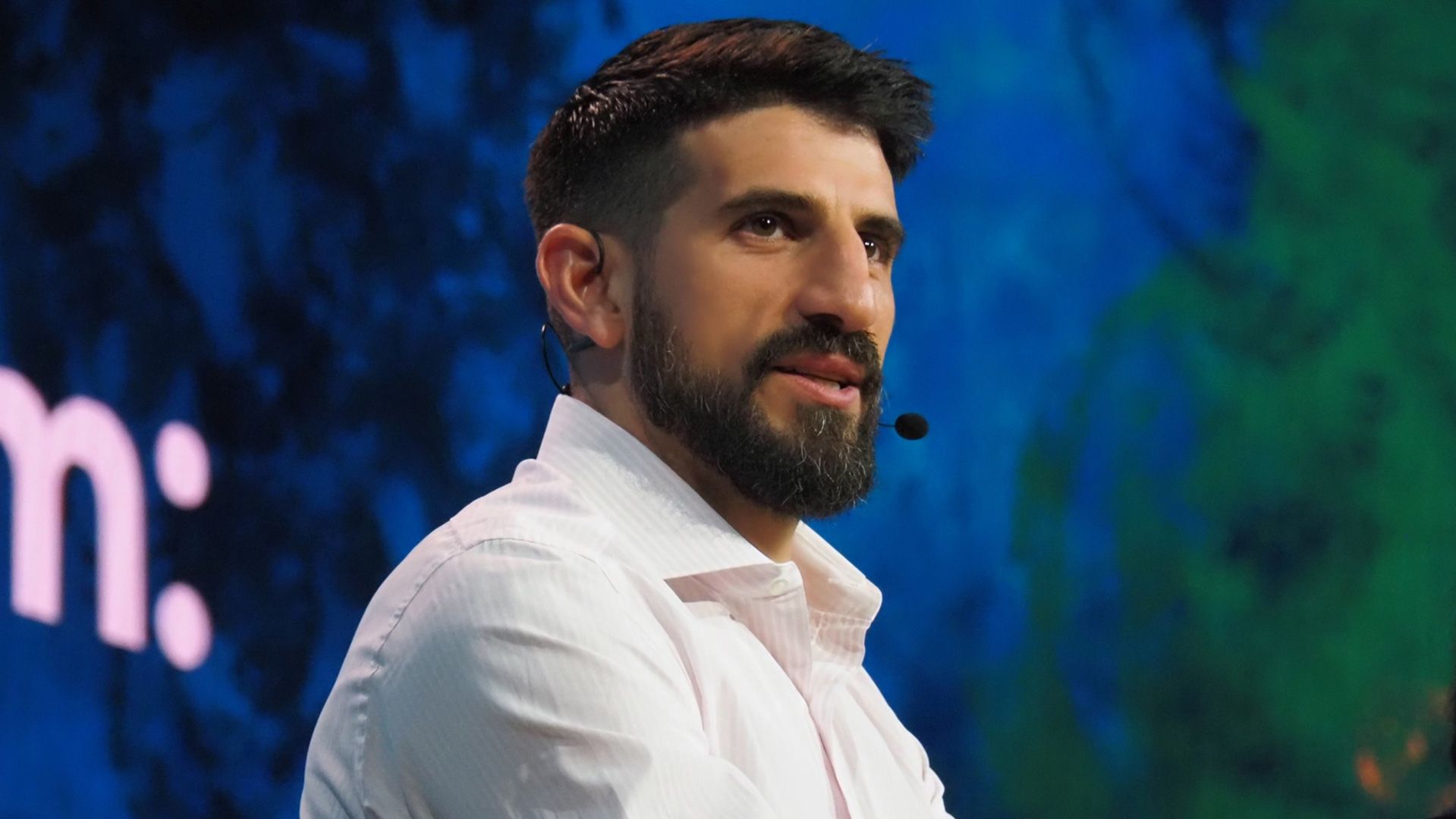
The crisis stayed with him
The financial crisis gave Cascarilla a lasting reason to question the infrastructure he knew. Clearing and settlement are easy to overlook when the institutions involved are solvent and willing to trade. Trouble makes the dependencies visible. The period between agreement and completion leaves counterparties exposed to one another, and the confidence supporting the whole arrangement can become painfully conditional.
He encountered Bitcoin in 2010. What interested him extended beyond the possibility of a new asset appreciating. A shared ledger offered a different way to record ownership and transfer value. For someone who had watched uncertainty spread through interconnected financial institutions, that was a practical attraction. A blockchain could potentially help institutions agree on the state of a transaction without endlessly reconciling separate records.
Paxos dates its founding to 2012. Cascarilla's collaborators included Rich Teo and Emil Woods, who shared the financial-services background behind the venture. The company would encompass the itBit exchange, custody, tokenized assets and settlement services. Those activities can seem like an untidy collection until viewed through his original preoccupation. Each involves holding something of value, recording who owns it and allowing it to change hands.
That ambition deserves a careful distinction between intention and outcome. A different ledger does not automatically eliminate financial risk. Someone still has to safeguard assets, operate the technology and meet obligations. Cascarilla's response was to put the business inside a regulated financial institution. The legal container became part of the product, alongside the software.
Custody → tokenization → settlement. A conceptual map of the work behind the transaction.
Permission was part of the design
In 2015, Paxos received a limited-purpose trust charter from the New York State Department of Financial Services, the first granted to a digital-asset company. A trust structure suited the custody business Cascarilla wanted to build. Its importance was more prosaic than the vocabulary of crypto might suggest: institutional partners needed an accountable organization with responsibilities for the property it held.
His argument for regulation was also an argument about adoption. A technology seeking to serve established financial institutions has to satisfy the people who answer for those institutions. Compliance, examinations and custody arrangements belong in that conversation. Cascarilla's company was selling a way for other businesses to introduce digital assets to their customers. Those businesses brought their own reputations to the table.
By December 2021, his written House testimony listed customers including PayPal, Bank of America, Mastercard and Interactive Brokers. He described Pax Dollar, or USDP, as a dollar-backed token that could move outside the usual working week. He also described a completed pilot for same-day securities settlement. The two products addressed different markets, but both pursued a shorter interval between deciding to transact and completing the transaction.
“How can we enable assets to move at the speed of the Internet?”
Charles Cascarilla, 2019
The name on the dollar
PayPal launched its dollar stablecoin, PYUSD, in August 2023, with Paxos Trust Company as issuer. The launch described reserves consisting of dollar deposits, short-term US Treasuries and similar cash equivalents, with redemption at one dollar per token. This was Cascarilla's institutional strategy in a recognizable form: a consumer-facing company introduced the product while Paxos supplied the issuance infrastructure underneath.
The relationship gives his career an unusual shape. Many founders spend years trying to put their company's name in front of customers. His business can succeed while remaining a less familiar name in the transaction. That is a reasonable trade for an infrastructure provider. The partner supplies distribution and an existing customer relationship; Paxos supplies capabilities the partner would otherwise need to construct or obtain elsewhere.
Another approach arrived with Global Dollar Network in November 2024. Initial participants included Anchorage Digital, Bullish, Galaxy Digital, Kraken, Nuvei, Paxos and Robinhood. Its stablecoin, USDG, was issued from Singapore by Paxos. The network proposed sharing economic benefits with partners that supported adoption, giving participating businesses a reason to distribute a common dollar token.
That design makes distribution part of the financial architecture. An asset can be technically transferable and still struggle to find a useful place in daily business. Partners need reasons to integrate it, hold it and make it available. Cascarilla's work increasingly involves those commercial arrangements as well as the ledger. The software must function; the institutions surrounding it must want to participate.
A charter comes with an examiner
The regulated strategy has brought consequences as well as credentials. In February 2023, New York's financial regulator ordered Paxos to stop minting Binance USD, the stablecoin associated with its Binance partnership. In August 2025, the department announced a settlement over due-diligence failures involving that relationship and deficiencies in Paxos's anti-money-laundering program.
The agreement required a $26.5 million penalty and an additional $22 million investment in compliance. Paxos said the issues were historical, had been remediated and had caused no consumer harm. The episode belongs alongside the company's charters in any account of Cascarilla's approach. Accepting supervision means accepting scrutiny of how the business actually operates, including the partners it chooses.
For a founder who places trust near the center of his proposition, that is a demanding test. A permission granted years earlier cannot do the daily work of monitoring transactions or identifying problems. The settlement put specific costs against those responsibilities. It also illustrated how closely the operational details of an infrastructure company are tied to its public argument.
- 2015New York limited-purpose trust charter
- 2025Conversion to a national trust charter under the OCC
- 2026Paxos subsidiary receives SEC clearing-agency registration
Seven years is a product cycle
In December 2025, Paxos converted its New York trust charter to a national trust charter overseen by the Office of the Comptroller of the Currency. Then, in May 2026, Paxos Securities Settlement Company received SEC registration as a clearing agency. Cascarilla described the latter as the result of seven years of work, beginning with a 2019 no-action letter and a settlement pilot.
The registration reaches back to the problem that helped bring him into blockchain: completing securities transactions. The company had begun operating its equities settlement pilot in February 2020. By 2026, the project had acquired a different regulatory footing. The chronology is a useful measure of his chosen business. Financial infrastructure moves through applications, pilots and permissions, with years between milestones.
Cascarilla has repeatedly taken that case to policymakers, appearing before the Senate Banking Committee in 2020 and the House Financial Services Committee in 2021 and 2025. His March 2025 testimony framed stablecoins as part of the future of the dollar, arguing for interoperability and a federal framework. It was the same aspiration presented to a different audience: let money move through a connected economy without inheriting every restriction of the old machinery.
His career has become a prolonged attempt to reconcile the speed he wants with the institutions required to deliver it. The founder who studied established financial companies now asks them to adopt different infrastructure. The investor who watched a crisis unfold now operates a business subject to its own examinations. And the child who bought a Cleveland steel stock ended up spending years on the less visible business of making ownership transferable. A confirmation message is easy. Making it mean the transaction is finished has proved a longer occupation.
Keep following the money
- Paxos · company website
- Watch · Empire conversation, April 2026
- Listen · The Stable Pulse, October 2026
- Watch · Dubai FinTech Summit fireside chat
- Watch · Unchained on GameStop and settlement
- Read · How Paxos came to be
- Read · The 2026 clearing-agency registration
- Read · New York’s 2025 settlement announcement