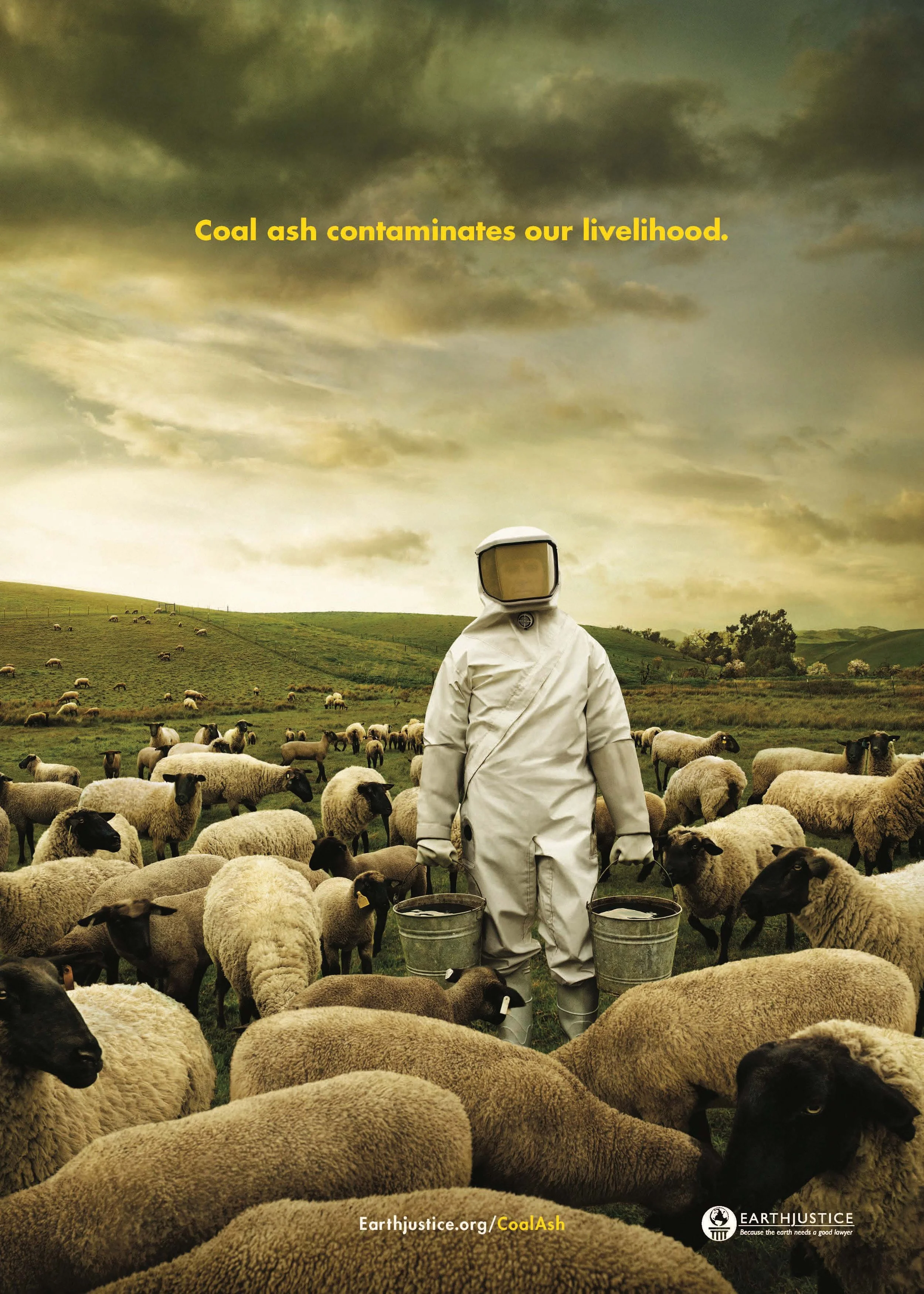
The sheep look perfectly comfortable. Their keeper is wearing a hazmat suit. In an advertisement Underground made for Earthjustice, an ordinary pastoral scene becomes a warning: something has gone badly wrong with the environment when feeding the flock requires protective equipment. The picture does the explaining before the reader reaches the small print.
That is a useful introduction to Underground, a San Francisco agency whose customers sell ideas, services and causes that people can easily overlook. Its work gives those subjects a recognizable face, a visual joke or an uncomfortable intrusion. A nonprofit’s mission statement may be earnest. Its advertising still has to survive a distracted glance.
Founder Charlie Cardillo’s agency traces its direction to a 1996 advertisement supporting the protection of an old-growth redwood forest. The experience encouraged a lasting focus on mission-based work. Today, the portfolio moves between classrooms, kitchens, patient information and public advocacy. The recurring question is practical: what would make someone notice this issue, understand it and do something?
01 / Give the problem a picture
For Earthjustice, Underground helped turn the aftermath of the 2008 Tennessee coal-ash spill into an appeal for public action. Photographer Dave Stewart supplied the images. The agency reports that the wider effort generated more than 450,000 comments to the EPA against an initial goal of 50,000. That measures participation in an advocacy effort; it does not isolate the photograph’s effect.
Elsewhere, the agency has used the opposite emotional temperature. For San Francisco’s Children’s Council, it developed collage imagery and materials promoting assistance for child care providers. A pandemic campaign connected care work to the functioning of the city, addressing officials, foundations and other influential audiences. The argument began with the workers everyone depended on and the care those workers needed.
The common technique is translation. An institutional concern becomes a scene someone can recognize. The tone follows the assignment: alarm for contamination, empathy for overextended providers. Copying the visual style without understanding the audience would miss the more useful part of the work.
02 / Free tuition needed an invitation
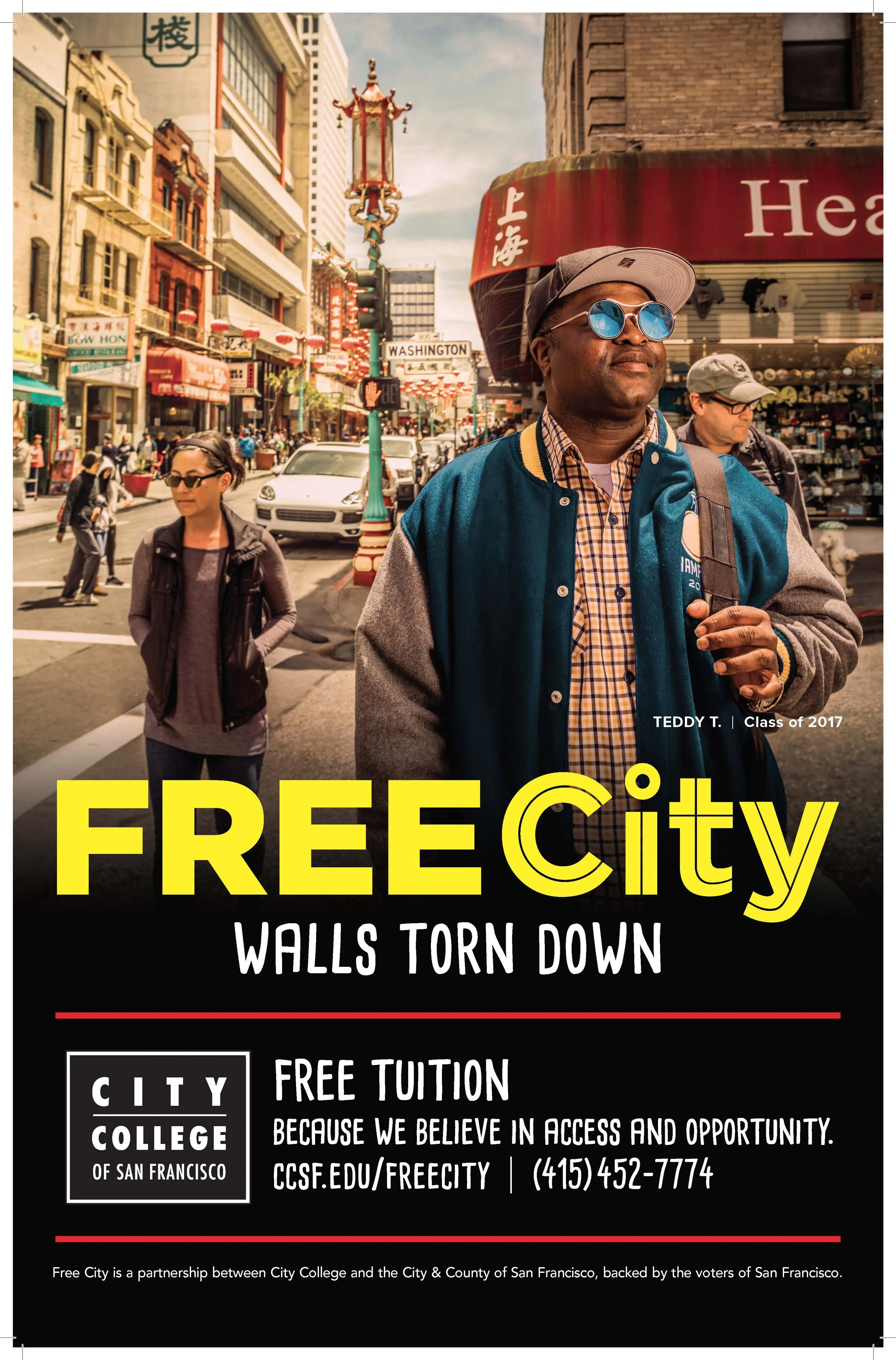
City College of San Francisco presented a different communications problem. Its Free City initiative had a concrete benefit to explain. Underground’s 2017 campaign put actual students in recognizable city settings and carried the message in English, Spanish and Chinese. Bus shelters, neighborhood newspapers, social media and digital advertising brought the invitation into everyday life.
“Free City. Walls torn down.” The line tied the offer to a broader feeling of access. Underground reports enrollment growth of more than 20% in its case study. Free tuition itself belongs in any explanation of that response, alongside the marketing. A college planning a similar effort should read the result as evidence of a combined policy-and-communications moment.
The college’s later enrollment plan confirms Underground’s role in Free City and its continuing marketing work. For adult education, the agency also describes consulting students and community organizations before building campaigns around student success. The people expected to respond were involved before the finished posters appeared.
03 / The campaign moved into the fridge
Underground’s StopWaste relationship, which it dates to 2006, shows how an assignment can change without discarding its purpose. Early work encouraged composting. Later work addressed preventing food waste before there was anything to compost. By spring 2017, the agency says, StopWaste was running its first consumer-facing prevention campaign.
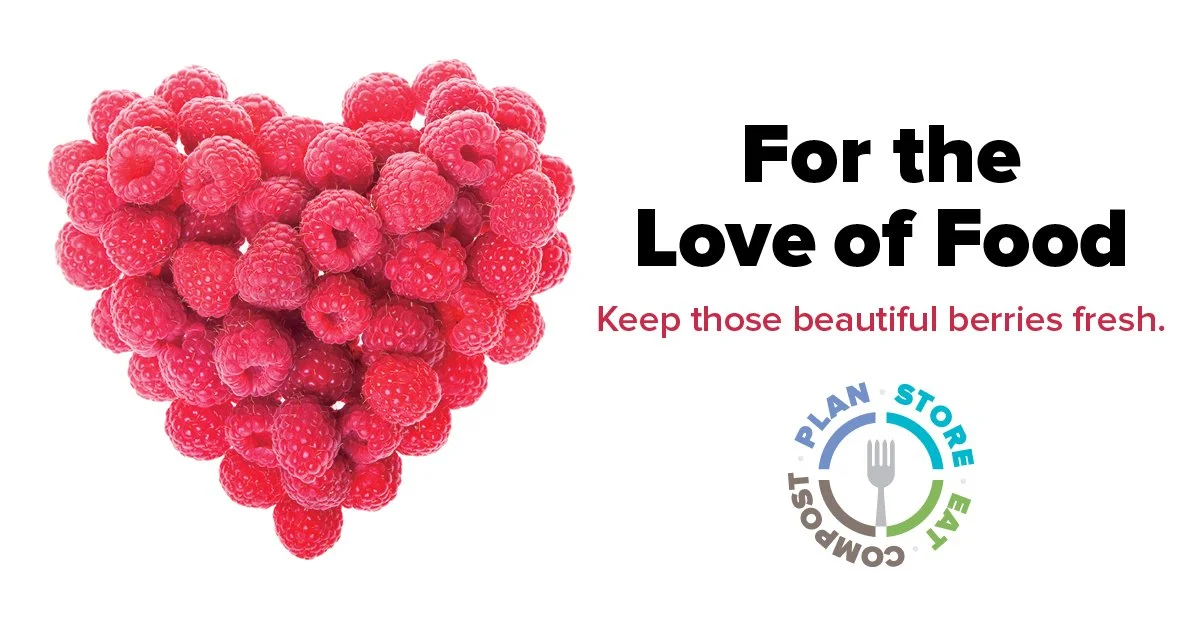
Raspberries arranged as a heart made care for food look appealing. Other executions used humor and domestic familiarity. The practical destination was a set of everyday actions: planning, storage, eating and composting. A resident could move from a pleasing picture to something useful in the kitchen.
The EPA’s account adds the audience research. Phone surveys identified families with young children as both substantial food wasters and receptive to change. The resulting campaign included storage guidance, shopping tools and reminders to use food already on hand. The lesson is specific: find a group with both a problem and an appetite for solving it.
That shift was a change in the point of intervention. Composting addressed the destination of discarded food; prevention addressed what happened earlier. Treating every revised campaign as a response to failure would flatten that distinction. Sometimes the assignment changes because the client sees a better opportunity to act.
04 / A real number in the budget
There is a concrete price reference in StopWaste’s 2017–18 budget: $75,000 in authorized spending for Underground to develop the next phase of Stop Food Waste creative. The same food-waste section separately identifies $70,000 for Zero Company’s online media purchases, $115,000 for Intersection’s digital and transit placements, and $15,000 for Pandora advertising.
Underground’s next phase of Stop Food Waste creative
These entries make a useful distinction for a prospective client. Creating the message and paying to distribute it are separate purchases. The $75,000 figure is a historical authorization for a defined assignment, not Underground’s current rate card. It also cannot tell us the cost per household that changed its habits.
Underground’s business is client-funded creative work. A buyer should therefore define the deliverables and the route to the audience together. A campaign can need research, translation, production and placement. A polished set of files has limited value if the people it is meant to reach never encounter it.
05 / Let the audience disturb the draft
In its Metastatic Trial Talk case study, Underground describes testing early concepts with women living with metastatic breast cancer. Participants responded to material specifically for Stage IV patients, the prospect of hope and the inclusion of men, who are less often represented in breast-cancer communications. That feedback informed a gentler identity and website.
The assignment also included launch advertising and support for the organization’s approach to social content. Here, the design problem was about the experience of encountering information during a difficult period. An image could be relevant to the disease and still feel wrong to the person looking at it.
For a client commissioning similar work, the transferable practice is to show unfinished concepts to the intended audience while revision remains possible. Ask what they notice, whom they think the message addresses and what they would do next. Appreciation is pleasant; an answer that changes the draft is more valuable.
“Life comes to school.”
Underground’s tagline for Linked Learning
Linked Learning required a different kind of listening across educators, policymakers, businesses and students. Working for the James Irvine Foundation, Underground developed messaging, identity and materials around an education approach connecting school with work. Its short tagline carries that connection without requiring the reader to learn an institutional vocabulary first.
06 / The work behind the clever line
The agency sells strategy, naming, identity, advertising, digital work and content production. Its animation offering runs from scripts and storyboards through work with illustrators and sound specialists. Clients can commission a particular piece or a coordinated campaign. The finished object might be a logo, a fundraising publication, a social advertisement or a film.
The published leadership team combines Cardillo’s writing and strategy with creative and design director Rochele Tanabe and senior account supervisor Savannah Kacher. Their listed experience spans design, communications and nonprofit fundraising, reflecting the mix of creative decisions and client coordination these assignments require.
Projects can also require managing an organization’s feelings about its own identity. Graybird Foundation brought Underground into the rebranding of Gatepath as AbilityPath. The work involved stakeholders, a new name, a logo and a tagline. For an established nonprofit, continuity is part of the design problem: people must recognize what they value after the public presentation changes.
That helps locate Underground in its market. It is a specialist creative services business with substantial civic and nonprofit work. StopWaste’s July 2026 procurement update lists it among vendors from the agency’s 2022 pool, alongside firms including Circlepoint, Spitfire and Gigantic Idea Studio. The list shows a field of possible suppliers, without establishing which firms competed for a particular assignment.
07 / Give attention somewhere to go
One Underground campaign for Conservatives Concerned About the Death Penalty paired portraits and arguments aimed at conservatives with a survey developed with Adriana Dakin of ImaginePod. The agency reports that the ads and survey doubled the organization’s email lists in 30 days. The mechanism matters: the advertisement led to a way of participating.
That provides a useful test for any proposed campaign. If the next step is unclear, visibility can end at visibility. If the promised service is inaccessible, communications cannot supply it. And if the audience hears condescension in the message, an elegant execution may simply make the mistake more conspicuous.
There is also a literal way to borrow from Underground’s work. The EPA’s food-waste toolkit offers customizable StopWaste materials and credits Underground for their creation. Its terms permit local branding changes while requiring the message and concept to remain intact and prohibiting commercial use. For an eligible organization, that is a practical starting point.
The agency’s portfolio rewards that kind of close inspection. Look past the picture to the audience decision, the distribution choice and the requested action. The sheep farmer wins the glance. What happens after the glance is the assignment.
Visit the work
Underground’s portfolio ↗ Services ↗ Contact ↗ LinkedIn ↗ Facebook ↗
Watch the creativeAnimation collection ↗ City Car Share: Do the Electric Boogie ↗