In May 2016, Udi Dor was talking with friends while one of them played with a Rubik’s Cube. One person had the puzzle; the others had a conversation. A question emerged: why couldn’t they play against one another? The cube was already a game. It lacked a way to let the rest of the room in.
Dor went looking for a connected version. He expected to find one. Instead, the search led him toward the engineering problem that would become GoCube: how to let a small, constantly rearranging object report what was happening to it. A perfectly reasonable evening among friends had acquired a research-and-development department.
That beginning helps explain the company he co-founded with Amit Dor. At Particula, Udi is the CEO, but the initial attraction was technical. A familiar toy presented a stubborn physical problem. Solve it, and the same object could help a beginner, record a practiced player’s movements and introduce an opponent somewhere else.
Before the toy cupboard
Dor arrived with a background in radio-frequency and analog systems. His early work included developing wideband transceivers in a technical unit of the Israel Defense Forces. These are devices concerned with sending and receiving signals, a useful apprenticeship for someone who would eventually want a toy to tell a telephone what its owner was doing.
His career included engineering at Intel, systems architecture and design management at Texas Instruments, and a stint as co-founder and chief technology officer of RF Pixel. At Netline Communications Technologies, his responsibilities ranged across research and development, product management and business development. The progression brought him from designing systems to thinking about the products and businesses built around them.

During his Netline period, Dor had accumulated more than fifteen years of multidisciplinary RF and analog experience, including work on system architecture, silicon and circuit boards. It is a rather different introduction from a toy demonstration. It also makes the later change of subject easier to understand. The technical ingredients were familiar; the thing they had to achieve was delightfully different.
A toy is an exacting customer for electronics. The mechanism has to work, the battery has to last, and the person holding it has little interest in your explanation of why the connection failed. A cube adds a particular indignity: the user is supposed to keep twisting it. The engineering must tolerate the very behaviour the product invites.
The cube learns to listen
GoCube’s development brought mechanical design, electronics, wireless communication, low power consumption and cloud software into the same small project. Each discipline could make demands on the others. More electronics might occupy space needed by the mechanism. More activity could draw more power. The finished object still had to feel like something worth playing with.
Dor’s team worked on tracking the cube’s changes rather than treating every visible square as an isolated object to follow. Starting from a known arrangement, a system can use the sequence of turns to keep track of where the colours have gone. That distinction matters: knowing what changed can be a more manageable problem than repeatedly measuring everything.
A conceptual explanation of the GoCube experience.
The work also appears in the patent record. Udi and Amit Dor are named inventors on a European patent concerning the tracking of three-dimensional puzzle components using embedded signatures and rotation sensors. Its priority dates to January 2017; the European grant was published in August 2025. Behind the friendly colours sits a sustained argument about how a machine can know where the pieces are.
For a player, that knowledge becomes something more approachable. The app can follow a solve, offer instruction and enable competition. An experienced cuber can look at performance; a newcomer can work toward completing the puzzle. The same physical object has room for people arriving with very different levels of confidence.
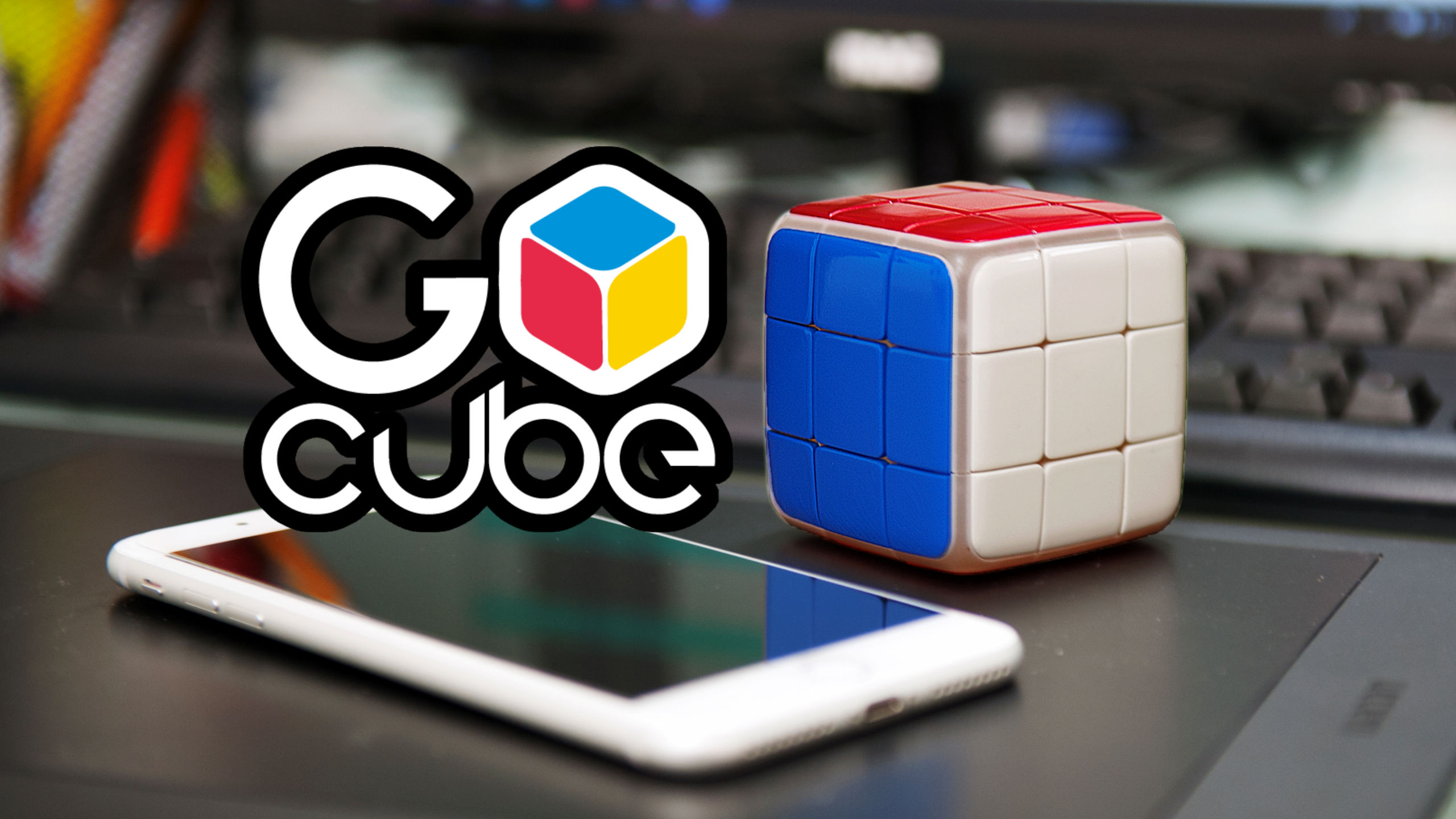
By June 2018, working prototypes were being discussed publicly and the first production run was being crowdfunded. In July, Dor sat down for a video interview about the invention. The timing catches a founder at a revealing stage: the explanation must leave the engineering team and make sense to people deciding whether they want one.
The explanation has a pleasing economy. Keep turning a real cube. Let the software understand the turns. Once those two things work together, teaching and competing become possible. The player gets a new relationship with an old puzzle, without having to trade the object in their hands for a picture of one.
A new job for the chessboard
The next objects made the underlying interest clearer. GoDice brought connected physical dice into app-assisted tabletop play. In February 2021, Particula announced a $5 million Series A led by Flashpoint Venture Capital, with plans that included production of GoDice and Rubik’s Connected. The company was extending its approach beyond one successful demonstration.
Chess offered another version of the problem. The board already contains an orderly record of a game, provided someone can read it. Give the board a connection and guidance, and it can participate in play across distance. Add robotics, and an opponent’s decision can appear as a piece moving in front of you.
At CES in 2023, Dor publicly celebrated the robotic GoChess project and credited the designers, developers, researchers and other people building it. The demonstration described a board that could move multiple pieces, set up positions and reproduce moves. A game with a remote opponent could acquire the theatrical pleasure of something happening on the table.
The theatrical part matters in a profile of Dor. He has described a longstanding interest in magic and games. A chess piece travelling without a visible hand is an unusually direct way to combine the two. The trick has engineering underneath it, which is reassuring for the manufacturer and slightly rude to the magician.
“My true passion was always rooted in magic, games, and the joy of making people smile.”
Udi Dor
The public milestones also show how much work lies beyond a demonstration. In 2024, Dor announced that GoChess Lite and Mini were ready to ship, sharing the excitement of boxes about to reach customers. Those named models matter. GoChess is a product family; a shipping announcement for Lite and Mini should be read on its own terms, separately from the robotic capabilities shown in other versions.
That distinction is part of the founder’s job, too. A compelling idea must become a range someone can choose from and understand. The customer needs to know what arrives in the box. The glamour belongs to the moving piece; the instructions have to do their share of the work.
The shelf is part of the invention
Dor has also shared Particula’s arrival at Barnes & Noble, praising the business-development team and describing bookstores as a fitting home for its games. It is an instructive setting for his products. People encounter a physical object on a shelf, then have to understand the extra possibilities that appear when it connects.
The same practical thinking appears in his description of Particula’s first subscription program, launched in early 2025. He discussed continuing value for customers and interest from chess clubs and educators. A device can be purchased once; a service needs a reason for someone to keep returning. That makes the experience after the sale part of the product’s design.
New funding led by Elah Fund, with Grove Ventures and Flashpoint participating.
Company-reported worldwide sales: more than 1 million units.By September 2026, Particula had announced that new funding round and reported more than a million units sold worldwide. Its expansion included international retail and licensed entertainment, with an official Warner Bros. Harry Potter licence for GoChess Wizard. The capital was intended to support development, hiring and international growth.
Those developments place Dor in a broader role than the engineer puzzling over a cube. Retail relationships, a licensed fictional world and continuing software services each introduce their own requirements. The playful object still has to work. So does the business that gets it onto the table.
Leave room for another game
One of Dor’s more revealing public experiments returns to the pleasure of building. He described connecting Claude with GoChess and making Snake, drawing and checkers activities on a physical board in less than an hour. He also outlined plans for a curriculum joining AI-assisted coding, projects and connected play.
That is a proposal for what people might make with the equipment, as well as what they might buy it to do. The chessboard becomes a surface for trying another idea. The educational ambition is expressed through a sequence of actions: imagine something, build it, connect it and play with it.
There is continuity with the conversation in 2016. Then, a cube suggested a game the friends could not yet play together. Now, a board suggests activities beyond the one printed on its squares. Dor keeps finding unfinished possibilities in objects whose rules appear settled.
The appealing detail is how ordinary those objects remain. A person still has to turn the cube, pick up the dice or consider the next move. All that engineering earns its place at a modest moment: someone reaches for the game again, and this time there is another thing they can do with it.
Keep playing
- Udi Dor / LinkedInFollow Udi D.
- Particula / Official websiteExplore the games
- Watch / July 2018Dor’s GoCube interview with GenXGrownUp ↗
- Read / 2018The engineering behind GoCube
- Read / September 2026Particula’s $15 million funding announcement
- Explore / InventionUdi and Amit Dor’s puzzle-tracking patent
- Particula / Company blogProduct updates and guides
More from Particula