Consider the interval between two guests. One has left a damp towel on the bathroom floor. The next has a reservation and expectations. In between sit laundry, missing supplies, a cleaner’s availability and the possibility that somebody changed the departure date. A booking calendar records the stay. Somebody still has to translate it into work.
- Turno connects rental calendars to cleaning projects, communication and payments.
- Hosts can bring their own cleaners or find independent professionals through its marketplace.
- Free subscriptions have conditions. Cleaning and applicable transaction fees still cost money.
That translation is Turno’s business. The Honolulu company occupies an easily overlooked part of short-term rentals: getting a property ready again. Its attraction is practical. A host should be able to see what needs doing, who has accepted it and whether it is finished without conducting the whole operation through scattered messages.
The calendar was the clue
Assaf Karmon encountered the problem as an Airbnb host. In a 2021 interview, he described struggling to track cleaning schedules and find cleaners. His response was to write an app. He shared it with other people; its popularity persuaded him to make a business of it with business-school friend Tim Roy.
“So, being a programmer by training, I created an app to help me.”Assaf Karmon, co-founder
The company dates its beginnings to 2016. Karmon became CEO; Roy became COO. Their original name, TurnoverBnB, practically contained the instruction manual. In February 2023, they shortened it to Turno. The underlying proposition remained recognizably specific: organize the recurring work created by a guest leaving.
Early demand exposed a staffing problem. Karmon said the company lacked the money for a large team while users expected a great deal. Nights and weekends filled the gap until hiring became possible. Growth had outrun the people available to support it. The lesson was awkwardly appropriate for a company selling coordination.

One booking, several handoffs
Turno combines two businesses that reinforce each other. Its software helps operators coordinate cleaners they already know. Its marketplace helps them meet cleaners they do not. Independent professionals submit bids and set their prices. Hosts can compare candidates, then keep a working relationship running through the same system.
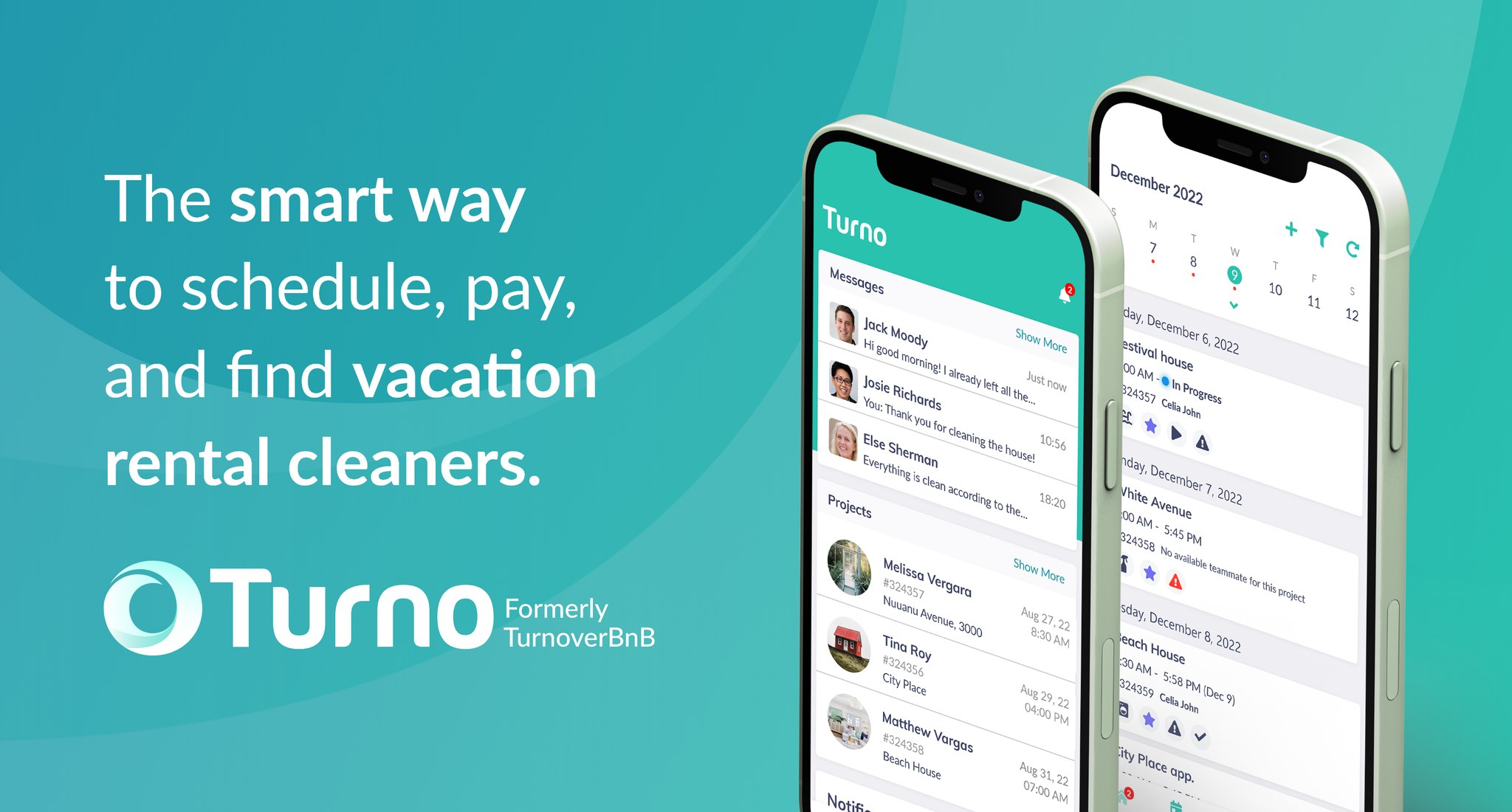
The calendar connection supplies the trigger. Reservations become cleaning projects. The cleaner receives the job information; photo checklists describe what completion should look like. Problem reporting and inventory tools bring news back from the property. Payments can follow the work automatically. Each step gives the next person something firmer than an assumption.
- 01Booking
syncs - 02Cleaning
project - 03Checklist
and issues - 04Completion
and payment
This is a distinct position within rental technology. A property management system handles a broader business; Turno concentrates on the cleaning relationship and its recurring transactions. Breezeway is another option for property operations. Shared calendars and direct messages remain an alternative, too. The decision turns on which work an operator needs connected.
The price of fewer loose ends
Turno’s business model makes the distinction between finding and bringing a cleaner financially important. A single-property account has no subscription charge. Properties using marketplace cleaners exclusively also avoid subscriptions. A host managing multiple properties with outside cleaners enters the paid subscription structure for those billable properties.
The published rates are $10 per property each month, or $96 per property billed annually, equivalent to $8 monthly. Three billable properties therefore cost $30 monthly or $288 for a year on annual billing. Those figures buy software access. They leave the cleaning itself and applicable payment fees to be counted separately.
External-cleaner, multi-property plan. Services and fees extra.
Marketplace payments must go through Turno. Its cleaner payment guidance lists a 5% platform fee on marketplace project payments, excluding tips and reimbursements. Host payment fees also apply and depend on the connection and payment method. For a cleaner, pricing a job means accounting for the amount that actually arrives.
Capital helped the company expand this machinery. In August 2021, TurnoverBnB raised $4.5 million in a Series A led by RET Ventures, with Blue Startups participating. At the time, it reported more than 20,000 rental hosts and revenue that had tripled since early that year. That was a dated growth snapshot, rather than a current revenue disclosure.
The review finds its way back
In July 2023, Turno became an official Airbnb Software Partner. Direct connectivity brought reservation updates through Airbnb’s API. That matters because a changed booking is an instruction to change the operation. A useful integration carries the change to the people whose afternoon depends on it.
Quality Center extends the connection beyond scheduling. Turno’s April 2025 documentation describes bringing Airbnb cleanliness ratings and reviews together with properties and assigned cleaners. Operators can examine trends and recurring feedback. It requires the Airbnb integration. A complaint about cleanliness can become something to investigate against a particular turnover, instead of an isolated bad review.
RentalWise announced a Turno integration that same month, linking reservation information to cleaning projects. These connections reveal Turno’s expertise: taking information from booking systems and making it useful to people working inside the property.
Copy the handoff
The transferable idea is straightforward. Give recurring work a visible trigger, an owner, a definition of completion and a record. Start with one property. Check that booking changes reach the cleaner. Write the checklist together. Decide who responds when the photographs show a problem.
The conditions matter. A marketplace needs suitable local cleaners with availability. A checklist needs agreement about standards. A remote host needs someone who can act when something breaks. Automation makes those responsibilities easier to track; the operating plan still needs people capable of carrying them out.
A guest eventually opens the door. The sheets, supplies and clean bathroom are there to be judged immediately. Turno’s opportunity lies in making all the preceding handoffs dependable enough that the guest never has to think about them.