A project can have a budget, a deadline and several intelligent people, and still spend an astonishing amount of time waiting for someone else. Dr. Tridibesh Satpathy has made that ordinary frustration the subject of a business career. His territory is the gap between knowing your own job and understanding how your work fits with everybody else's. It is a crowded gap. Entire calendars live there.
In a December 2022 conversation about project delivery, Satpathy returned to coordination: people working together, dependencies being managed, value reaching customers sooner. His examples included software, new products and assembly lines. He was talking about the machinery of collaboration, the arrangements that let individual effort become a useful result. A brilliant employee can do only so much while waiting for an answer.
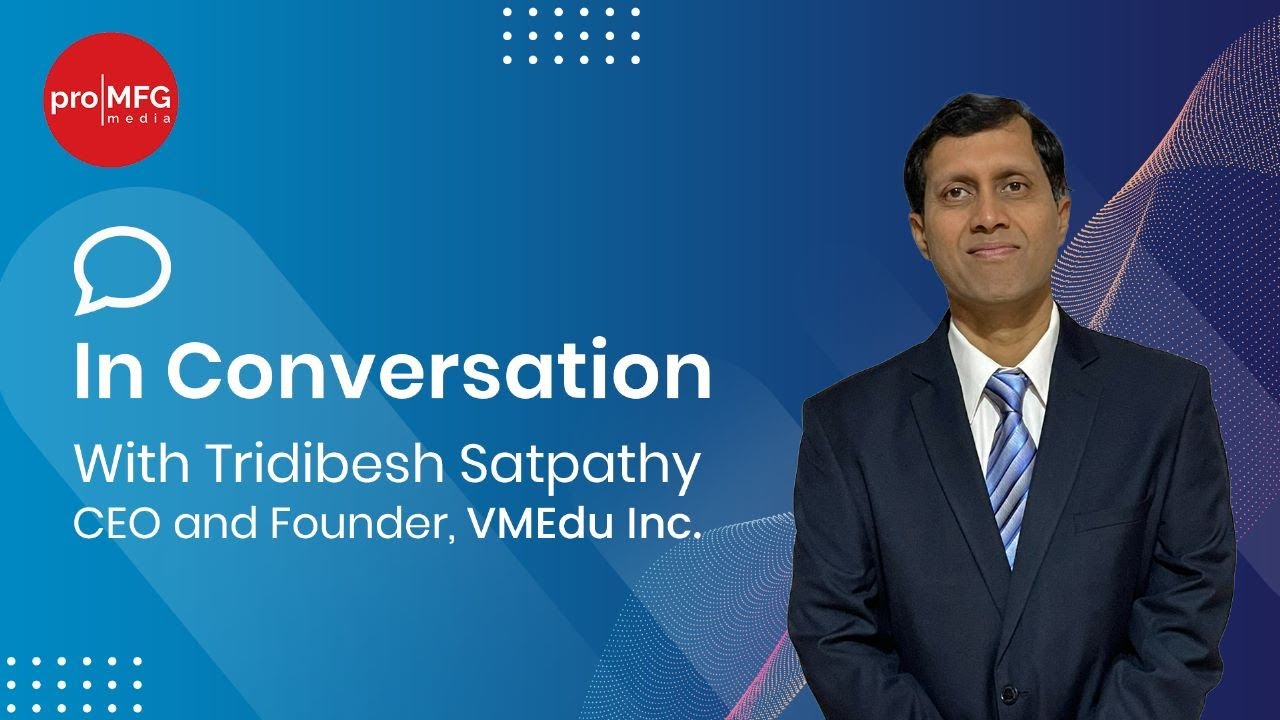
Today he is the founder and CEO of VMEdu, the professional training and certification company behind SCRUMstudy and other learning brands. He is also the lead author of A Guide to the Scrum Body of Knowledge, generally shortened to the SBOK Guide. The combination matters. He has built both the curriculum and a business that helps people learn it. The reader, the trainer and the team are connected parts of the enterprise.
His public career offers a story about repeatability. A useful explanation can become a book. A book can become a course. A course can travel through instructors who understand their own local audiences. Each step introduces a practical question: what must stay consistent, and what can change? That tension runs through Satpathy's work, from the early training business to the way he talks about team autonomy.
Personal savings, then outside capital
Satpathy studied mechanical engineering at IIT (BHU) Varanasi, graduating with the 1995 batch. He went on to an MBA at IIM Lucknow and senior management study at Wharton. His education spans engineering and management, two disciplines that have plenty to say about systems and the people responsible for keeping them working.
Before his education ventures, his career included IBM, American Express, Wachovia Bank, Tata Consultancy Services and Unit Trust of India. His documented IBM role was senior project manager, from December 2002 to November 2004. Those details place him inside the working world he would later serve: organizations with projects, clients, obligations and people whose responsibilities had to meet somewhere.
The early Edusys business was funded with ₹3 lakh of his personal savings. By February 2012, it had attracted a $7.5 million investment from Sequoia Capital. Contemporary reporting described it as a first funding round and said the business had operated on profits generated from its first year. The investment arrived after the business had already found paying customers.
At the time, Edusys worked with 3,500 companies across 150 countries. Satpathy explained its appeal through a choice of learning formats: customers could attend offline centers or work with tutors online. That is a particularly sensible detail in an education business. A professional may want the same qualification as a colleague while having an entirely different timetable.
His 2012 conference biography reported more than 150,000 customers, fifth place in Deloitte's 2011 Technology Fast 50 India ranking, and a Red Herring Top 100 Asia award in 2012. These are company milestones rather than personal medals. They describe the operation he had built: a training business serving customers across borders before outside growth funding entered the picture.
There was an education venture before Edusys, too. Satpathy founded ExcelAtExams.com and sold it to IMS in 2001. VMEdu's founding sits in 2008 in his career record. Across these separate ventures, his work kept returning to education: helping learners prepare, building ways to deliver instruction, and serving professionals already navigating the demands of employment.
- 1995Mechanical engineering
IIT (BHU) - 2008VMEdu
founded - 2013First SBOK
Guide - 2024Vabro
CEO role
A book with many hands
In 2013, the first SBOK Guide brought another kind of work into view. Satpathy was its lead author, supported by coauthors, subject experts and reviewers. SCRUMstudy's account of that edition describes 52 subject matter experts and reviewers from ten countries. The author credit gives him a clear place in the project while the contributor list makes its collaborative character equally clear.
In the early guide's foreword, he described an ambition to standardize how Scrum is applied to projects and to encourage further thought about its use. He thanked contributors and reviewers for helping assemble knowledge from different disciplines. That is a useful window into the book's purpose. It was intended to be consulted by people trying to implement a method, including readers arriving without previous Scrum experience.
The guide organizes its approach through principles, aspects and processes. Its six principles include collaboration, self-organization, time-boxing and iterative development. Five aspects address organization, business justification, quality, change and risk. Nineteen processes sit within five phases, moving from initiation through planning and implementation to review and release.
There is something pleasingly practical about giving a reader several ways into a complicated subject. Principles explain the underlying commitments. Aspects identify concerns that remain present throughout a project. Processes describe work to be done. A person looking for the reason behind an activity and a person trying to prepare the next activity can consult the same book for different purposes.
The fifth edition adds expanded material on scaling Scrum for large projects and for the enterprise. Its structure acknowledges that coordinating a single team and coordinating work across an organization require different levels of attention. The diagram below describes the guide's five phases; it is a reading aid, rather than a promise that every project will proceed neatly from left to right.
The electronic guide is available free from SCRUMstudy. That choice gives the written framework a life beyond the purchase of a course. A reader can examine it before choosing training, return to it after an exam, or use it as a reference during work. The business still offers certifications and instruction, while the book remains accessible as a book.
- Initiate
- Plan & estimate
- Implement
- Review & retrospect
- Release
Freedom needs a shared agreement
One of Satpathy's brief public comments supplies a useful counterweight to the image of Agile as permanent improvisation: “agility is not anarchy.” He added that team members should follow a collaboratively derived consensus so projects can be delivered successfully. The phrase is brisk enough to fit on a mug, though its second half is the part that asks something of the person holding it.
The comment brings agreement into his account of autonomy. A team can help decide how it works and still have commitments that its members must honor. Collaboration requires enough freedom to contribute and enough consistency for other people to depend on the contribution. Otherwise, each participant's private efficiency can become another participant's waiting time.
Satpathy's role as an author makes this particularly relevant. A guide supplies a shared vocabulary before a team starts negotiating the details of its own work. It cannot make every decision for the people using it. It can give them common terms for discussing decisions, responsibilities and outcomes. The distinction helps explain why teaching the framework is such a substantial part of his career.
His published LinkedIn writing includes a 2017 article titled “7 C's of Scrum” and a 2016 article about creating and hosting online courses through VMEdu's cloud learning management system. Those subjects connect the method to its distribution. The first addresses how people understand work; the second addresses how educators put instruction within reach of their students.
“agility is not anarchy.”
Dr. Tridibesh Satpathy, in a public LinkedIn comment
The teacher's teacher
VMEdu now reports more than three million professionals trained, more than 2,500 training partners and reach across more than 150 countries. These are company-reported figures, not an independent census of Satpathy's personal influence. They do show how the organization describes its scale: through learners and the network that teaches them.
Its portfolio includes Scrum, Kanban, business analysis, objectives and key results, Six Sigma, and sales and marketing. Training is available through online sessions, virtual instructor-led instruction and in-person classes. Partners can use co-branded content and training support. The structure preserves the early business's attention to different ways of reaching a learner.
Satpathy also appears in the work of training trainers. A public account of VMEdu's Train-the-Trainer sessions identifies him as their leader and reports participation by more than 300 partners in a recent round. Topics included newer course offerings, faculty preparation and Vabro.ai. It places the CEO in a teaching role with the people who carry material onward to other classrooms.
His career record lists a CEO role at Vabro beginning in March 2024. The training business's current offerings include AI-enabled certifications, and his LinkedIn activity has promoted free Scrum and Kanban webinars scheduled for February 2026. Those updates describe the current direction of the work without requiring a prediction about where artificial intelligence will take professional education.
A name on a mechanical engineering medal
There is another kind of credential in Satpathy's story, back at the institution where he studied engineering. IIT (BHU) lists his contribution toward the Dr. Tridibesh Satpathy Medal of Excellence for Mechanical Engineering. The institute's donor records give the amount as ₹500,883.75. The recognition attaches his name to academic achievement in his original discipline.
The 2025 convocation recipient list makes the award concrete. Kapil Soni received the medal for standing first in the B.Tech. mechanical engineering examination. A named award can become an abstract line in a biography; a recipient brings it back to the student whose work earned it. In this case, the connection between alumnus and institution has a precise academic purpose.
The IIT (BHU) Foundation's donor wall also lists VM Edu Inc. alongside Satpathy's name and identifies his 1995 mechanical engineering cohort. That public connection sits beside his commercial work in adult learning. One part of the record concerns professionals adding skills after university. Another supports recognition for a student reaching the end of an engineering degree.
Taken together, these episodes give Satpathy's career a recognizable shape: managing projects, building training businesses, assembling a reference guide, teaching trainers and supporting an academic award. The scale changes from a team to an international learning network to a single prize recipient. The recurring subject is how knowledge is organized, passed along and recognized. Somewhere between the book and the classroom, somebody still has to get everyone on the same page.