A researcher can have an interesting idea about the stock market and still be a long way from making a trade. There is data to acquire, a simulation to build, and an execution system to trust. Before the idea can face the market, somebody has to assemble its laboratory. Trexquant Investment LP has made that unglamorous distance central to its business.
- It builds systematic investment strategies from data and statistical signals.
- Its research platform connects experiments to a larger portfolio process.
- Two contractor programs let outside talent contribute research or strategies.
Founded by Tyger Park, the Stamford firm lists 2012 as its founding year and April 2014 as the beginning of operations. Park previously worked at Millennium Partners and WorldQuant. That background places Trexquant within an established quantitative investing tradition, where repeatable methods and collections of signals matter more than a manager’s conviction about one company.
A signal is only the first ingredient
Trexquant calls its trading signals Alphas. Researchers develop and refine them using data and the proprietary TREX QUANTA environment. Selected signals become inputs to more complex Strategies. The distinction matters: identifying a possible pattern is one research problem; deciding how patterns belong together in an investable portfolio is another.
The firm describes thousands of models and tens of thousands of signals. Its stated objective is market-neutral equity portfolios across global markets. Market neutrality is a portfolio design goal aimed at limiting broad market exposure; it does not remove the possibility of loss. The interesting engineering challenge is how to turn many small, imperfect predictions into something coherent.
- 01DataFind something measurable
- 02AlphaDevelop and simulate a signal
- 03StrategyCombine and refine inputs
- 04PortfolioIntegrate accepted strategies
TREX QUANTA brings data, simulation, evaluation, and collaboration into one research environment. The practical attraction is consistency. Researchers can work with common tools while pursuing different hypotheses. A useful way to read Trexquant’s model is as a system for organizing experiments, with investment portfolios at the end of the process.
Two doors into the same laboratory
The Global Alpha Researcher program offers one entrance. GARs are independent contractors who use Trexquant’s tools to develop signals. A company hiring description dates the program to 2015 and says it has contracted more than 200 people since inception. MIT’s jobs board describes a part-time role often taken by students, and says many full-time researchers began as GARs.
The Global Alpha Trader program offers a different bargain. Applicants are expected to bring experience operating systematic strategies. Trexquant offers research infrastructure, help sourcing data, simulation, and a route for accepted strategies into its portfolio investment process. Its public pitch is admirably concrete: Your Vision, Our Platform
.
“Your Vision, Our Platform”Trexquant’s Global Alpha Trader program
The data menu includes social media sentiment and global crop yields. The company advertises tests across more than a decade of market history. For someone with a research idea, these are practical ingredients: access to inputs and a place to discover whether the hypothesis survives contact with observations.
Trexquant says it funds accepted strategies and shares profits with their creators. Contributors supply time and expertise. Entry also has conditions: GAT applicants need a relevant degree, strong quantitative skills, Python tools such as NumPy and pandas, and at least one year of systematic strategy experience. Remote participation is subject to applicable law and contractor terms covering confidentiality, conflicts, and intellectual property.

Nine accounts tell the business story
The business behind these programs is institutional investment management. Trexquant’s July 1, 2026 regulatory filing reports approximately $13.48 billion in regulatory assets across nine discretionary accounts. Six pooled investment vehicles account for $6.44 billion. Three sovereign wealth funds or foreign official institutions account for $7.04 billion.
3 accounts · 52.2%
6 accounts · 47.8%
The firm reports compensation through asset-based and performance-based fees. This places it among systematic investment managers selling portfolio management expertise to capital allocators. Its research platform serves that business. GARs and GATs contribute to the engine; they occupy a different role from the institutions whose assets it manages.
For an allocator, the appeal of the stated market-neutral approach is a return objective less dependent on a rising equity market. For a researcher, the attraction is access to infrastructure. Those interests meet in the portfolio, where promising experiments must become positions that can actually be managed.
People are part of that infrastructure bill. A September 2026 PhD researcher listing on MIT’s jobs board advertises a base salary of $150,000 to $200,000, with a potential discretionary performance bonus. That is a price for one role, rather than a research budget. It gives the platform’s convenience some economic substance: skilled research and the systems supporting it require sustained spending.
The classroom is part of the pipeline
One revealing detail appears in an MIT event notice. Denis Lapitski, Trexquant’s Head of Strategy Research, holds an Oxford doctorate in Quantum Electrodynamics. His September 2026 talk addressed portfolio construction and deep learning, including Mixture of Experts models, graph neural networks, and contrastive learning. The subject was the application of these methods to trading.
Trexquant’s university program extends that contact through professor presentations, campus talks, capstone projects, competitions, and recruiting. Its published terms distinguish educational data from production systems and give the research team discretion to adapt, implement, or reject outputs. An academic collaboration creates an opportunity to investigate; deployment remains a separate decision.
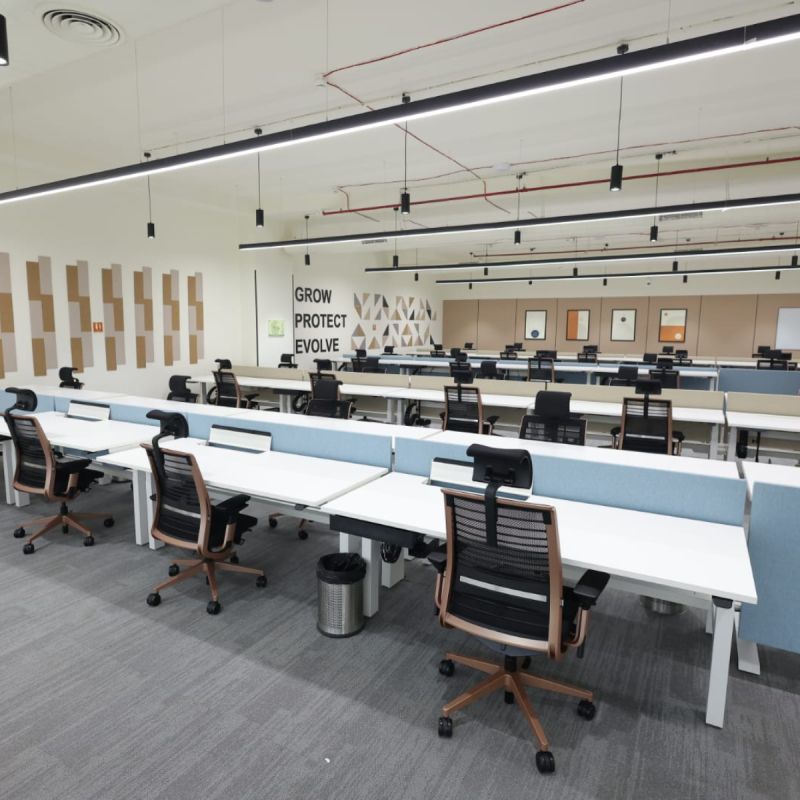
The firm’s stated culture emphasizes collegiality, open communication, and recognition for contributions ranging from helper functions to complete strategies. These are employer commitments. The operating structure gives them a practical test: people doing different pieces of research need to exchange ideas and use shared resources. Trexquant’s laboratory depends on that cooperation as well as on the sophistication of its models.
What travels beyond trading
There is a useful organizational lesson here: independent ideas become easier to compare when they share an evaluation environment. That is an inference from Trexquant’s structure, rather than evidence that any particular model will succeed. Teams elsewhere can copy the separation of hypothesis, test, and deployment without borrowing a trading strategy.
Historical simulations still describe history. A strategy that looks persuasive in a backtest has further work ahead before it earns a place in a live portfolio. Trexquant’s distinctive offer is the machinery around that journey: a common laboratory, contributors with different backgrounds, and a process connecting research to investment decisions.